
Why use educational craft guides for better skills
TL;DR:
- Educational craft guides combine step-by-step instructions with reflection prompts, fostering genuine skill development and creativity. They support inclusive learning by incorporating adaptations and pacing flexibility, promoting mental wellbeing through structured practice. Prioritizing guides with explanations, variations, and reflection fosters the maker mindset and long-term craftsmanship.
Educational craft guides are structured learning resources designed to develop skills, creativity, and critical thinking through purposeful, step-by-step crafting practice. They differ fundamentally from simple project instructions by incorporating reflection prompts, technique explanations, and scaffolded progression that builds genuine competence over time. Understanding why use educational craft guides matters because the difference between following a template and genuinely learning a craft lies entirely in how the guidance is structured. UNESCO’s 2024 Framework positions arts and culture education as transformative and systemic, not supplementary, confirming that guided craft learning belongs at the centre of any serious skill-development programme. Whether you work with card making, paper crafts, or textile techniques, the quality of your guide shapes the quality of your learning.
Why use educational craft guides to build real skills
The core argument for using educational craft guides rests on a straightforward principle: structured steps produce more consistent, transferable learning than unguided experimentation alone. When a guide breaks a technique into deliberate stages, each with a clear purpose, you build procedural memory rather than simply completing a project. The difference is the same as learning to drive with an instructor versus figuring it out in an empty car park. You may eventually succeed either way, but the instructor-led route produces safer, faster, and more durable competence.
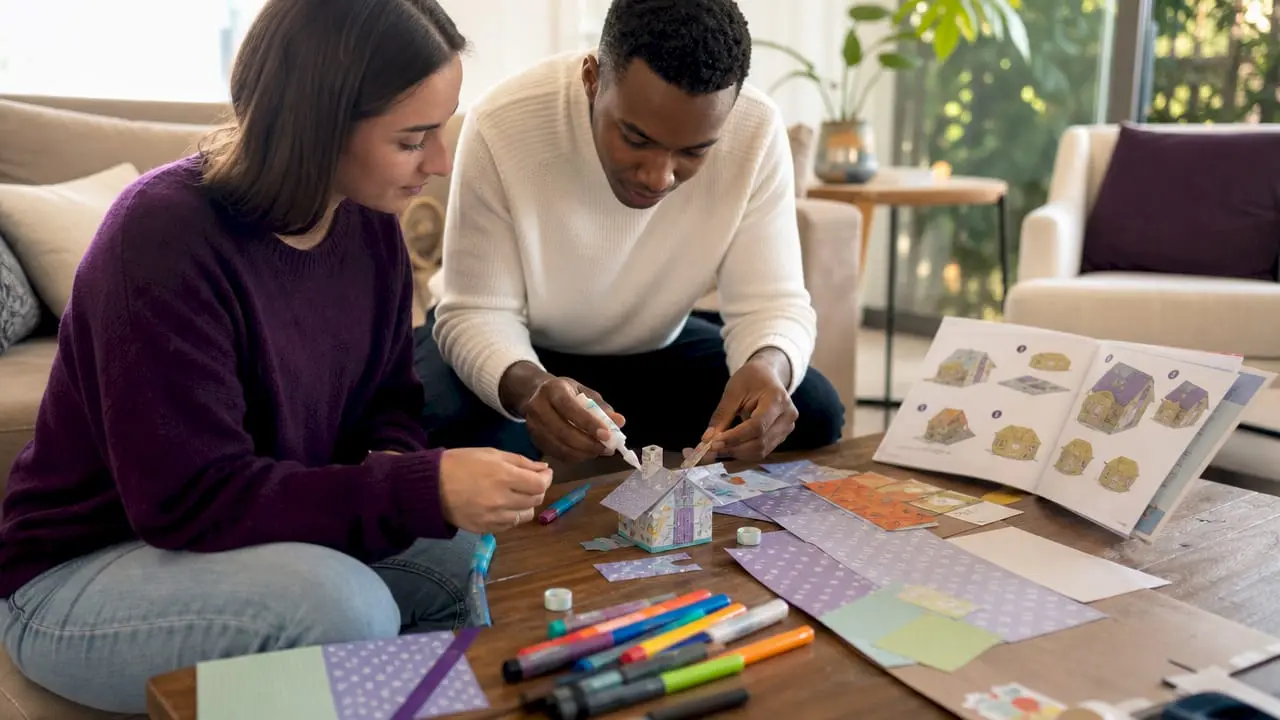
Research published in ScienceDirect in 2026 demonstrates this directly. Cross-stitch practice enhances fine motor skills, reduces stress, and improves learning attitude, suggesting that craft activities prepare learners effectively for complex skill acquisition. The study, conducted with midwifery students, found that handicraft practice supported manual dexterity and learning readiness for clinical procedures. The implication for hobby crafters is significant: the physical discipline of guided craft work trains your hands and your mind simultaneously.
A well-designed educational craft guide typically moves through four progressive stages:
- Orientation. The guide explains the technique, its origins, and the tools required. This context anchors the skill in meaning rather than mere mechanics.
- Demonstration. Step-by-step instructions with visual cues or diagrams allow you to follow along without guesswork. Precision at this stage prevents bad habits forming early.
- Reflection. Prompts ask you to assess what worked, what did not, and why. This is the stage most basic project sheets omit entirely, and its absence is why many crafters plateau.
- Variation. The guide invites you to adapt the technique, swap materials, or combine it with another skill. This is where creativity genuinely develops.
The benefits of craft guides that include all four stages are measurably greater than those offering steps alone. Springer’s 2026 research on maker education confirms that effective facilitation transitions from instructive to reflective, fostering creativity, collaboration, and a growth mindset. Guides that stop at step-by-step instruction deliver a finished object. Guides that continue into reflection and variation deliver a more capable crafter.
Pro Tip: When selecting a craft guide, look specifically for reflection prompts or “what would you change?” questions at the end of each project. Their presence signals that the guide was designed for learning, not just production.
How do craft guides support inclusive and adaptive learning?
The craft guide importance extends well beyond mainstream hobbyist contexts. For learners with intellectual or motor impairments, a well-adapted guide can be the difference between meaningful participation and exclusion from creative activity altogether. The Horizon Europe CRAEFT programme, which studied special-education craft workshops, found that tailored craft activities produced meaningful participation and socioemotional development in students with diverse impairments. The key word is “tailored.” Generic instructions rarely accommodate the range of needs present in any group of learners.
Inclusive educational craft guides share several defining characteristics:
- Observable skill targets. Each step links explicitly to a measurable outcome, such as improved grip strength, colour recognition, or sequencing ability, so progress can be tracked and celebrated.
- Material adaptations. The guide specifies alternative tools or materials for learners with limited dexterity, such as foam-handled scissors, pre-scored card, or larger-format templates.
- Pacing flexibility. Sessions are structured in short, completable segments rather than long continuous sequences, reducing fatigue and frustration.
- Emotional scaffolding. Guides include language for facilitators to use when a learner struggles, normalising difficulty as part of the process rather than a sign of failure.
CRAEFT research calls specifically for guides detailing adaptations addressing diverse impairments, confirming that adaptation is not an optional extra but a core design requirement. This matters for mainstream crafters too. Many hobbyists manage arthritis, visual impairment, or anxiety, and a guide that anticipates these realities is simply a better guide for everyone.
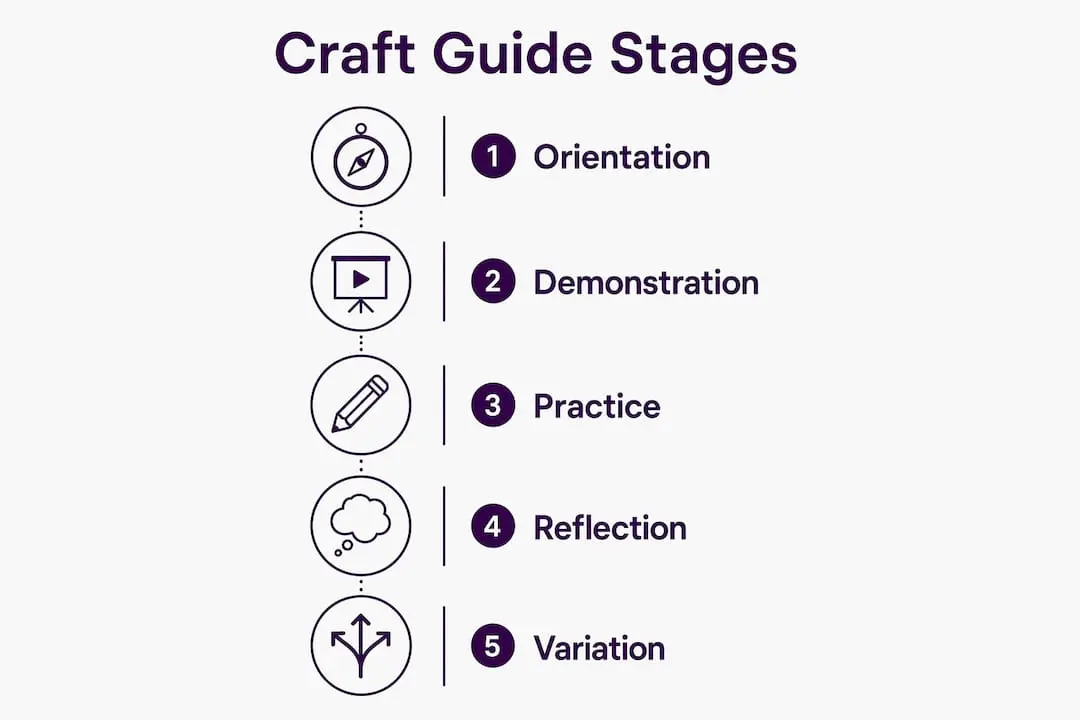
The value of educational crafts in inclusive settings also extends to communication. Craft activities create a shared focus that reduces the social pressure of direct conversation, making them particularly effective for learners who find verbal interaction challenging. Group card-making sessions, for example, generate natural dialogue about colour choices, technique decisions, and personal associations with the finished object, all without the self-consciousness that structured discussion can produce.
“Craft activities create a shared focus that reduces the social pressure of direct conversation, making them particularly effective for learners who find verbal interaction challenging.”
UNESCO’s practical guidance on embedding culture and arts into education stresses inclusive, context-relevant methods in both formal and community settings. The practical implication is that educational craft guides should reflect the cultural backgrounds and lived experiences of their users, not impose a single aesthetic standard. A card-making guide that draws on diverse decorative traditions, for instance, signals to learners from different backgrounds that their creative heritage is valued and relevant.
Can crafting with guides improve mental wellbeing?
Crafting is a non-pharmacological intervention for stress reduction, emotional regulation, and social connection, according to a 2025 Frontiers in Public Health network analysis of university students. This finding repositions craft from leisure activity to genuine health resource. The study identifies mindfulness, flow states, and social belonging as the primary pathways through which craft creation improves wellbeing. Each of these pathways is activated more reliably by structured, guided practice than by unstructured making.
Flow states, the experience of complete absorption in a task, require an activity pitched at the right level of challenge. Too easy and the mind wanders; too difficult and anxiety replaces focus. A well-calibrated educational craft guide manages this balance by sequencing tasks from simpler to more demanding within a single session. Paper-cutting exercises that begin with straight lines and progress to curved and layered designs, for example, keep the crafter in a productive zone of engagement throughout.
The social dimension of guided crafting is equally significant. The same Frontiers research notes that emotional release and social belonging are key pathways that well-structured craft guides can activate. Guides that include group roles, shared decision points, and collective reflection prompts create the conditions for genuine social connection rather than merely parallel activity in the same room. This is why craft circles and guided group workshops consistently report stronger wellbeing outcomes than solo crafting sessions, even when the projects are identical.
Process design is the critical variable. Guides that include pacing, group roles, and reflection moments are more effective than simple step lists for emotional and social benefits. A guide that tells you to “make a card” produces a card. A guide that structures your time, invites you to share your choices with a partner, and asks how the finished piece makes you feel produces a meaningful experience. For crafters managing stress, grief, or social isolation, that distinction is not trivial.
What is the maker mindset, and why do craft guides develop it?
The maker mindset is a disposition towards learning characterised by curiosity, experimentation, resilience in the face of failure, and satisfaction in the act of creation rather than only in the finished product. It is the craft equivalent of a growth mindset, and educational craft guides are one of the most effective tools for cultivating it deliberately.
The shift from instructive to reflective facilitation is the mechanism through which guides build this disposition. Springer’s 2026 maker education research identifies scaffolding and guided reflection as key for learning persistence. Scaffolding means the guide provides exactly as much support as the learner needs at each stage, then gradually withdraws it. A beginner card-maker might receive a fully scored and pre-cut template. An intermediate learner receives measurements and must score and cut independently. An advanced learner receives only a design brief and selects their own materials and methods. Each stage builds confidence and autonomy.
The table below contrasts instructive and reflective craft guides to clarify the practical difference:
| Feature | Instructive guide | Reflective guide |
|---|---|---|
| Primary goal | Complete the project | Develop the learner |
| Steps | Fixed sequence | Flexible with decision points |
| Reflection prompts | Absent | Present at key stages |
| Variation encouraged | Rarely | Consistently |
| Learner autonomy | Low | Progressively higher |
| Outcome measured | Finished object | Skill and confidence gained |
Guides that gradually transition learners from direct instruction to autonomous reflection and variation promote sustained engagement and build a maker mindset conducive to creativity and resilience. This is why the same printable card-making template can produce very different learning outcomes depending on whether it is accompanied by a reflective guide or used as a bare instruction sheet.
Pro Tip: After completing any guided project, spend five minutes sketching or noting three variations you could make using the same technique with different materials, colours, or themes. This single habit accelerates skill development faster than completing three additional identical projects.
The maker mindset also has a collaborative dimension. Guides that assign group roles, such as materials manager, quality checker, and design lead, teach learners to work creatively with others, negotiate decisions, and take responsibility for shared outcomes. These are skills that transfer directly into professional and community contexts, making the value of educational crafts extend well beyond the craft table itself.
Key takeaways
Educational craft guides deliver measurably better learning outcomes than unstructured making because they combine skill instruction, reflective practice, and adaptive scaffolding into a single coherent resource.
| Point | Details |
|---|---|
| Structured guides build real skills | Guides with orientation, demonstration, reflection, and variation stages develop transferable competence, not just finished projects. |
| Inclusive design benefits everyone | Guides with material adaptations, pacing flexibility, and observable skill targets serve diverse learners and improve outcomes across ability levels. |
| Guided crafting supports mental health | Well-structured guides activate flow states, emotional release, and social belonging, making craft a genuine wellbeing intervention. |
| Reflective facilitation builds the maker mindset | Scaffolded independence and reflection prompts develop curiosity, resilience, and creative confidence beyond the immediate project. |
| Cultural relevance strengthens engagement | Guides that incorporate diverse traditions and co-creation elements deepen learner identity connection and long-term motivation. |
The case for guides that go further than instructions
I have worked with craft content long enough to know that the most common complaint from hobbyists is not “I can’t find projects.” It is “I keep making things but I don’t feel like I’m actually getting better.” That frustration is almost always a guide problem, not a talent problem.
The crafters who progress most visibly are not the ones who complete the most projects. They are the ones who pause, assess, and deliberately vary what they do. A good educational craft guide builds that habit structurally. It does not leave reflection to chance or assume the learner will naturally interrogate their own process. It creates the conditions for improvement by design.
What I find most underappreciated about the benefits of craft guides is their role in reducing the anxiety that stops many people from trying new techniques at all. A guide that says “here is what this step should look like, here is what commonly goes wrong, and here is how to recover” removes the fear of irreversible mistakes. That reassurance is not hand-holding. It is the same function a good teacher performs, and it is what separates a learning resource from a mere instruction sheet.
My advice for anyone serious about developing their craft skills is to treat guide selection as seriously as material selection. Look for guides that explain the “why” behind each step, include at least one reflection prompt, and suggest at least one variation. If a guide cannot tell you why a particular fold or cut matters, it cannot teach you to make better decisions independently. And independent decision-making is ultimately what craftsmanship means.
— Rob
Explore craft guides and projects on Craftsuprint
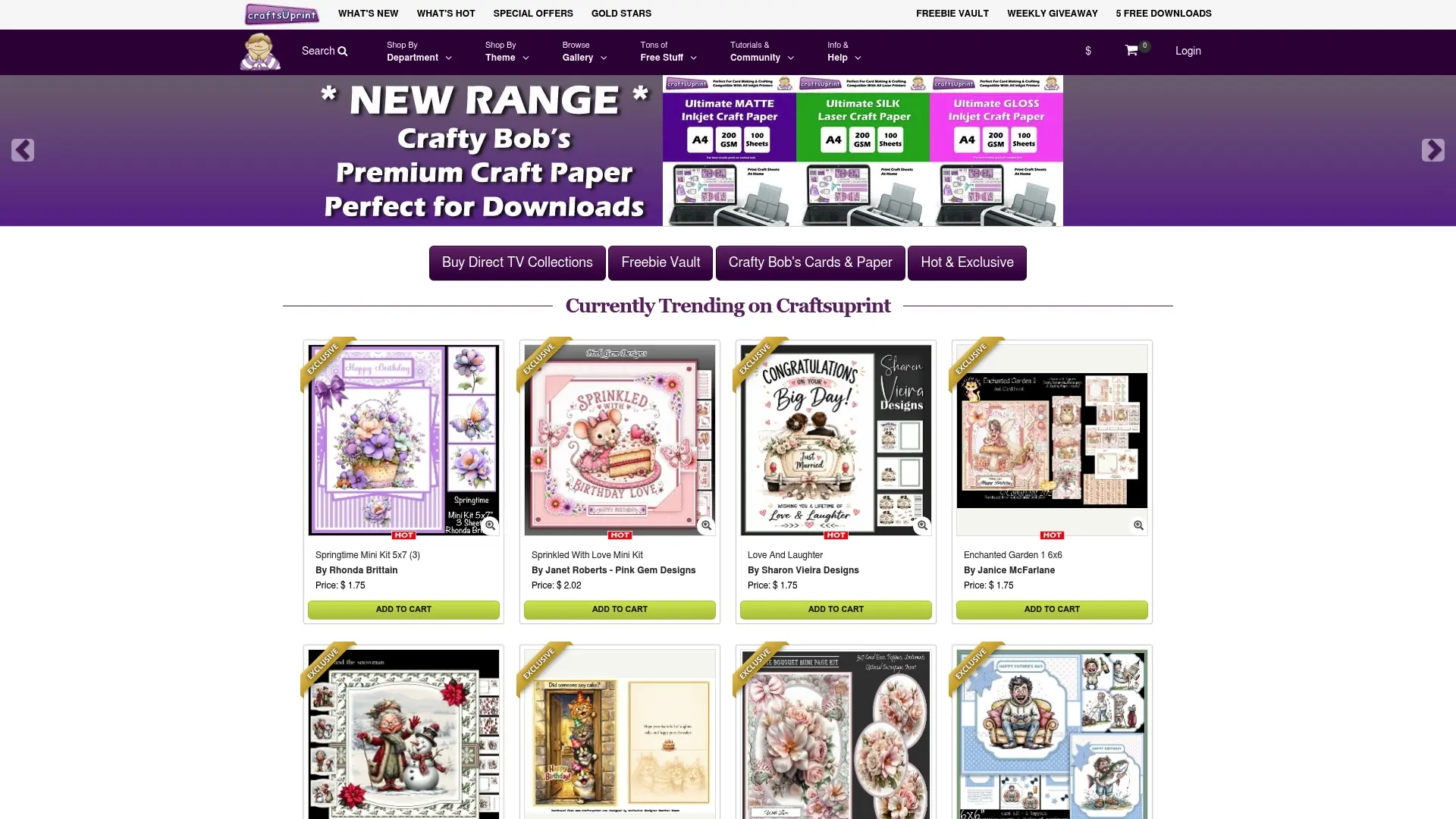
Craftsuprint offers an extensive library of craft downloads and tutorials designed to support exactly the kind of structured, skill-building practice this article describes. From card making kits and paper patterns to themed mini kits, every resource on the platform is built around printable projects that give you a clear starting point and room to develop your own creative direction. Whether you are working through a new technique for the first time or looking for a guided project to share with a group, Craftsuprint’s catalogue covers the full range of hobby crafting needs. The platform also supports independent designers, so the guides you find there reflect genuine creative expertise rather than generic templates. Start exploring and find the project that moves your skills forward.
FAQ
What are educational craft guides?
Educational craft guides are structured resources that combine step-by-step technique instruction with reflection prompts, skill objectives, and adaptation options. They are designed to develop competence and creative confidence, not simply produce a finished object.
How do craft guides differ from standard project instructions?
Standard project instructions tell you what to do. Educational craft guides explain why each step matters, invite you to reflect on your process, and encourage variation. This distinction is what produces lasting skill development rather than one-off project completion.
Are craft guides useful for learners with additional needs?
The CRAEFT programme’s research confirms that well-adapted craft guides produce meaningful participation and socioemotional development in learners with intellectual and motor impairments. The critical requirement is that guides include explicit material adaptations and observable skill targets.
Can guided crafting genuinely improve mental health?
A 2025 Frontiers in Public Health study found that craft creation practice improves emotional regulation, stress reduction, and social connection in university students. Guides that include pacing, group roles, and reflection moments produce stronger outcomes than simple step lists.
What should I look for when choosing a craft guide?
Choose guides that include a clear explanation of technique purpose, at least one reflection prompt, material adaptation suggestions, and an invitation to vary the project. These features signal a guide designed for learning rather than production alone.