
Why support independent crafters: benefits that matter
TL;DR:
- Supporting independent crafters promotes local economies, preserves cultural heritage, and strengthens emotional bonds. Buying directly from makers ensures better income flow and encourages sustainable, transparent production practices.
Supporting independent crafters is defined as the deliberate choice to buy from individual makers, small studios, and artisan designers rather than mass-market retailers. That choice delivers economic, cultural, and emotional returns that no factory-made product can replicate. The reasons to support independent crafters go far beyond sentiment. They connect directly to job creation, cultural preservation, environmental responsibility, and the psychology of giving. Whether you buy handmade cards, paper crafts, or textile pieces, your purchase is a signal with real consequences.
Why support independent crafters: the economic case
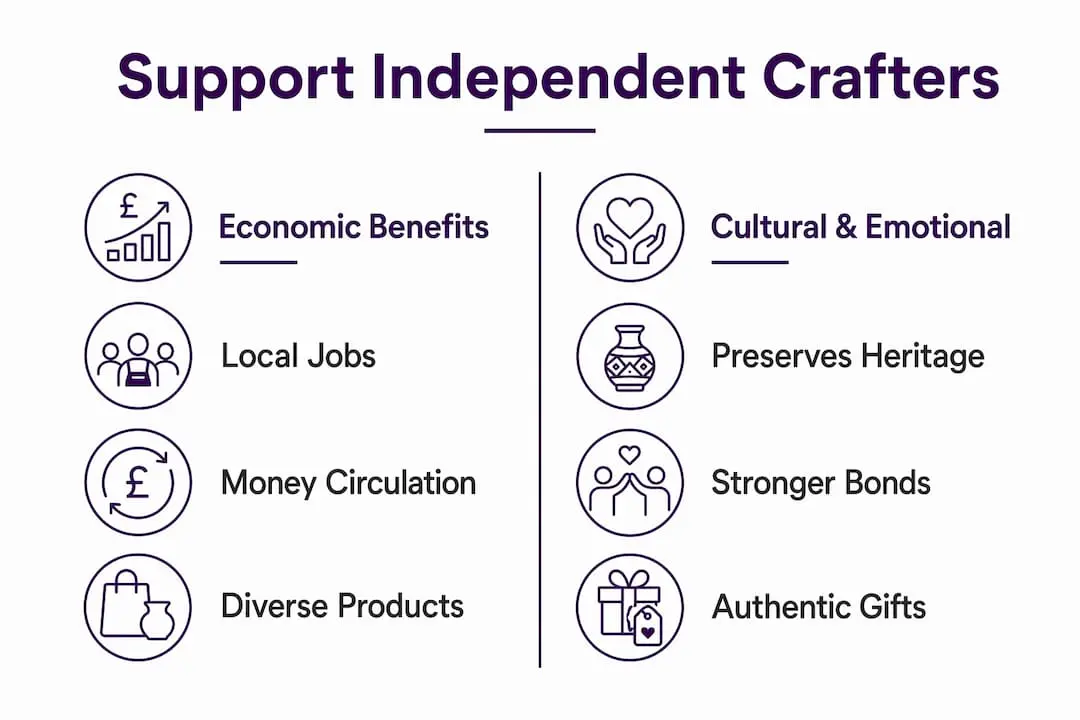
Buying from independent makers keeps money circulating within creative ecosystems rather than funnelling it to large corporations. The World Bank documents this clearly. In Sierra Leone, creative industries contribute 4.5% of GDP and 10% of formal employment, with fashion and textiles alone accounting for over 11,000 formal jobs. That figure shows how craft is not a hobby sector. It is a genuine economic engine in communities where alternative employment is scarce.
The challenge is that independent crafters rarely receive institutional backing. In the United States, no government funding exists for independent fashion designers, and formal award schemes are limited. Consumer purchasing therefore becomes the most reliable demand signal available to small makers. When you buy directly from a crafter, you replace the institutional support that does not exist.
Small creative firms also diversify local economies in ways that large retailers cannot. A single independent textile maker in a rural community may employ local dyers, pattern cutters, and packaging suppliers. That network effect multiplies the value of each purchase beyond the item itself.
Pro Tip: When choosing between two similar handmade products, pick the one where the maker lists their location, production method, and materials. That transparency signals a genuine local economic connection.
The benefits of supporting crafters are not limited to developing economies. Craft fairs, independent online marketplaces, and platforms like Craftsuprint all create demand pipelines that sustain creative livelihoods in the UK and beyond.
- Buying directly from makers removes intermediary markups, meaning more money reaches the creator.
- Small-batch production supports local supply chains for materials, packaging, and logistics.
- Consumer demand acts as proof of viability, helping crafters access loans and business support.
- Platforms that host independent designers, such as Craftsuprint, give makers market access they could not build alone.
Does buying handmade preserve cultural heritage?
The importance of independent artisans extends well beyond economics. Handmade craft carries cultural knowledge that cannot be encoded in a factory specification sheet. Techniques passed down through generations, regional dyeing methods, and pattern traditions are alive only as long as someone practises them.
India’s handicraft sector illustrates the scale of what is at stake. Handicraft exports reached ?33,122.79 crore in 2024–25, with artisan clusters actively safeguarding techniques tied to Geographical Indication (GI) tagged crafts. GI status is a legal designation that links a product to its place of origin and the specific methods used to make it. Without active consumer demand, those clusters shrink, and the techniques disappear with them.
The challenge of generational knowledge transfer is real and urgent. Younger generations in craft communities often leave for urban employment when craft income is insufficient. The result is a skills gap that cannot be filled by training programmes alone. Consumer purchasing creates the income that makes staying viable.
| Factor | GI-tagged artisan craft | Mass-produced equivalent |
|---|---|---|
| Cultural authenticity | Legally verified, place-specific | None |
| Skill transmission | Active, generational | Not applicable |
| Rural livelihood impact | Direct, community-wide | Minimal |
| Product uniqueness | High | Low |
| Price premium | Yes, justified by provenance | No |
Community resilience is another benefit that rarely appears in the conversation about why choosing handmade items matters. Craft clusters create social networks, shared infrastructure, and collective identity. When those clusters thrive, the communities around them are more stable and more inclusive, particularly for women and marginalised groups who make up a large proportion of artisan workforces.
Pro Tip: Look for the GI tag or a maker’s regional designation when buying artisan crafts. It confirms the product is genuinely tied to a specific tradition and community, not just marketed as handmade.
Craftsuprint’s artisan crafting guide explains how traditional skills translate into modern craft projects, making it easier to understand what you are supporting when you buy from independent makers.
Is handmade always more sustainable than mass production?
The environmental case for handmade goods is more complicated than most advocates admit. Handmade textiles generally consume less mechanical energy than industrial equivalents, but they can generate higher carbon emissions when shipped individually over long distances. Industrial production saves resources through scale but carries a higher absolute environmental impact. Neither model is automatically greener.
Sustainability depends on the specific metrics you measure. Energy consumption, water use, chemical inputs, and supply chain length all produce different results depending on the product and the maker. A handmade ceramic mug fired in a wood kiln may have a higher carbon footprint than one produced in a modern gas-fired factory. A hand-dyed textile made with natural pigments near its point of sale may be far cleaner than an industrially dyed equivalent shipped from the other side of the world.
The practical implication is that consumers should ask questions rather than assume. Transparency from the maker is the most useful signal available.
- Ask where the raw materials come from and how far they have travelled.
- Check whether the maker uses natural or synthetic dyes, finishes, and adhesives.
- Consider the distance between the maker and your delivery address.
- Look for makers who describe their production process in specific terms, not just marketing language.
- Prefer small-batch production over made-to-order models that generate excess stock.
The honest position is that buying handmade is not a guaranteed environmental win. It is, however, a context in which transparency is more achievable. A single independent maker can answer your questions directly. A global manufacturer cannot. That accountability gap is itself a reason to favour independent crafters when environmental credentials matter to you.
How do handmade products create stronger emotional connections?
Handmade gifts carry a psychological weight that manufactured products cannot replicate. Research from SleekNova describes this as the handmade effect: buyers are willing to pay more for handmade gifts when their motivation is affection rather than performance. The effect is strongest when buying for close relationships and diminishes for more distant ones.
The mechanism is straightforward. Craftsmanship makes human attention visible. Every stitch, cut, or painted detail is evidence that a person spent time and care on the object. The maker’s love becomes evidence of the buyer’s love, strengthening the emotional connection between giver and recipient. That is a function no mass-produced item can perform, regardless of its technical quality.
“Handmade gift purchases are not about features but about conveying love through the visible signs of human attention and care in craftsmanship.”
This matters practically when choosing gifts. A handmade card from Craftsuprint, printed and assembled by the giver, communicates something a shop-bought card cannot. The time invested is part of the message.
Here are four practical ways to choose handmade gifts that convey care effectively:
- Match the craft to the recipient’s interests. A hand-illustrated botanical print means more to a gardener than a generic decorative item.
- Choose makers whose process is visible. When the recipient can see how the item was made, the emotional value increases.
- Personalise where possible. Many independent crafters offer customisation that mass producers cannot.
- Give the maker’s story alongside the gift. Sharing who made the item and why you chose them adds a layer of meaning that the object alone cannot carry.
The advantages of handmade goods in gift-giving contexts are therefore both psychological and relational. They create a three-way connection between maker, giver, and recipient that a factory product simply does not support.
Practical ways to support independent crafters effectively
The impact of buying from crafters depends on how you buy, not just whether you buy. Transparency is the most important criterion. Makers who share their sourcing, production batch sizes, and personal identity give you the information needed to make a genuinely supportive purchase. Small-batch makers face perception challenges around variety and scale, and clearer information from the maker directly reduces the hesitation buyers feel.
Craft fairs remain one of the most direct ways to support local artists. They remove all intermediaries, allow you to ask questions directly, and create the kind of community visibility that mentorship and community provide for independent designers. Online platforms that curate independent makers, such as Craftsuprint, serve a similar function in the digital space.
Social media sharing is underrated as a support mechanism. Sharing a maker’s work with your network costs nothing and can generate sales that no advertising budget would have reached. For independent crafters with limited marketing resources, word-of-mouth from genuine customers is the most effective promotional tool available.
- Buy directly from the maker’s own shop or platform where possible.
- Share purchases on social media and tag the maker.
- Leave detailed reviews that describe the product’s quality and the buying experience.
- Return to the same makers rather than always seeking novelty.
- Attend local craft fairs and markets at least once per season.
Pro Tip: Before buying from an independent maker online, check whether they list their production method, batch size, and materials. Makers who provide this detail are more likely to deliver consistent quality and are genuinely invested in their craft.
Craftsuprint’s guide on selling handmade card designs offers a useful perspective on the challenges independent crafters face in reaching customers, which helps buyers understand the value of their direct support.
Key takeaways
Supporting independent crafters delivers economic, cultural, emotional, and environmental value that mass production cannot match, making every informed purchase a meaningful act.
| Point | Details |
|---|---|
| Economic impact is real | Creative industries contribute measurably to GDP and employment, especially where institutional support is absent. |
| Cultural preservation requires buyers | GI-tagged artisan crafts survive only when consumer demand makes practising them financially viable. |
| Sustainability needs scrutiny | Handmade is not automatically greener. Ask makers specific questions about materials, energy, and supply chains. |
| Emotional value is evidence-based | The handmade effect shows buyers pay more for crafted gifts because craftsmanship visibly signals care. |
| Transparency is the key criterion | Makers who share sourcing, batch size, and process details deserve preference and repeat custom. |
The part of this conversation that most people skip
I have spent years watching the handmade craft sector get flattened into two lazy narratives. The first is pure romance: handmade is always better, always greener, always more meaningful. The second is pure scepticism: it is expensive, inconsistent, and impractical. Neither is honest.
What I have found is that the value of supporting independent crafters is entirely conditional on the quality of the relationship between buyer and maker. When a buyer takes the time to understand who made something and why, the purchase becomes genuinely different from anything a retailer can offer. When a buyer simply pays a premium for a “handmade” label without asking any questions, they may be supporting nothing more than clever marketing.
The environmental complexity is the part most advocates avoid. I have seen beautifully made products shipped in excessive packaging from the other side of the world, with no information about materials or process. That is not sustainable craft. It is a handmade aesthetic applied to an industrial supply chain. Buyers who care about this need to ask harder questions.
The economic case, by contrast, is more straightforward than people realise. When creative industries in places like Sierra Leone account for a significant share of formal employment, and when independent designers in wealthier markets receive no government support, the consumer’s purchasing decision carries genuine weight. You are not just buying a product. You are functioning as the primary funding mechanism for an entire category of creative work.
My honest advice is to support fewer makers more consistently rather than buying widely and shallowly. Find two or three independent crafters whose work and values you understand, and return to them. That kind of sustained demand is worth far more than occasional impulse purchases spread across dozens of makers.
— Rob
Craftsuprint: where independent craft comes to life
Craftsuprint connects craft enthusiasts directly with independent designers through a curated marketplace of downloadable craft projects, card-making kits, paper patterns, and craft supplies.
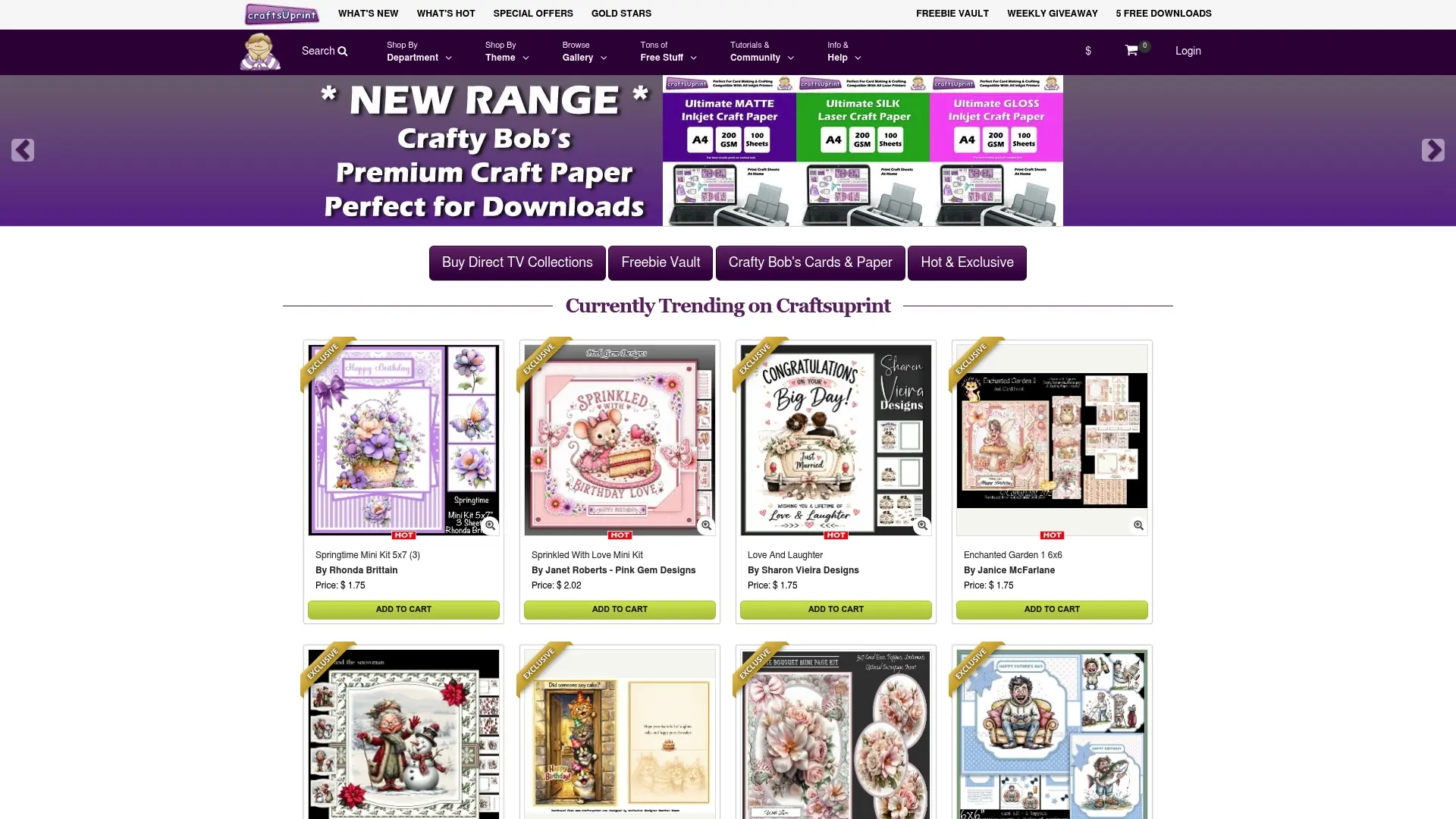
Every design on the platform comes from an independent creator, meaning your purchase supports a real maker rather than a corporate catalogue. The platform’s classified listings cover everything from textile crafts to paper projects, giving you direct access to a wide range of independent creative work. Craftsuprint members also receive exclusive access to free downloads and special offers. Claim your free members’ gift and start building a craft collection that genuinely supports independent makers.
FAQ
Why does buying from independent crafters matter economically?
Independent crafters receive little or no institutional funding in most markets, making consumer purchases the primary income source that sustains their work. In creative economies like Sierra Leone, craft industries support 10% of formal employment, showing the scale of what consumer demand can maintain.
Are handmade products always better for the environment?
Handmade products are not automatically more sustainable than industrially made ones. Environmental impact depends on energy use, water consumption, chemical inputs, and shipping distance, so buyers should ask makers specific questions about their process.
What is the handmade effect?
The handmade effect is the documented tendency for buyers to pay more for handmade gifts when their motivation is affection rather than utility. Research from SleekNova shows the effect is strongest for close relationships, where craftsmanship visibly signals care.
How can I tell if an independent crafter is genuinely transparent?
Look for makers who list their materials, production batch size, and location clearly on their product pages. Makers who provide this detail reduce buyer hesitation and demonstrate genuine investment in their craft.
Does supporting independent designers require spending more money?
Not always. Digital craft downloads from platforms like Craftsuprint offer independent designer work at accessible price points. The premium on physical handmade goods reflects genuine labour and material costs, not arbitrary pricing.