
Why ready-to-print kits make crafting easier
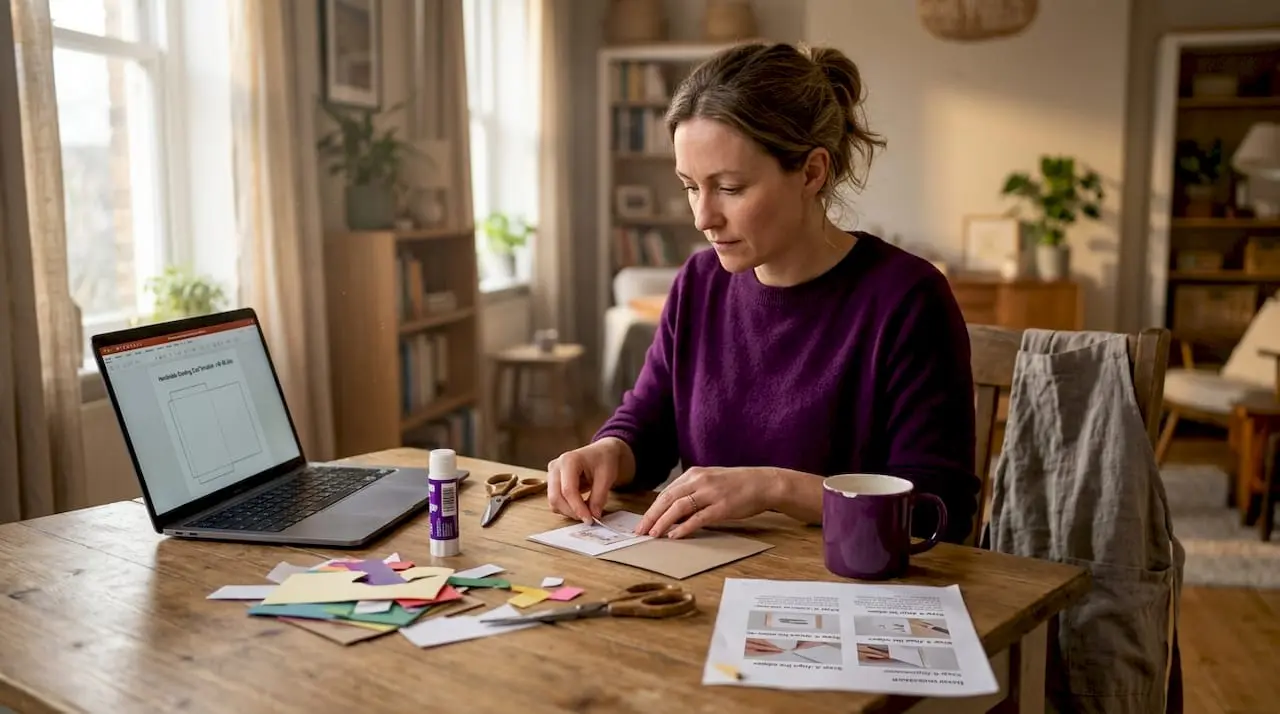
Too much choice is the enemy of creativity. You sit down at your crafting table, surrounded by paper, stamps, ribbons, and ideas — and then nothing happens. That creative paralysis is real, and it affects hobbyists at every skill level. Ready-to-print kits offer a surprisingly effective solution: a structured starting point that hands you a clear path from blank page to finished project, without stripping away the personal satisfaction of making something yourself. This article explains exactly how these kits work, why they genuinely free rather than restrict your creativity, and how to decide whether they suit your crafting goals.
Table of Contents
- What are ready-to-print kits?
- How structure helps (and doesn’t hinder) creativity
- The biggest benefits: time, cost, and convenience
- Who should use ready-to-print kits?
- Why the right balance between guidance and freedom is the key to joyful crafting
- Find your perfect ready-to-print kit
- Frequently asked questions
Key Takeaways
| Point | Details |
|---|---|
| Guided creativity | Ready-to-print kits offer crafters structure that encourages creativity without overwhelming them with choices. |
| Time and stress saver | These kits help avoid creative paralysis and wasted supplies, making it easier to start and finish projects. |
| Flexible for all skill levels | Both beginners and experienced crafters can benefit and personalise their results with kits. |
| Bridges inspiration to action | Kits empower you to turn ideas into finished crafts by eliminating common roadblocks. |
What are ready-to-print kits?
Before understanding the specific benefits, it helps to clarify what these kits actually include and how they are used.
A ready-to-print kit is a digital download containing everything you need to complete a specific craft project, minus the physical supplies. When you purchase one, you receive files that you print at home, then cut, fold, assemble, or embellish according to the provided instructions. There is no waiting for delivery, no hunting down specialist materials, and no starting from a blank canvas unless you choose to.
Most kits include the following components:
- Printable templates: Pre-designed layouts, shapes, and frames ready to print on card stock or standard paper
- Step-by-step instructions: Clear guidance on assembly order, folding lines, and finishing techniques
- Add-on elements: Extras such as sentiment tags, decorative borders, toppers, or inserts to personalise the finished piece
- Size and paper guidance: Recommendations for paper weight, printer settings, and cutting tools
The range of projects suited to these kits is broad. Card making kits are among the most popular, covering everything from birthday and anniversary cards to seasonal designs for Christmas, Easter, and Halloween. Wall art prints, gift boxes, favour bags, bookmarks, and home decor panels all translate beautifully into kit format. Seasonal crafts — think advent calendars or Valentine’s gift wrapping — also feature heavily in the digital craft marketplace.
The popularity of these kits has grown substantially among hobbyists for one central reason: they deliver results. As paint-by-numbers kits demonstrate in the home decor world, offering “just enough” guidance removes uncertainty without removing the hands-on creative experience. Hobbyists finish projects, feel proud, and reach for their craft supplies again the following weekend.
How structure helps (and doesn’t hinder) creativity
Knowing what these kits entail, it’s time to tackle the myth that structure limits, rather than enables, genuine creativity.
Many crafters worry that following a template means their work isn’t truly their own. This is a very understandable concern, but it’s worth examining whether it reflects reality or just an idea we’ve absorbed from creative culture. The truth is that some of the most satisfying creative experiences happen within constraints. Poets work within metre and rhyme. Architects design within the boundaries of space and budget. Crafters who use structured kits often produce more finished, polished work than those who try to build from nothing every time.
The psychological term for that overwhelming feeling of too many options is “choice overload,” and it’s genuinely demotivating. When you start a project with no template and no guide, every single decision — size, layout, colour palette, embellishment placement — requires mental energy. After a while, your brain is too tired to feel creative at all.
Structured kits sidestep this problem entirely. A numbered kit approach removes the fear of getting it wrong, making the whole process more approachable and genuinely fun. When you know the template has been tested and the proportions are right, you can focus your creative energy on the parts that matter to you: the colours you choose, the sentiment you write, the ribbon you tie.
“Creativity doesn’t require chaos. Sometimes the most imaginative work happens when the structural decisions have already been made for you.”
Here is how to personalise a kit and put your own stamp on the finished project:
- Swap the colour palette: Print the template on coloured card stock or use markers to change the default tones entirely
- Layer embellishments: Add buttons, gems, washi tape, or dried flowers on top of the printed design
- Change the sentiment: Most card kits leave space for your own words; write something personal rather than using the generic text
- Mix elements from different kits: Combine toppers from one download with backgrounds from another to create a hybrid design
- Adjust the scale: Print at 80% for a smaller card format or at 115% for a statement piece
Pro Tip: If a kit feels too restrictive, challenge yourself to change just one element from how it was designed. Swapping a single colour or adding an unexpected texture is often all it takes to make the piece feel genuinely yours, and it builds your confidence to make bolder changes next time.
Exploring craft supply tutorials alongside your kit is a great way to pick up techniques that help you customise more effectively as you grow.
The biggest benefits: time, cost, and convenience
With a better grasp of how structure and guidance support creativity, let’s examine the practical rewards of using these kits.
Time is the resource most hobbyists are shortest on. Designing a card or home decor project from scratch involves sourcing inspiration, sketching layouts, testing proportions, and adjusting until something works. That process can take hours before you’ve cut or stuck a single thing. A ready-to-print kit collapses all of that preparation into a quick download and print.
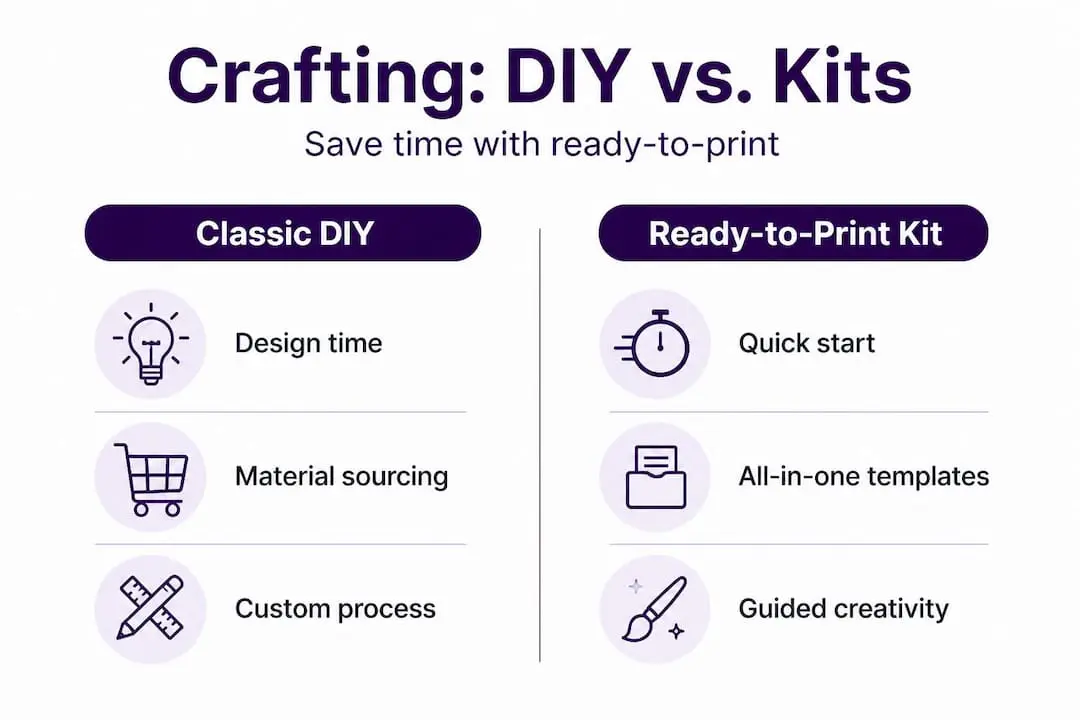
| Feature | Classic DIY | Ready-to-print kit |
|---|---|---|
| Design time | 1 to 3 hours | None required |
| Material sourcing | Shopping trip or multiple orders | Only basic supplies needed |
| Instructions | Self-devised | Included and tested |
| Risk of wasted materials | High (trial and error) | Low (clear guidance) |
| Finishing quality | Variable | Consistent |
| Cost per project | Often higher (over-buying) | Predictable and lean |
| Suitable for beginners | Can be daunting | Ideal starting point |
The cost savings are easy to overlook until you tally them up. Classic DIY crafting almost always involves buying supplies “just in case,” which means leftover rolls of card stock, barely-used embellishment packs, and half-finished background papers. Ready-to-print kits help you avoid that waste. You know exactly what you need before you print a single page.
There are several other practical bonuses worth mentioning:
- Less trial and error: Because the template has already been designed and tested by a professional, you avoid the frustration of pieces that don’t fit together or proportions that look wrong when assembled
- More finished projects: Starting with a clear structure means you actually complete things, which is genuinely motivating and builds a body of work you can gift or display
- Consistent quality: Even on off days when your creative instincts feel muted, you can produce something polished and attractive
- Digital storage: Your kit lives in a folder on your computer, ready to print again whenever you need a repeat or want to try a colour variation
Project downloads eliminate the pressure that comes with blank-page crafting, allowing you to get started immediately and finish with far less frustration, all while retaining the hands-on, tactile experience that makes crafting so rewarding in the first place, as structured kit approaches in related hobbies consistently demonstrate.
Who should use ready-to-print kits?
Having reviewed the general benefits, it’s helpful to consider which types of crafters gain most — or least — from this approach.
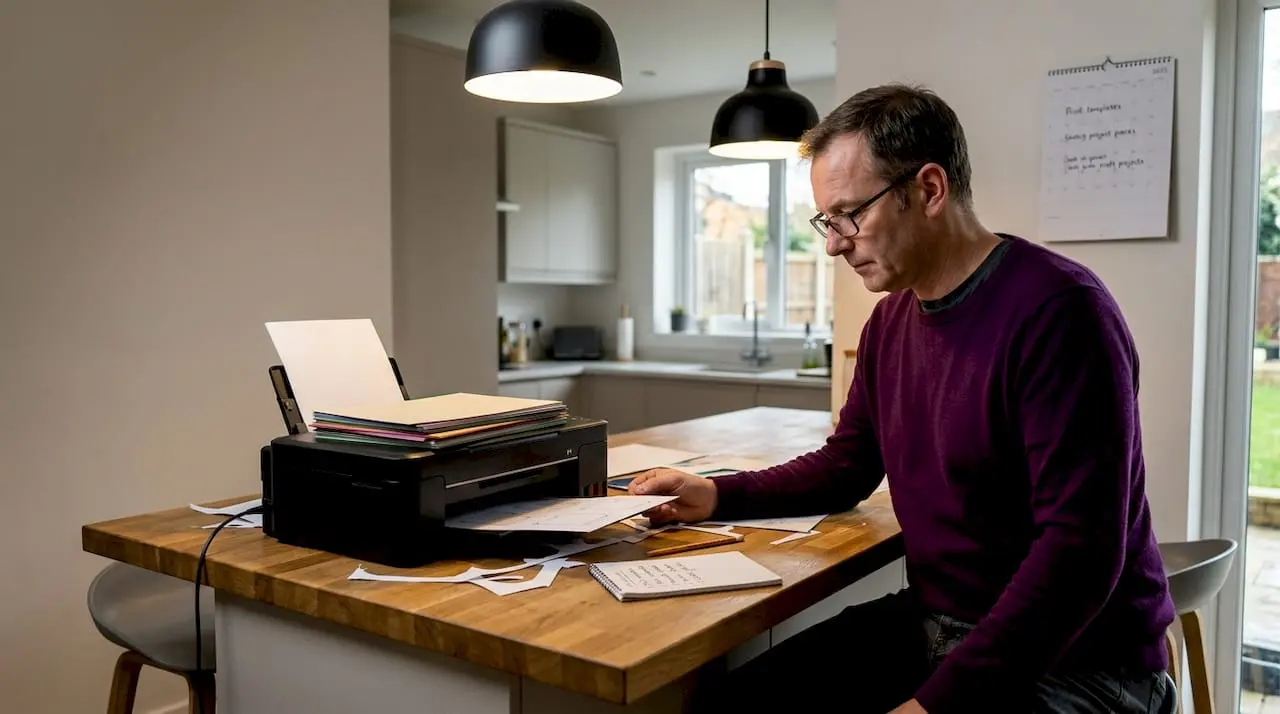
Not every crafter has the same needs, and ready-to-print kits are genuinely better suited to some situations than others. Kits are especially valuable when you want to avoid making mistakes, providing both confidence and the convenience of having the design work done for you before you even begin.
Here are the situations where a ready-to-print kit is likely to be the right choice:
- You are new to crafting: Kits give you a clear, achievable first project that ends in success rather than a crumpled pile of failed attempts
- You are short on time: A kit lets you craft on a Tuesday evening without needing a Sunday afternoon of preparation first
- You want reliable, gift-worthy results: When a birthday card needs to look genuinely impressive, a well-designed kit delivers every time
- You feel intimidated by blank-page design: Kits remove the anxiety of “where do I even start?” entirely
- You want to build a consistent crafting habit: Regular small wins from kit-based projects keep motivation high and your craft table in use
There are crafters who may find kits less satisfying. Advanced crafters who have developed strong design instincts and want to experiment with unconventional formats may feel constrained by some kits. Similarly, those who specifically enjoy the process of designing from scratch as part of their creative practice may prefer to use kits only occasionally, as a change of pace rather than a regular workflow.
The most honest way to think about kits is as a bridge between inspiration and action. You have seen a beautiful card on a crafting website; you want something like it on your desk by this evening. A kit makes that possible. Experienced crafters who browse crafting testimonials often note that kits helped them rediscover their love of crafting after a period of stalling, precisely because the barrier to entry became so low.
Pro Tip: If you are unsure whether kits suit your style, start with a single themed download for a project you have been putting off. Use it as designed first, then try one personalised version. Most crafters who try this approach find they enjoy the experience far more than they expected, and it frees them up to attempt more adventurous independent projects alongside.
Why the right balance between guidance and freedom is the key to joyful crafting
Here is something most articles about craft kits won’t say plainly: even highly skilled crafters benefit from a structured shortcut sometimes, and there is nothing creatively diminished about admitting that.
There is a quiet snobbery in the crafting world around the idea of “cheating” with templates or kits. This idea suggests that real creativity means starting from nothing every time, and that using someone else’s design work is somehow less authentic. That view misunderstands how creativity actually functions. Every skilled crafter draws on techniques, patterns, and conventions that someone else developed. Using a kit is simply making that process transparent.
Consider this scenario. You have been meaning to make a set of handmade Christmas cards for three years. Every November you gather your supplies, open a blank document, stare at it, and then quietly abandon the project in favour of a shop-bought box. The problem was never your skill or your enthusiasm — it was the invisible weight of designing twelve matching cards from scratch.
Now imagine downloading a festive card kit instead. Within an hour you have printed, cut, and assembled your first card. It looks beautiful. You make three more. By the weekend you have a full set, each one slightly different because you swapped colours and changed the sentiment on each one. That is not “less creative” than the blank-page approach — it is more creative, because you actually made something.
The crafters who get the most from their hobby are those who use every tool available to them without guilt. Kits, tutorials, templates, and community inspiration are all legitimate parts of a rich creative practice. The goal of crafting is joy, and ready-to-print kits deliver it reliably. Use them as springboards, build your confidence and your skills through them, and then push further when you are ready. That is not a compromise — it is smart creative practice.
Find your perfect ready-to-print kit
Ready to see the benefits for yourself? Here is where you can start experimenting.
Craftsuprint brings together hundreds of professionally designed printable projects, with something to suit every taste and skill level. Whether you are looking for themed seasonal designs, elegant everyday cards, or decorative home pieces, the range is genuinely broad.
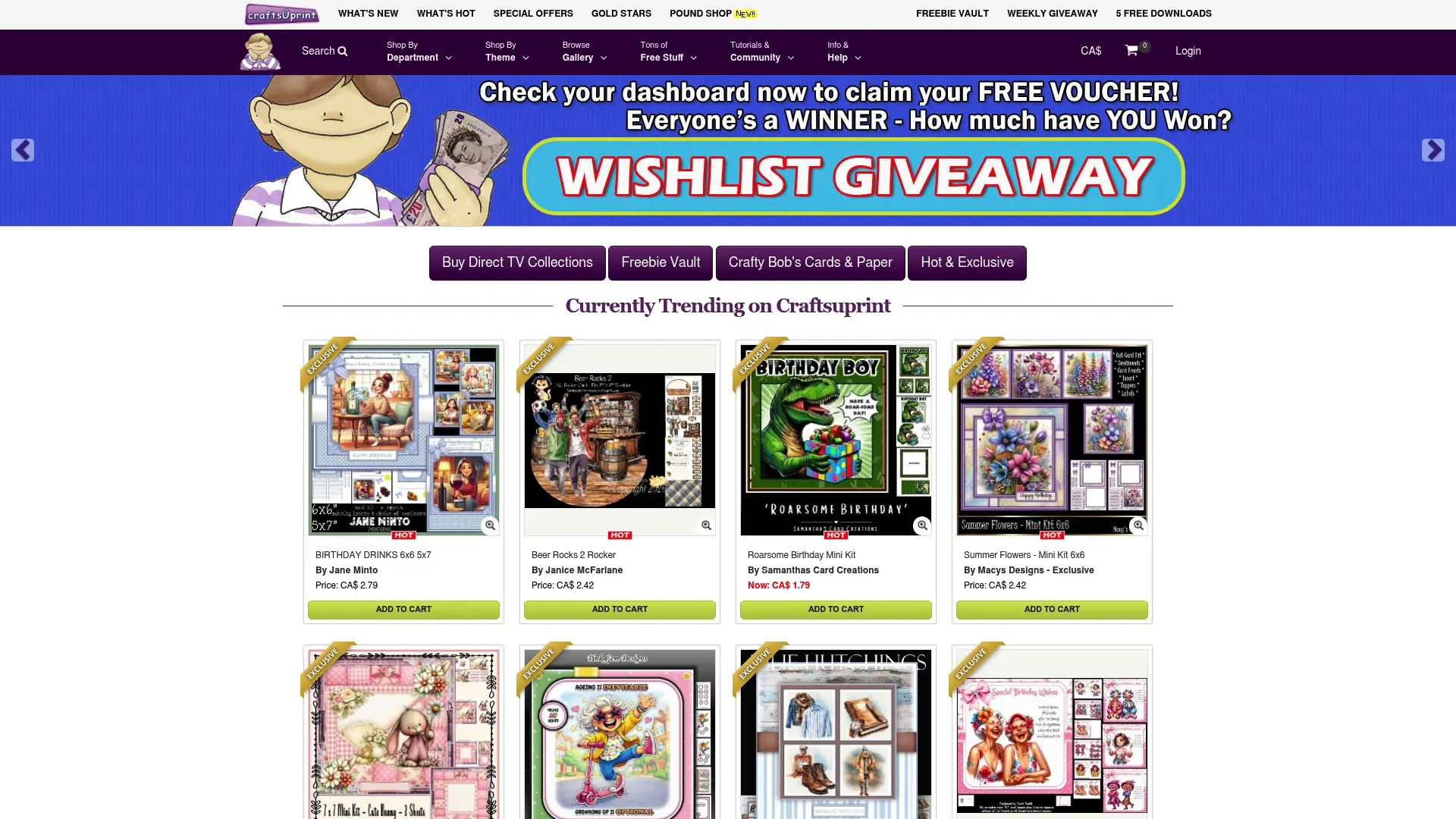
Browsing the card making downloads on Craftsuprint is the easiest way to find a kit that matches your next project. You will also find community inspiration, designer spotlights, and regular free downloads that let you try the format before committing. Independent designers on the platform bring real variety and originality to the catalogue, so you are rarely short of something fresh and exciting to try. Your next finished project is closer than you think.
Frequently asked questions
Do ready-to-print kits come with all necessary materials included?
Most kits provide digital patterns and instructions; you will usually need to supply basic tools and paper, but all design and steps are included. All templates and steps are provided within the download, mirroring the clarity of numbered home decor kits.
Are these kits only for beginners, or suitable for experienced crafters?
Ready-to-print kits are valuable for crafters of all skill levels, especially when you want a quick, satisfying project without the design prep work. Approachable structure reduces creative paralysis whether you have been crafting for one month or ten years.
How much customisation is possible with a ready-to-print kit?
You can personalise most kits with your choice of colours, embellishments, paper stocks, and finishing touches to make the result uniquely yours. Kits provide structure while leaving plenty of room for individual creative expression.
What if I want to design my own project?
You can always move on to fully independent DIY after gaining confidence with kits; they are a starting point, not a permanent constraint. Kits build confidence and help remove the fear of mistakes, making the leap to original design feel far less daunting.