
Why card makers use patterned paper: the real reasons
TL;DR:
- Patterned paper provides an instant, coordinated background that saves time and enhances card-making efficiency.
- Using it regularly improves skills like cutting, layering, and color matching, especially in batch production.
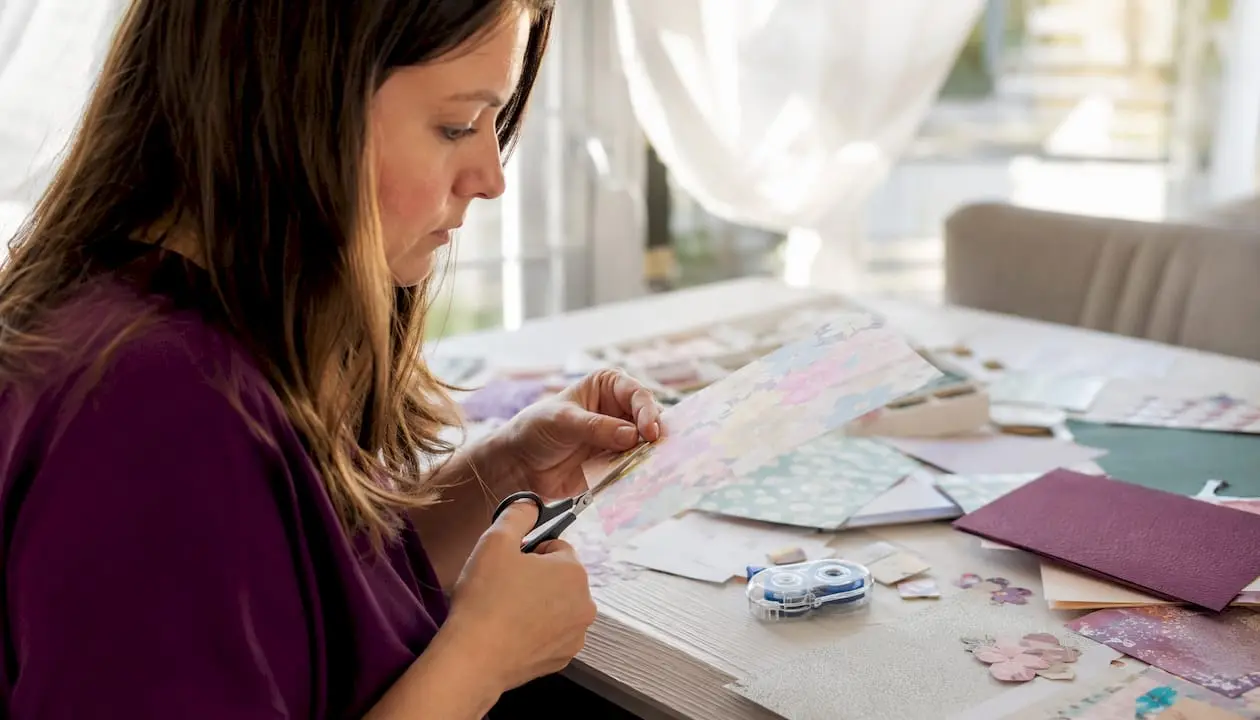
Patterned paper is defined as pre-printed decorative paper that provides a ready-made colour palette, background design, and visual texture in a single sheet. Card makers rely on it because it removes the need for manual ink blending, background stamping, or hand colouring, cutting production time significantly. A well-chosen sheet of patterned paper does the design work before you pick up a single stamp. Craftsuprint stocks a wide range of card and paper supplies that show just how central this material has become to modern card making. Whether you are new to the craft or producing cards in batches, understanding why card makers use patterned paper will change how you approach every project.
Why do card makers use patterned paper as a foundation?
Patterned paper acts as a ready-made colour palette and decorative background, saving significant time by eliminating manual ink blending or colouring. That single fact explains why it sits at the heart of so many card making workflows.
The benefits of patterned paper as a foundation layer are concrete and practical:
- Instant design consistency. One sheet establishes the colour story for the entire card. You match your cardstock, ribbon, and embellishments to what is already printed, rather than building a palette from scratch.
- Reduced background work. A patterned sheet replaces the need to stamp, sponge, or paint a background. That step alone can save ten minutes per card.
- Built-in visual depth. Layering a patterned panel over a plain card base creates dimension without any additional tools. The contrast between the two surfaces does the visual heavy lifting.
- Easy embellishment pairing. Pre-coordinated patterned paper simplifies colour matching for cardstock and ink, removing guesswork for card makers. Stamps, die cuts, and stickers placed over a coordinated background look intentional rather than accidental.
Pro Tip: When selecting a patterned sheet, choose one that contains at least three colours you already own in cardstock. That guarantees a coordinated card without buying anything new.
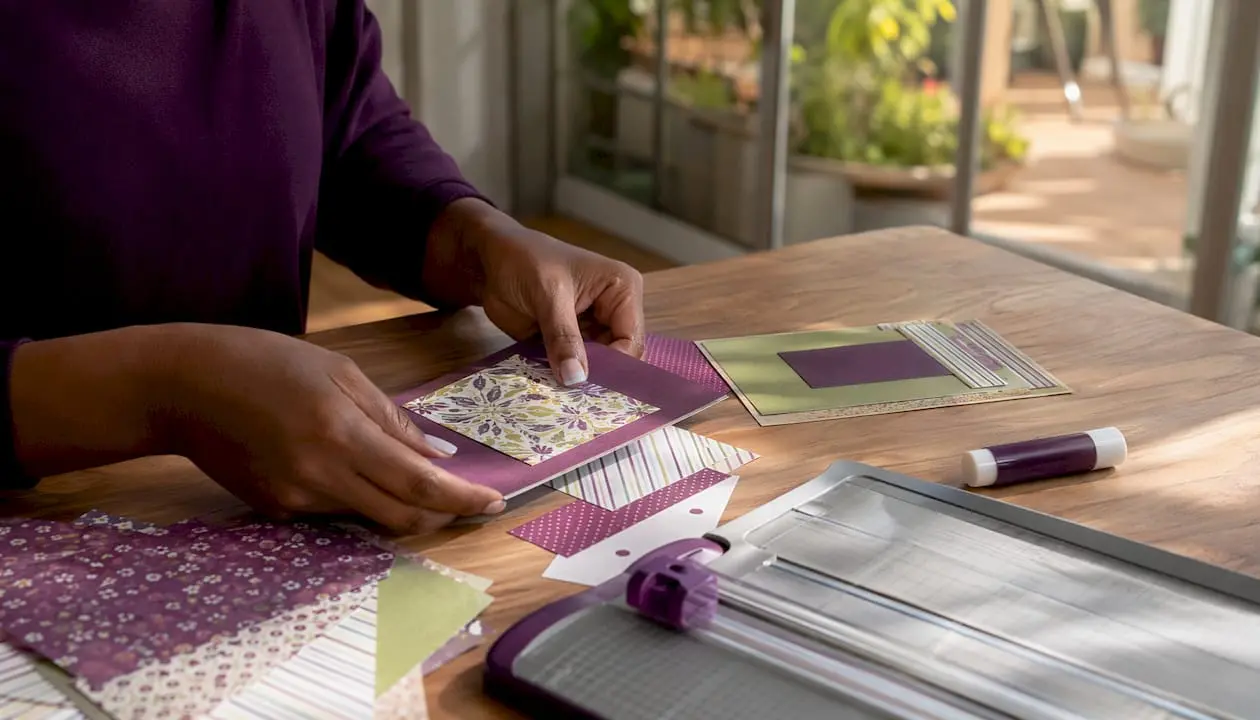
Patterned paper also supports layering techniques that would otherwise require advanced skill. A beginner can place a die-cut sentiment over a floral patterned panel and produce a card that looks considered and professional. The paper carries the design weight so the maker can focus on placement and proportion.
How does patterned paper support crafting efficiency and skill development?
Patterned paper does more than decorate. It actively builds the skills that make card makers faster and more confident over time.
Batch production and template use
Card makers who work in batches rely on patterned paper to standardise their layouts. When every card in a run uses the same sheet cut to the same dimensions, the cutting, scoring, and assembly become repetitive in the best way. Repetition builds muscle memory. You cut straighter, score more accurately, and assemble faster with each card you make.
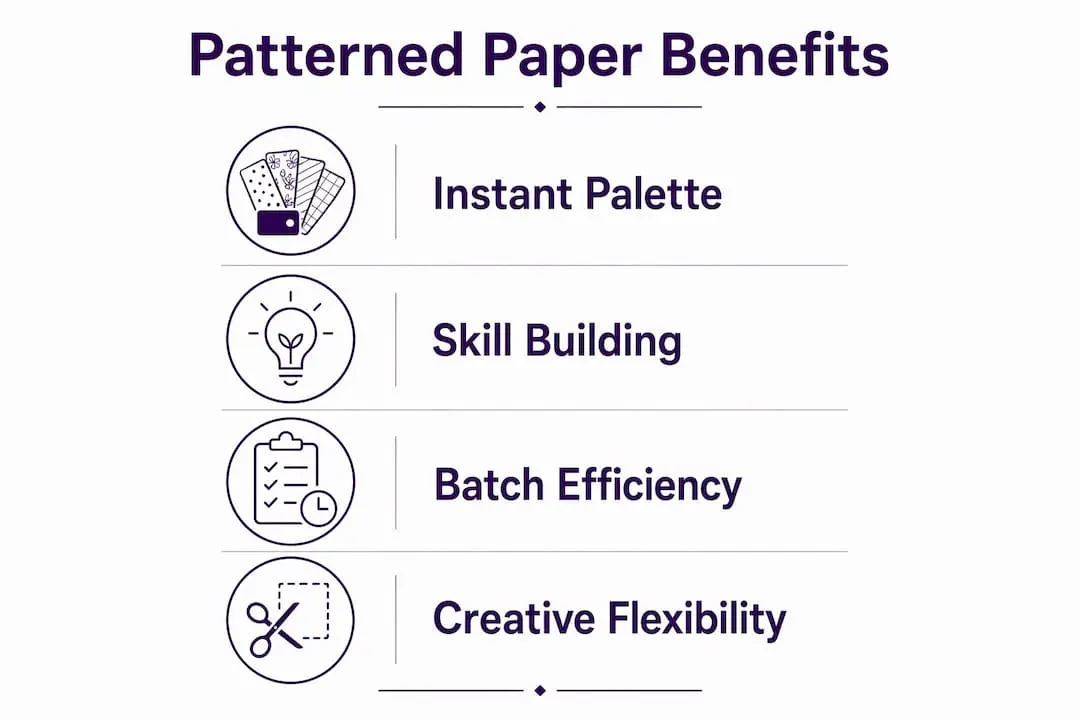
Research shows that using patterned paper regularly improves fine motor skills and cutting accuracy by up to 55% over multi-cycle practice periods. That figure reflects what experienced card makers already know from practice: the more you cut precise shapes from printed guides, the sharper your hand-eye coordination becomes.
Four skills patterned paper develops
- Precise cutting. Printed lines, borders, and geometric shapes give you a visual guide that plain paper does not. Cutting along a printed stripe trains your hand to follow a line accurately.
- Layering judgement. Placing a patterned panel at the right position on a card base teaches proportion and spatial awareness. You learn to read a design rather than guess at it.
- Colour matching. Repeatedly pulling cardstock and ink to match a patterned sheet trains your eye to identify undertones and complementary shades. This skill transfers to every other craft project you attempt.
- Efficient planning. Working out how to cut a 6x6-inch sheet into multiple card panels forces you to think about yield and waste. That planning habit makes you a more efficient crafter across the board.
Patterned paper also reduces trial and error in colour selection. Because the colours are already printed and coordinated by the designer, you spend less time holding swatches up to the light and more time actually making cards. That efficiency compounds over a crafting session, meaning you finish more cards in the same amount of time.
What creative techniques help when patterned paper feels too busy?
Every card maker has a stack of patterned paper they love to look at but hesitate to use. The pattern feels too bold, too busy, or simply wrong for the card they have in mind. These techniques turn those sheets into assets.
- Cut into smaller panels. Cutting patterned paper into smaller panels or layering with vellum helps reduce visual overwhelm for busy patterns. A 2x4-inch strip of a bold floral reads very differently from a full A5 sheet of the same design.
- Layer vellum over the top. A sheet of semi-transparent vellum placed over a busy pattern softens the colours and reduces contrast. The pattern becomes a subtle texture rather than a dominant feature.
- Use tone-on-tone stamping. Stamping a matching or slightly darker ink directly onto a patterned sheet adds depth without adding new colours. The result looks deliberate and artful.
- Die-cut the paper into shapes. Techniques like die-cutting, crumpling, and tone-on-tone stamping can transform disliked patterned papers into intentional background textures. A die-cut butterfly or flower cut from a pattern you dislike becomes a focal point you love.
- Distress or crumple the sheet. Crumpling a sheet and then flattening it creates a linen-like texture that breaks up a busy print. Ink the edges and the paper reads as aged and intentional.
Pro Tip: Before discarding a patterned sheet you dislike, run it through a die-cutting machine with a large background die. The cut negative space often produces a more usable panel than the original sheet.
The table below compares approaches for handling patterned paper based on the challenge you face:
| Challenge | Technique | Result |
|---|---|---|
| Pattern too bold | Layer vellum over the sheet | Softens colour, reduces contrast |
| Pattern too busy | Cut into small panels or strips | Isolates one focal area |
| Dislike the print entirely | Die-cut into shapes or backgrounds | Removes the print context |
| Colours feel wrong | Tone-on-tone stamping | Adds depth, neutralises clashing tones |
| Paper feels too flat | Crumple and distress | Adds texture and aged character |
The key mindset shift is treating a difficult sheet as raw material rather than a finished design. Every pattern contains at least one element worth using. Your job is to find it.
What are the most efficient ways to maximise patterned paper?
Getting the most from every sheet of patterned paper is both a practical and creative skill. Card makers who plan their cuts carefully produce more cards, waste less paper, and build a more useful scrap collection.
Four steps to maximise every sheet
- Plan your cuts before you score. Lay the sheet flat and sketch out your panels before cutting anything. A standard 6x6-inch sheet yields panels for a card front, a layered mat, and two accent strips when cut with a plan. Research confirms that crafters can create four or more professional cards from one 6x6-inch patterned paper using standard layouts and templates. That yield makes patterned paper one of the most cost-effective materials in card making.
- Save every scrap. Pieces smaller than 2x2 inches still work as envelope liners, card interior accents, or small die-cut shapes. Sort scraps by colour family into labelled envelopes so you can find them quickly.
- Use the paper to plan your palette. Pull your card base colour, ink pad, and embellishment colours directly from the shades printed on the sheet. This approach guarantees coordination and removes the need to test combinations.
- Extend into 3D projects. Patterned paper works in gift boxes, envelope liners, bookmarks, and small paper bags. A sheet you bought for card making can produce six or seven finished items when you plan across project types.
The table below shows how different sheet sizes translate into usable card components:
| Sheet size | Card fronts | Accent strips | Envelope liners |
|---|---|---|---|
| 6x6 inch | 1 full front | 2–4 strips | 1 small liner |
| 8x8 inch | 2 card fronts | 4–6 strips | 1 standard liner |
| 12x12 inch | 4 card fronts | 8+ strips | 2 standard liners |
Planning your cuts around a standard card size, such as A2 (4.25x5.5 inches), makes the maths straightforward. You cut the same dimensions every time, which speeds up production and reduces off-cuts. For card makers who want inspiration on how to structure these layouts, the DIY card kit examples on Craftsuprint show how coordinated paper packs translate into finished projects.
Key takeaways
Patterned paper is the single most efficient material in card making because it provides instant colour coordination, builds cutting and layering skills, and yields multiple finished cards from one sheet.
| Point | Details |
|---|---|
| Ready-made colour palette | Patterned paper removes the need to build a colour scheme from scratch. |
| Skill development | Regular use improves cutting accuracy and hand-eye coordination measurably. |
| Batch efficiency | One 6x6-inch sheet yields four or more professional cards with planned cuts. |
| Difficult patterns | Die-cutting, vellum layering, and distressing turn unwanted sheets into usable assets. |
| Scrap value | Every off-cut works as an envelope liner, accent strip, or 3D project component. |
Why I think most card makers underestimate patterned paper
The most common mistake I see is treating patterned paper as a precious object rather than a working material. Crafters buy beautiful sheets, stack them neatly, and then hesitate to cut them. The paper sits in a drawer while they reach for plain cardstock instead. That habit costs them the very efficiency patterned paper is designed to deliver.
Viewing patterned paper as a consumable rather than a collectible solves this immediately. When you accept that a sheet exists to be cut, layered, and used, you stop hoarding and start producing. Your output increases, your skills sharpen, and you actually enjoy the paper you spent money on.
The second thing I have noticed is that card makers dismiss patterns they dislike far too quickly. A bold geometric print that looks wrong for a birthday card might be exactly right when die-cut into a wreath shape or crumpled into a distressed background. The print itself is not the problem. The application is. Treating every sheet as a design problem to solve rather than a finished product to accept or reject opens up a much wider range of creative possibilities.
Patterned paper also teaches design principles that no amount of reading about colour theory will replicate. When you spend an afternoon matching cardstock to a printed sheet, you are learning to read undertones, balance contrast, and judge proportion. Those skills stay with you. They make every card you make after that session better, even when you are not using patterned paper at all.
— Rob
Patterned paper supplies and downloads at Craftsuprint
Craftsuprint brings together a wide selection of patterned paper designs, coordinated card kits, and printable craft resources in one place. Whether you want a themed seasonal collection or a classic floral background, the range covers both beginner and experienced card makers.
The craft supplies section includes pre-matched paper packs that take the colour coordination work out of your hands entirely. For card makers who want to go further, Craftsuprint’s card pattern guide walks through how to select patterns that work across multiple projects. New members can also claim a free members gift to get started with premium craft downloads right away.
FAQ
What is patterned paper used for in card making?
Patterned paper provides a decorative background and ready-made colour palette for handmade cards. Card makers use it as a base layer, accent panel, or die-cut element to add visual interest without additional stamping or colouring.
Does using patterned paper improve crafting skills?
Regular use of patterned paper improves fine motor skills and cutting accuracy by up to 55% over practice periods. The printed guides on the paper train hand-eye coordination more effectively than cutting plain card.
How many cards can you make from one sheet of patterned paper?
A standard 6x6-inch sheet yields four or more professional cards when cut with planned layouts and templates. Larger 12x12-inch sheets can produce up to four card fronts plus multiple accent strips and envelope liners.
What do you do with patterned paper you do not like?
Die-cutting, crumpling, or tone-on-tone stamping transforms unwanted patterns into usable background textures and focal shapes. Layering vellum over a busy print also softens the design into a subtle, workable texture.
How does patterned paper help with colour coordination?
Patterned paper features multiple printed colours that act as a built-in guide for selecting complementary cardstock, ink pads, and embellishments. Matching your supplies to the colours already on the sheet removes guesswork and produces consistent results.