
What is pattern sharing in crafts: a complete guide
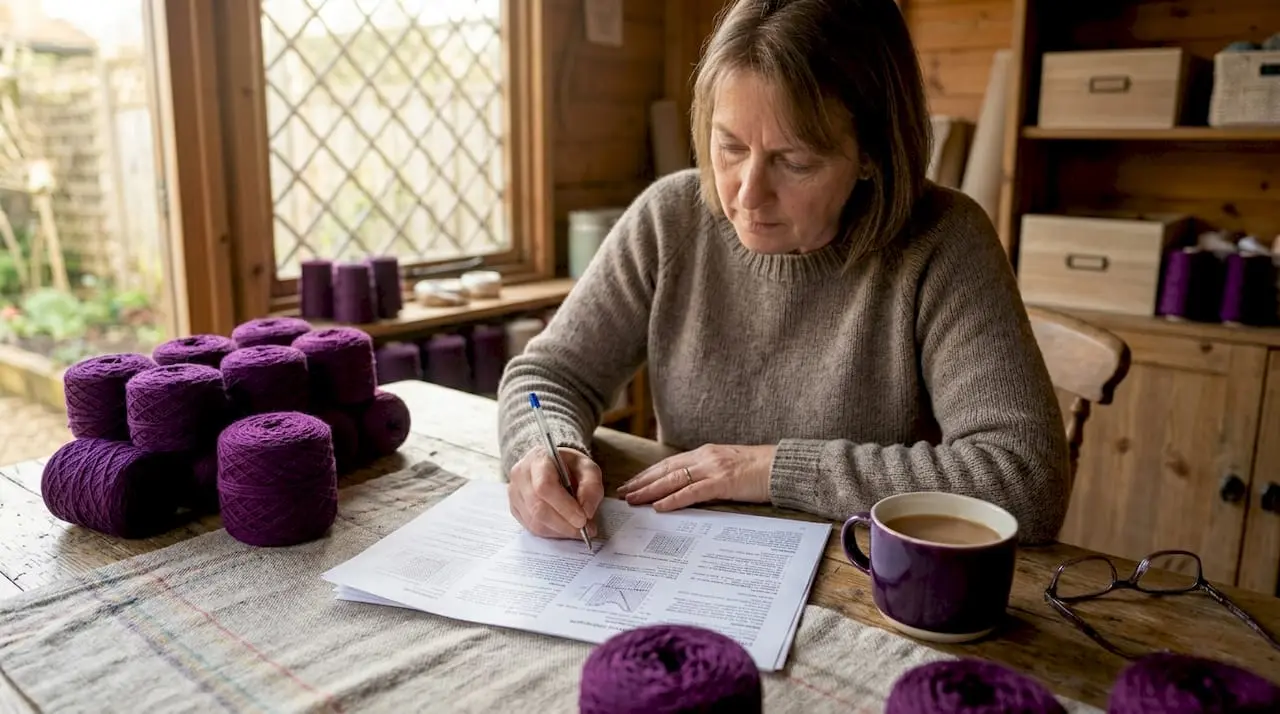
Pattern sharing in crafts is the practice of distributing, exchanging, or collaboratively using craft patterns among makers, either informally between friends or through structured digital platforms, always under specific usage rights and community etiquette. The concept spans everything from a knitting circle passing round a beloved stitch chart to a professional designer selling PDF downloads on a global marketplace. Platforms like Ravelry, LoveCrafts, and WeCrochet have made pattern sharing in crafts more accessible than ever, connecting millions of hobbyists with designers worldwide. Understanding what pattern sharing means, how it works, and where the legal and ethical lines sit will make you a more confident, creative, and responsible crafter.
What is pattern sharing in crafts and how does it work?
Pattern sharing in crafts covers three distinct forms: peer-to-peer social sharing, professional distribution through authorised channels, and organised collaborative projects. Each form operates under different expectations and rules, but all three depend on the same foundation: a craft pattern is a creative work, and its creator holds rights over how it is used and distributed.
Peer-to-peer sharing is the oldest form. Knitting circles, quilting bees, and embroidery groups have exchanged handwritten or photocopied instructions for generations. Today, this happens in Facebook groups, Discord servers, and local craft clubs. Ravelry, LoveCrafts, and WeCrochet are the central hubs for pattern commerce and community engagement in 2026, hosting millions of free and paid patterns alongside active discussion forums.
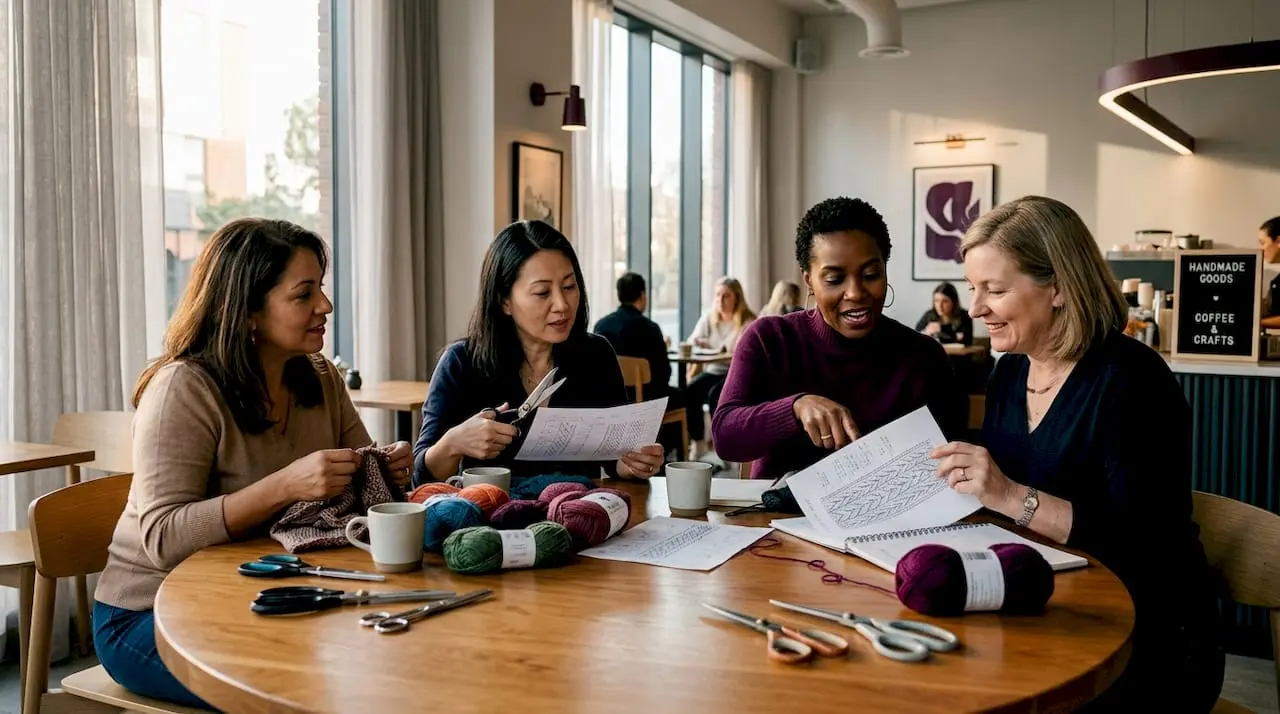
Professional distribution works differently. A designer creates a pattern, assigns it a licence, and sells or gives it away through a marketplace. The buyer receives a personal use licence in most cases, meaning they can make the item for themselves or as a gift, but cannot reproduce or resell the pattern itself.
Organised community events add a third dimension. Crochet-Alongs, known as CALs, are collaborative projects releasing patterns in weekly or monthly instalments, supported by tutorials and group discussion. Knit-Alongs follow the same model for knitters. These events build enormous community momentum and have successfully raised significant funds for charitable causes, demonstrating the real-world impact of organised crafting pattern exchange.
Pro Tip: When joining a CAL or KAL, save each pattern instalment to a dedicated folder the moment it is released. Designers sometimes update files mid-event, and having your own saved copy prevents confusion mid-project.
What are the ethical and legal considerations of sharing craft patterns?
Copyright law protects craft patterns as creative works the moment they are written down or recorded. This is not a grey area. The rules are clear, even if many crafters are unaware of them.
Here is what you need to know before sharing any pattern:
- Personal use is not the same as redistribution rights. When you buy a digital PDF pattern, you receive the right to use it for personal projects. You do not receive the right to copy, email, or upload it for others, even close friends.
- Sharing with a friend is still a violation. Forwarding a purchased pattern file to one person without the designer’s permission constitutes copyright infringement and carries potential civil or criminal penalties.
- Free patterns carry the same protections. A pattern offered at no cost is not in the public domain. The designer retains copyright unless they explicitly state otherwise with a licence such as Creative Commons.
- Only the creator can authorise reproduction. Copyright protection applies once a pattern achieves sufficient creative expression. Only the original creator, or someone they have formally authorised, can permit copying or distribution.
- Cultural motifs are a separate conversation. Legal copyright protects specific pattern expressions, but broader craft motifs belong to shared cultural heritage, raising complex ownership questions that go beyond simple copyright.
“Design moves across time and cultures, making ownership more about legal protections than aesthetic language.” This distinction matters enormously when crafters adapt traditional motifs from other cultures, as the ethics of attribution extend well beyond what the law strictly requires.
Attribution is equally important from an ethical standpoint. Craft patterns often result from collective adaptation rather than purely individual creation. The story of May Morris illustrates this perfectly: many patterns long attributed to William Morris were actually her work, and her contribution went unrecognised for decades. Crediting the actual creator is not just good manners. It is a professional and ethical obligation that sustains the livelihoods of independent designers.
What benefits does pattern sharing offer crafters?
The pattern sharing benefits for individual crafters and the wider community are substantial, reaching far beyond simply getting a free project to make.
- Skill development through collective experience. When crafters share patterns alongside notes, modifications, and finished project photos, the entire community learns faster. A beginner reading through a Ravelry project page for a complex lace shawl gains insight from hundreds of makers who have already worked through the tricky sections.
- Motivation through collaborative projects. Collaborative art projects foster creativity, skill development, and empathy through coordinated design. CALs and KALs create a shared deadline and a community of people working towards the same goal, which dramatically reduces the likelihood of abandoning a project mid-way.
- Cultural exchange and inspiration. Patterns carry the history of the communities that created them. Sharing them across borders and generations keeps traditional techniques alive and introduces crafters to methods they would never encounter otherwise. A crafter in Edinburgh discovering a traditional Oaxacan embroidery pattern through an online exchange is participating in a form of cultural dialogue.
- Fundraising and social impact. Organised crafting pattern exchange events have raised significant funds for charities, hospitals, and community organisations. Group blanket projects, charity knit-alongs, and collaborative quilt initiatives demonstrate that pattern sharing can have a measurable positive impact beyond the individual maker.
- Community belonging. Sharing a pattern you love, or receiving one from a fellow crafter, creates a bond. The craft pattern resources available through active communities give hobbyists a sense of connection that solo crafting simply cannot replicate.
How to share craft patterns responsibly and effectively
Responsible pattern sharing starts before you post anything online. These practical steps protect both you and the designers whose work you admire.
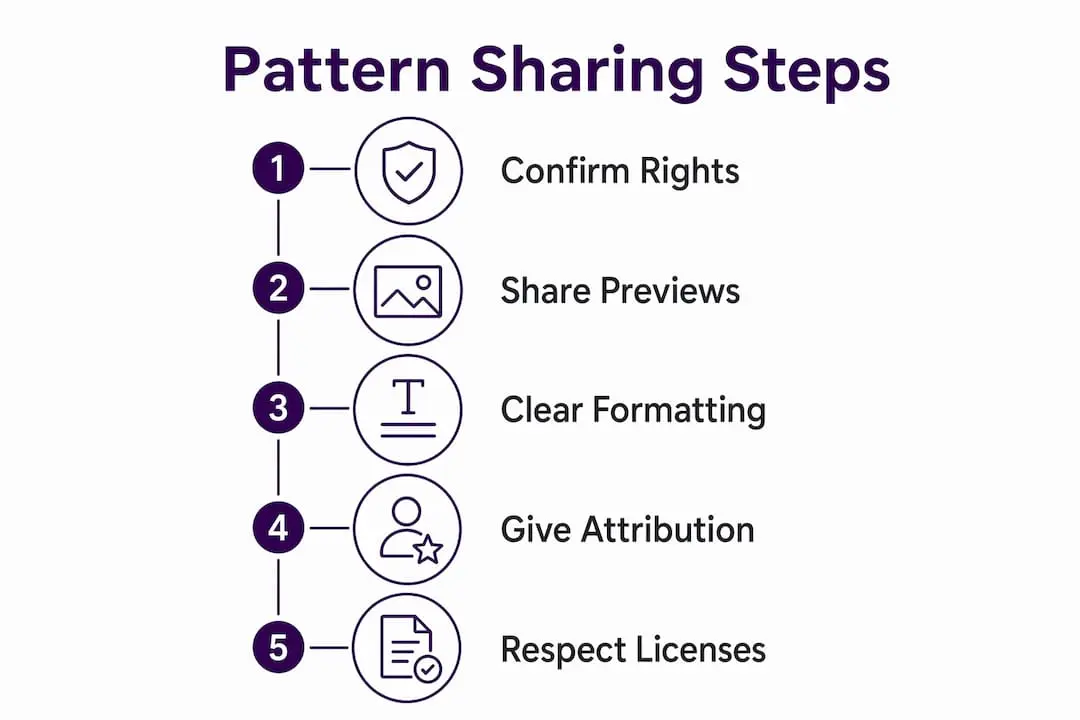
Confirm your rights before sharing anything
Check the licence attached to every pattern you want to share. Many designers explicitly state “personal use only” in their PDF files or on their product pages. If no licence is stated, the default position under copyright law is that redistribution is not permitted. When in doubt, contact the designer directly. Most are happy to clarify, and many will grant permission for specific non-commercial uses.
Share previews, not full files
Professionals share pattern previews using tiled, lower-resolution images to showcase designs without enabling unauthorised copying. This approach works equally well for hobbyists who want to recommend a pattern to their community. Post a photo of your finished make, link to the original source, and let the designer benefit from the traffic. Tools that protect designs online by automating watermarking and resolution reduction are widely available for designers who want to share samples safely.
Write and format patterns clearly before distributing them
If you are sharing your own original patterns, presentation matters. Effective pattern writing involves consistent terminology, logical layout, and user-friendly formatting. Reading your draft aloud, or using a text-to-speech tool, helps identify confusing phrasing before anyone else encounters it. A pattern that is easy to follow is a pattern that gets shared, recommended, and remembered.
Pro Tip: Before releasing a pattern, ask two crafters at different skill levels to test it. A beginner will catch unclear instructions that an experienced maker skips over automatically, and an advanced crafter will spot technical inconsistencies.
The table below summarises the key methods for sharing craft patterns responsibly:
| Method | Best for | Key consideration |
|---|---|---|
| Link to original source | Recommending paid or free patterns | Drives traffic to the designer; no copyright risk |
| Share a preview image | Showcasing a design on social media | Use low resolution; always credit the creator |
| Distribute your own pattern | Original designs you have created | Include a clear licence statement in the file |
| Organise a CAL or KAL | Community engagement and skill building | Obtain written permission if using another designer’s work |
| Use an authorised marketplace | Selling or distributing patterns at scale | Platforms handle licensing terms and payment processing |
Key takeaways
Pattern sharing in crafts enriches creativity and community, but it requires consistent respect for copyright, clear attribution, and deliberate use of authorised channels.
| Point | Details |
|---|---|
| Copyright applies to all patterns | Personal use rights do not permit redistribution, even to close friends. |
| Attribution is an ethical duty | Credit the actual creator, not just the most famous name associated with a design. |
| CALs and KALs build community | Organised collaborative events raise motivation, funds, and collective skill. |
| Share previews, not full files | Low-resolution images and source links protect designers while promoting their work. |
| Clear formatting improves sharing | Consistent terminology and logical layout make patterns usable and worth recommending. |
Why pattern sharing has always been more complicated than it looks
I have spent years watching the craft community wrestle with the tension between generosity and ownership, and my honest view is that most copyright problems in crafting come from good intentions rather than bad ones. Someone finds a pattern they love and wants their friend to experience the same joy. The impulse is entirely understandable. The problem is that the designer’s income depends on each person buying their own copy.
What strikes me most about the history of craft patterns is how collective the creative process has always been. The attribution of May Morris is a perfect example of how easily individual contributions get absorbed into a famous name. Modern pattern sharing has the potential to correct that historical tendency, because digital platforms make it straightforward to credit the actual creator every single time.
The crafters I most admire are the ones who treat sharing as an act of promotion rather than distribution. They post their finished makes, tag the designer, link to the purchase page, and write detailed project notes that help others succeed. That approach costs nothing, respects the creator’s rights, and builds the kind of community where talented designers feel safe releasing their best work. The craft community thrives when generosity and respect travel together.
— Rob
Discover and legally access craft patterns on Craftsuprint
If you are ready to build your pattern library the right way, Craftsuprint is the place to start.
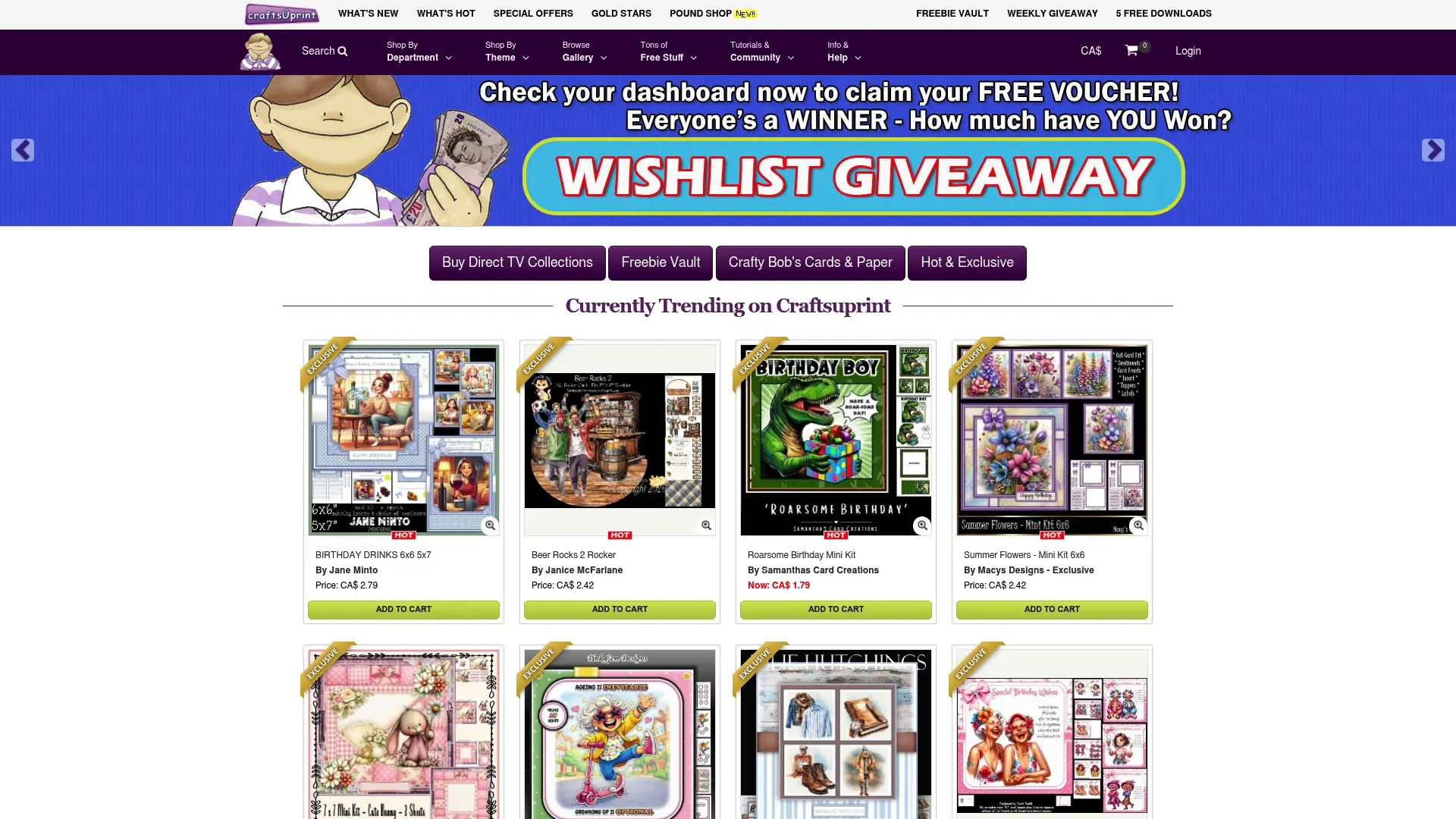
Craftsuprint is a dedicated digital platform offering thousands of craft pattern downloads, card making kits, paper craft projects, and step-by-step tutorials, all created by independent designers and licensed for personal use. Every pattern comes with clear usage terms, so you always know exactly what you are permitted to do. Whether you are looking for themed mini kits, seasonal card designs, or printable paper craft resources, Craftsuprint connects you with original, authorised content that supports the designers behind it. The platform also runs weekly freebies and community contests, making it a genuinely active hub for hobbyists who want to craft with confidence.
FAQ
What is the difference between a free pattern and a public domain pattern?
A free pattern is offered at no cost but remains under the creator’s copyright, meaning redistribution is still restricted unless the designer states otherwise. A public domain pattern has no copyright protection, either because it has expired or was explicitly released without restriction.
Can I share a craft pattern in a private Facebook group?
Sharing a purchased or downloaded pattern in any group, private or public, without the designer’s explicit permission is a copyright violation. The safest approach is to post a link to the original source rather than the file itself.
What is a Crochet-Along and how does it relate to pattern sharing?
A Crochet-Along is a collaborative crafting event where a designer releases pattern sections over several weeks, with participants working through the project together online. It is one of the most popular forms of organised crafting pattern exchange in the current craft community.
Do I need to credit the designer when I share a photo of my finished make?
Crediting the designer is not always a legal requirement, but it is standard ethical practice in craft communities. Attribution supports the designer’s visibility and income, and most platforms actively encourage it.
How do I know if a pattern allows redistribution?
Check the licence statement inside the PDF file or on the product listing page. If no licence is stated, assume redistribution is not permitted and contact the designer directly to ask for clarification.