
What is artisan crafting: a guide for hobbyists
TL;DR:
- Artisan crafting involves skillfully creating unique objects by hand, emphasizing mastery, originality, and deliberate intent. It balances traditional techniques with selective machine use, distinguishing it from mass production and casual hobby making. Supporting cultural heritage and local economies, artisan craft quality is evaluated through indicators like mastery and originality, encouraging committed practice and continuous improvement.
Artisan crafting is the skilled creation of material objects partly or entirely by hand, combining mastery, originality, and cultural tradition to produce items that carry both function and meaning. An artisan craft worker shapes furniture, jewellery, textiles, ceramics, and tools through deliberate technique rather than automated production. What is artisan crafting, at its core? It is the practice where the maker’s hand, judgement, and vision remain central throughout the process. This distinguishes it sharply from mass manufacturing and separates it from casual hobby making. The American Craft Council describes craft as an intrinsic expression of life and creation, turning imaginative ideas into tangible works through skill, aesthetic, and vision. That definition captures exactly why artisan crafting continues to attract hobbyists, collectors, and cultural institutions alike.
What is artisan crafting and how does it differ from other making?
Artisan crafting sits at a specific point on the spectrum between industrial manufacturing and casual hobby making. Understanding where it sits requires looking at what actually defines it, rather than assuming “handmade” is the only criterion that counts.
The attributes that define artisan work
Bruce Metcalf, writing for the American Craft Council, argues that craft is a cluster of attributes rather than a single rule. No single quality, such as being handmade, is strictly necessary on its own. Instead, the presence of multiple attributes, including mastery, originality, intention, and skilled finishing, cumulatively defines whether something qualifies as artisan craft. A potter who uses an electric wheel but applies years of trained judgement to form, glaze, and fire each piece is practising artisan crafting. A factory worker pressing identical cups from a mould is not.
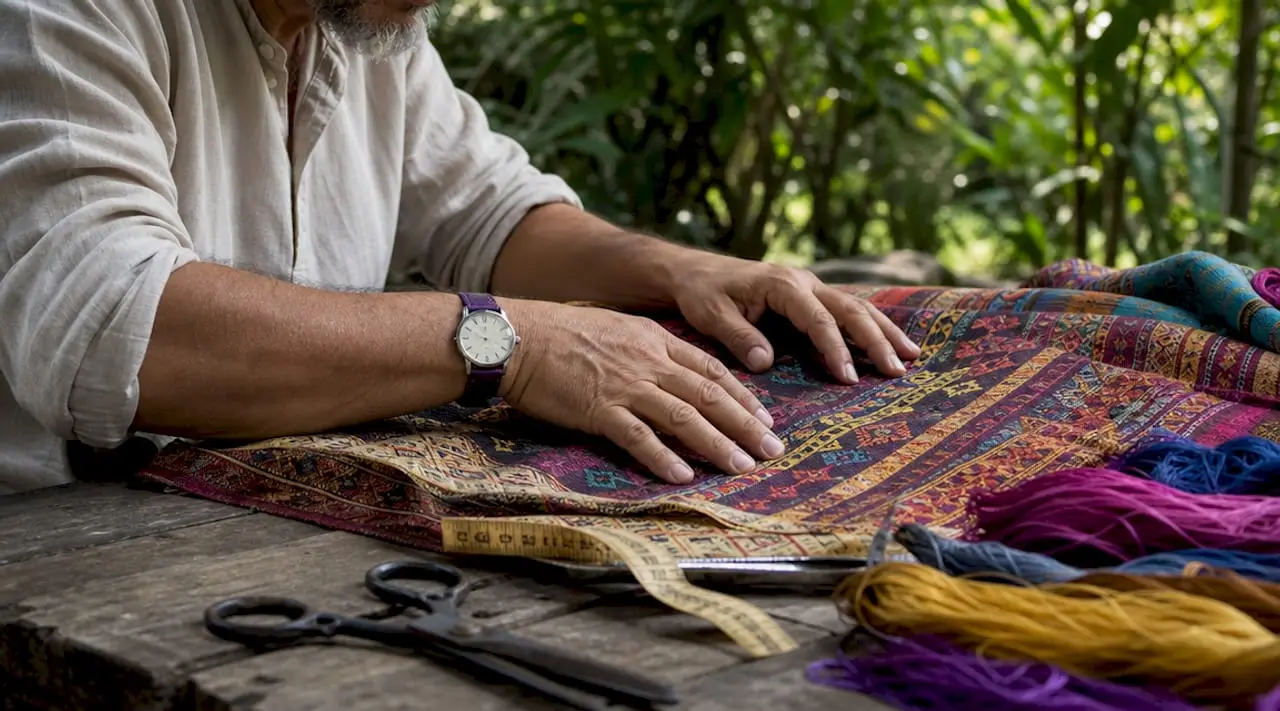
This matters practically because many people assume artisan crafting means entirely handmade. In reality, some machine use is compatible with artisan work when the maker’s skill and finishing remain central. A woodworker who uses a bandsaw to rough-cut timber but hand-planes, carves, and finishes every surface is still working as an artisan. The machine assists; the maker decides.
Artisan crafting vs mass production vs hobby crafting
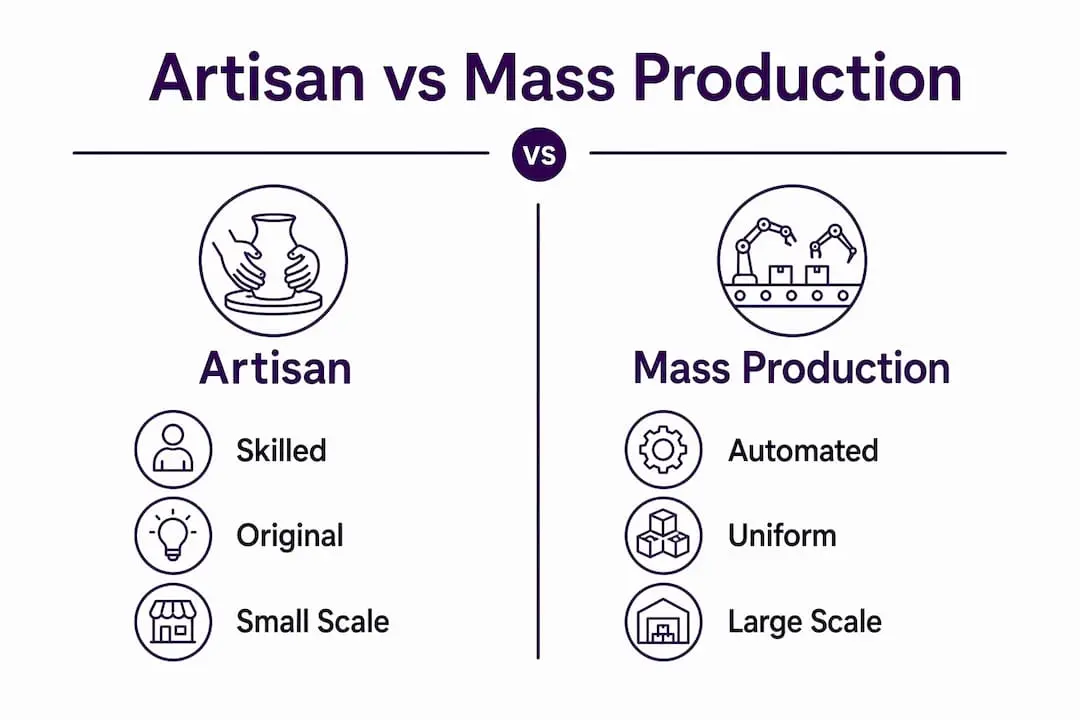
The table below clarifies the key distinctions across three types of making.
| Feature | Artisan crafting | Mass production | Hobby crafting |
|---|---|---|---|
| Skill level | High, developed over years | Mechanised, minimal maker skill | Variable, often beginner to intermediate |
| Originality | Central to the work | Absent, identical units | Present but not required |
| Intention | Deliberate aesthetic and cultural purpose | Efficiency and volume | Personal enjoyment |
| Handwork | Significant, even if tools assist | Minimal | Varies widely |
| Output | Limited, often unique pieces | High volume, uniform | Personal or small scale |
Hobby crafting is a genuine gateway to artisan work. Many skilled artisans began as hobbyists who deepened their practice over time. The difference is not talent but commitment to mastery and the deliberate pursuit of originality.
Pro Tip: When assessing whether your own work is moving toward artisan quality, ask three questions: Am I developing mastery in this technique? Is each piece shaped by my own judgement and vision? Does the work carry intention beyond simply completing a project? If the answer to all three is yes, you are practising artisan crafting.
How is the quality of artisan crafts evaluated?
Evaluating artisan crafting quality has historically relied on subjective taste, but a 2025 study published in Creativity Studies introduced a structured methodology that changes this. The research proposed 12 indicators for systematically assessing artistic craftsmanship, weighted by Czech craft organisations. Mastery and originality ranked as the two most important indicators. This gives collectors, retailers, and makers a practical framework that moves beyond “I know good craft when I see it.”
The most important evaluation indicators
The 12 indicators span technical, aesthetic, and cultural dimensions. The top-weighted ones include:
- Mastery: the depth of technical skill demonstrated in the work
- Originality: the degree to which the piece reflects the maker’s unique creative voice
- Material knowledge: understanding of how materials behave and how to work with them
- Intentionality: the clarity of purpose behind every decision in the making process
- Cultural reference: whether the work connects to or extends a craft tradition
The distinction between artistic and traditional crafts can be blurry, but mastery and originality indicators help frame that evaluation more objectively. A traditionally made piece of Welsh tapestry weaving may score high on cultural reference and mastery but lower on originality. A contemporary jeweller working in silver may score high on originality and intentionality but lower on cultural reference. Neither is superior; the framework simply makes the comparison transparent.
Why evaluation frameworks matter for buyers and makers
Retailers and collectors use these criteria, whether consciously or not, when pricing and selecting artisan goods. A piece that scores strongly across multiple indicators commands a higher price and greater cultural credibility. For makers, structured evaluation offers a practical blueprint for self-assessment and improvement without relying solely on external feedback or market response.
Pro Tip: Use the mastery and originality indicators as a personal review tool after completing each piece. Write two sentences: one describing the highest-skill technique you used, and one explaining what makes this piece distinctly yours. Over time, this habit sharpens both your technical practice and your creative identity.
What is the cultural and economic significance of artisan crafting?
Artisan crafting is not simply a personal creative practice. It carries weight as intangible cultural heritage, a source of economic livelihood, and a mechanism for transmitting knowledge across generations. UNESCO’s Convention on Safeguarding Intangible Cultural Heritage formally recognises traditional crafts as living knowledge that requires active protection and transmission. This means the skills a Japanese lacquerware maker or a Moroccan zellige tile craftsman holds are treated as cultural assets comparable to language or ritual.
UNESCO policy and economic development
UNESCO’s 2026 policy frameworks go further than preservation. They promote quality control and SME support for traditional handicraft sectors, recognising that cultural value and economic sustainability must advance together. The policy links quality standards, entrepreneurship training, and market access to sustain artisan livelihoods and prevent craft traditions from disappearing under market pressure.
| UNESCO initiative | Purpose | Outcome |
|---|---|---|
| Quality control frameworks | Set standards for authentic handicrafts | Protects consumers and artisan reputations |
| SME and entrepreneurship support | Builds business capacity for artisan makers | Sustains livelihoods and job creation |
| Intangible heritage transmission | Passes craft knowledge to younger generations | Preserves cultural identity and diversity |
| Cultural industrialisation | Integrates craft into modern economic systems | Increases added value and market reach |
Traditional handicrafts involve not only making objects but maintaining and transmitting know-how that can survive market pressures and generational change. This is why youth employment in craft sectors features prominently in UNESCO’s cultural economy agenda. When a young weaver in Oaxaca or a ceramicist in Stoke-on-Trent learns from a master, they are not just acquiring a skill. They are becoming a link in a chain of cultural continuity.
Artisan crafting and local economies
The economic argument for supporting artisan crafting is concrete. Artisan goods typically command premium prices over mass-produced equivalents, generating higher margins for small producers. Craft tourism, craft markets, and online platforms have expanded the market for artisan work significantly. Handmade gothic jewellery, for example, illustrates how artisan quality and meaning translate into consumer willingness to pay more for pieces with demonstrable mastery and originality. The same principle applies across pottery, textiles, woodwork, and paper crafts.
Pro Tip: If you sell or plan to sell artisan work, document your process. Photographs of your tools, materials, and making stages communicate authenticity and mastery to buyers who cannot visit your studio. This transparency directly supports the premium pricing that artisan work deserves.
What are common artisan crafting techniques and how do you get started?
Artisan crafting techniques span a wide range of materials and disciplines. The most widely practised include pottery and ceramics, hand weaving and textile work, woodworking and furniture making, jewellery making in metal and stone, bookbinding, glassblowing, and paper crafts including card making and printmaking. Each technique carries its own tradition, material logic, and learning curve.
Popular techniques and what makes them artisan
Pottery requires understanding clay bodies, throwing or hand-building forms, and controlling kiln temperatures. Weaving demands knowledge of fibre, loom mechanics, and pattern construction. Jewellery making involves metalworking skills such as soldering, forming, and stone setting. What makes each of these artisan rather than merely hobbyist is the depth of engagement. An artisan potter does not just make pots. They develop a relationship with specific clays, glazes, and firing methods that produces a recognisable body of work.
Paper crafts, including card making, paper cutting, and printmaking, are accessible entry points into artisan practice. Craftsuprint’s handmade paper crafting guide covers the tools, techniques, and creative approaches that help hobbyists move from casual making toward genuine artisan practice in this discipline.
How to start artisan crafting: a practical sequence
Starting artisan crafting does not require a fully equipped studio or years of formal training. The steps below offer a grounded path for beginners.
- Choose one technique. Breadth comes later. Pick the discipline that genuinely excites you, whether that is pottery, weaving, woodworking, or paper craft, and commit to it for at least six months.
- Source quality materials. Artisan work depends on understanding your materials. Buy the best you can afford and learn how each material behaves before trying to control it.
- Study a master. Find a practitioner whose work you admire and study how they work. Books, video tutorials, and workshops all serve this purpose. Craftsuprint’s free craft videos offer accessible visual guidance across a range of techniques.
- Set up a dedicated workspace. Even a small, consistent space trains your mind to enter a focused making state. Organisation matters as much as equipment.
- Practise with intention. Each session should have a specific technical goal, not just the completion of a project. Improving your joining technique, refining your glaze application, or perfecting a paper fold are all valid session goals.
- Seek feedback from other makers. Craft communities, both local and online, provide the kind of honest, informed feedback that accelerates development faster than solo practice alone.
Pro Tip: Begin with a hobbyist starter guide to understand the foundational principles before investing heavily in tools or materials. Most artisan techniques require surprisingly little equipment at the start. Mastery of basic tools precedes the need for advanced ones.
Key takeaways
Artisan crafting is defined by mastery, originality, and intentional handwork, not by the absence of tools, and its value spans personal creativity, cultural heritage, and economic sustainability.
| Point | Details |
|---|---|
| Definition of artisan crafting | A skilled maker creates objects by hand with mastery, originality, and deliberate intention at the centre. |
| Artisan vs mass production | Artisan work prioritises unique, skilled output; mass production prioritises volume and uniformity. |
| Evaluation framework | The 2025 Creativity Studies methodology uses 12 indicators, with mastery and originality weighted highest. |
| Cultural and economic value | UNESCO links artisan craft to intangible heritage, job creation, and sustainable livelihoods through quality standards and SME support. |
| How to get started | Choose one technique, source quality materials, study a master, and practise with a specific technical goal each session. |
Why artisan crafting still matters more than most people realise
I have spent years watching the craft world shift. Digital tools have made it easier than ever to produce things that look handmade without the underlying skill. Print-on-demand, AI-generated patterns, and laser-cut kits all have their place, but they are not artisan crafting. The distinction matters because what artisan crafting actually gives you, the maker, is not just a finished object. It is a deepening relationship with a material, a technique, and ultimately with your own capacity for patience and judgement.
The most common mistake I see new makers make is treating artisan crafting as a shortcut to a premium product. It is not. It is a long-term commitment to a practice. The artisans I most admire are not the ones with the most impressive finished pieces. They are the ones who can tell you exactly why they made every decision in a piece, from the choice of clay body to the angle of a carved line. That level of intentionality is what separates craft from making.
There is also something worth saying about cultural responsibility. When you practise a traditional technique, whether that is Japanese shibori dyeing, Welsh slate carving, or English lace making, you are participating in a living tradition. You are not just making something beautiful. You are keeping knowledge alive that took generations to develop. That is not a small thing, and it is worth taking seriously even if you are working at a hobby level.
My honest encouragement is this: do not wait until you feel ready. Start with the technique that calls to you, accept that your early work will be imperfect, and commit to the practice rather than the product. The artisan quality will follow.
— Rob
Start your artisan crafting practice with Craftsuprint
Craftsuprint brings together craft ideas, tutorials, and digital resources for hobbyists and aspiring artisans at every level of experience.
Whether you are exploring paper crafts for the first time or deepening an existing practice, Craftsuprint’s craft ideas and tutorials give you a structured starting point with projects designed to build real skill. The platform’s free craft making videos walk you through techniques visually, so you can see exactly how experienced makers approach each stage of a project. From card making kits to printable paper patterns, Craftsuprint connects you with the resources that make artisan-quality work accessible from day one.
FAQ
What is the definition of artisan crafting?
Artisan crafting is the skilled creation of material objects partly or entirely by hand, with mastery, originality, and intentional making at its core. It differs from hobby crafting in its depth of skill and from mass production in its emphasis on unique, maker-led output.
Does artisan crafting have to be entirely handmade?
No. Artisan crafting can include some machine use when the maker’s skilled judgement and finishing remain central to the work. The American Craft Council defines craft as a cluster of attributes rather than a strict handmade-only criterion.
How is artisan craft quality measured?
A 2025 methodology published in Creativity Studies proposed 12 indicators for evaluating artistic craftsmanship, with mastery and originality weighted as the most important. These indicators give buyers, retailers, and makers a structured way to assess quality beyond subjective taste.
Why is artisan crafting culturally significant?
UNESCO recognises traditional crafts as intangible cultural heritage, treating the knowledge and techniques involved as living assets that require active transmission across generations. Artisan crafting preserves cultural identity and supports local economies through premium pricing and craft tourism.
How do I start artisan crafting as a beginner?
Choose one technique, source quality materials, and practise with a specific technical goal each session rather than simply completing projects. Craftsuprint’s craft ideas and free video tutorials offer accessible guidance for hobbyists beginning their artisan practice.