
What is a crafting community and why it matters
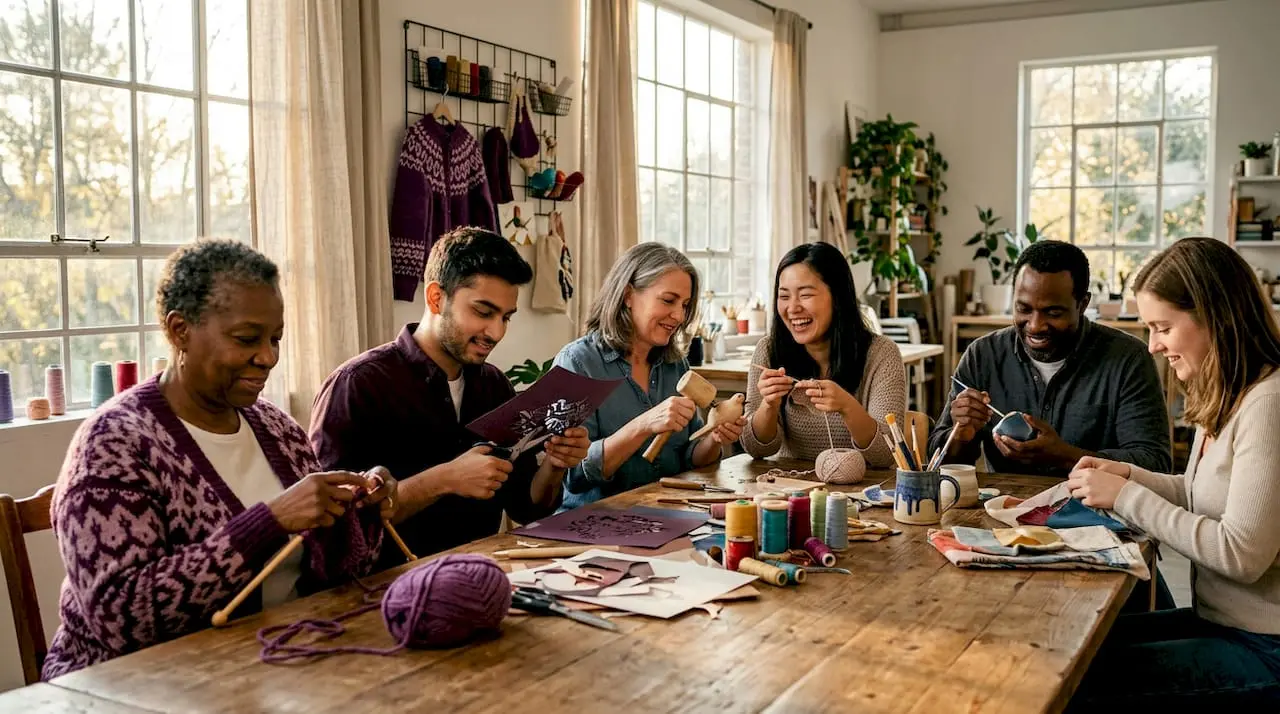
Most people picture crafting as a solitary pursuit. You sit at a table, scissors in hand, surrounded by paper and glue, working alone. But that picture misses something real. A crafting community is a social group built around shared making, and for millions of people, it is where the real value of crafting lives. Whether you gather in a local hall, connect through an online forum, or download projects through a platform like Craftsuprint, the community around the craft shapes the experience just as much as the craft itself. This guide explains what these communities are, how they work, and why joining one might change how you create.
Table of Contents
- Key takeaways
- What is a crafting community, defined clearly
- How crafting communities function in practice
- Benefits of joining crafting communities
- Comparing formats: which type suits you?
- How to find and join a crafting community
- My honest take on community crafting
- Discover your craft community with Craftsuprint
- FAQ
Key takeaways
| Point | Details |
|---|---|
| Crafting communities are social groups | They form around shared making, not just shared interest, with interaction through discussions, workshops, and peer support. |
| Low-pressure participation is the norm | Successful groups welcome small contributions and works-in-progress, reducing barriers for newcomers. |
| Benefits extend beyond the craft | Members gain belonging, emotional support, skill development, and lasting friendships. |
| Format variety suits everyone | In-person, online, mobile, and hybrid communities each offer distinct advantages depending on your lifestyle. |
| Shared resources build connection | Groups that use common supplies rather than isolated kits actively encourage interaction and community ties. |
What is a crafting community, defined clearly
The term “crafting community” is widely used but rarely pinned down. The recognised concept in social research is closer to a community of practice. A crafting community is a social group organised around shared making, repair, or customisation, with interaction flowing through activities like discussions, skill-sharing sessions, and collaborative workshops.
This goes well beyond a simple hobby club. Community crafting serves as a vehicle for social cohesion, cultural preservation, and knowledge exchange. When a group of people sit together to sew, stamp cards, or build paper models, they are doing something that has existed in human societies for centuries. Skills pass from person to person. Stories attach to objects. Traditions survive.
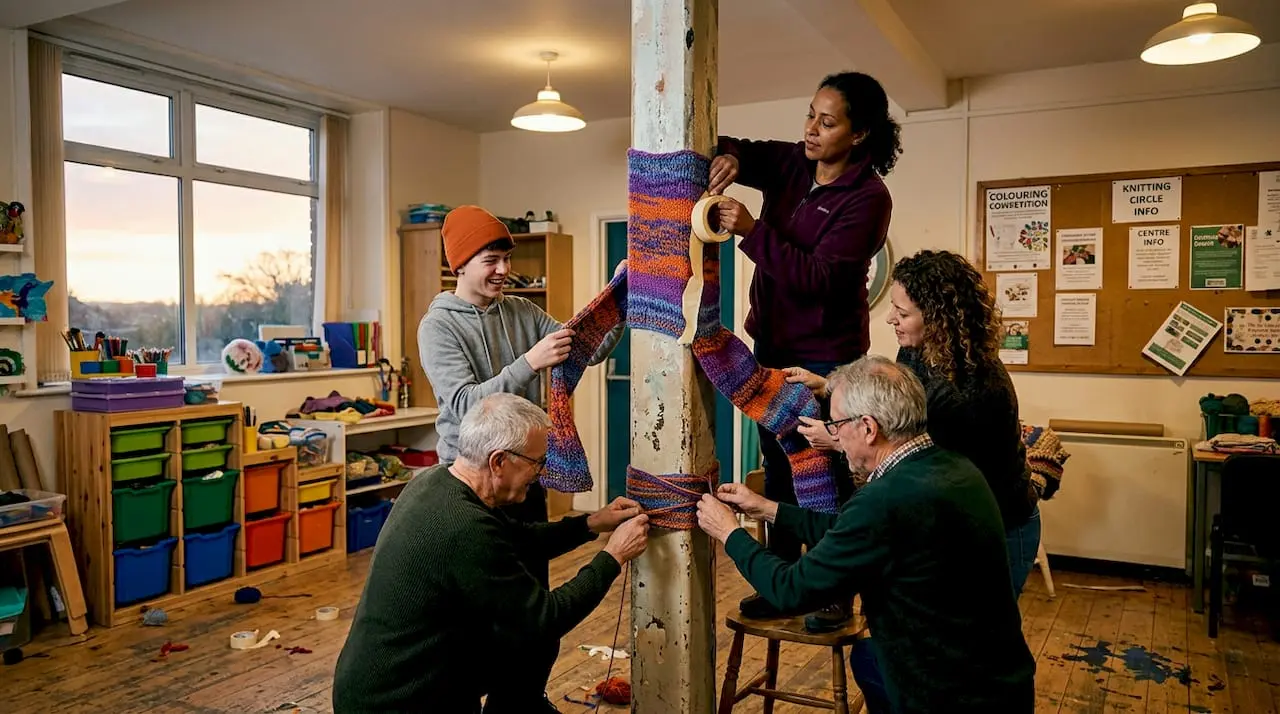
What separates a crafting community from a general crafting forum or marketplace is the emphasis on ongoing, reciprocal interaction. A forum is a place you visit to ask a question and leave. A community is a place where relationships form over time, where members know each other’s projects, where encouragement is consistent rather than occasional.
A few characteristics that define genuine crafting communities:
- Shared purpose. Members are united by making, not just consuming content about making.
- Reciprocal engagement. People both give and receive feedback, resources, and encouragement.
- Cultural continuity. Techniques, styles, and stories carry forward through the group.
- Inclusive structure. Entry points exist for beginners and experienced crafters alike.
Pro Tip: When evaluating whether a group qualifies as a true crafting community, ask whether members interact with each other, not just with an administrator or content creator. Genuine community is peer-to-peer.
How crafting communities function in practice
Understanding the structure of a crafting community helps explain why they work so well for sustained creative engagement. The most effective groups are built around low-pressure participation, where members can start small, share works-in-progress, and ask questions without needing to present a polished identity or finished product.
This design matters more than most people realise. One of the biggest barriers to sustained creative practice is the feeling that you need to produce something impressive before sharing it. Crafting communities that actively dismantle this expectation see far better long-term engagement. Members stay, contribute, and grow.
Here is how many well-functioning crafting communities organise their participation:
- Observation first. New members are welcome to watch, read, and absorb before contributing. There is no pressure to post immediately.
- Small sharing encouraged. Updates like “I started this project today” or “I’m stuck on this step” are treated as valuable contributions, not noise.
- Peer response normalised. Feedback and encouragement are expected from all members, not just group leaders.
- Progress celebrated. Communities track journeys, not just finished results, so partial progress counts.
- Flexible formats. Sessions and activities are designed to accommodate different skill levels and time commitments.
Some groups take this flexibility to creative extremes. A well-known example is a Los Angeles mobile crafting group that combines hiking with outdoor sewing, meeting in California parks to stitch while walking. The social and physical activity blends with the making, creating a community experience that no single format could replicate.
“The main product of many crafting groups isn’t the craft object at all. It’s the peer support, the companionship, and the sense of being known.” This is worth holding in mind when you are deciding what kind of community to seek out.
Shared supplies and flexible resources are also a key design element in successful groups. When a group provides communal materials rather than requiring each member to arrive with an individual kit, interaction increases naturally. People ask to borrow things. They offer what they have. The material act of sharing becomes a social act too.
Pro Tip: If you are starting or facilitating a crafting group, avoid distributing individual rigid kits for every session. Instead, offer shared supplies at a central table. That small change can transform isolated crafters into a connected group.
Benefits of joining crafting communities
The advantages of being part of a crafting community are both practical and deeply personal. Crafting builds connections by creating shared experiences and fostering meaningful relationships, particularly at events built around creative prompts and collaborative making.
The social dimension is often what surprises new members most. You might join for the card-making tutorials or the pattern-sharing, and stay because you have found people who genuinely care about your creative progress.
Here are the core benefits that draw people to these groups and keep them engaged:
- Belonging and social support. Belonging arises from shared making, not just shared conversation. The act of creating alongside others produces a sense of connection that passive social media cannot replicate.
- Skill development and knowledge sharing. Techniques spread naturally within communities. A member who has mastered a particular folding method or colour-mixing approach will share it, often without being asked.
- Emotional wellbeing. For many people, crafting groups provide therapy, companionship, and social support that extends well beyond the making itself. The craft is the excuse; the community is the cure.
- Cultural preservation. Traditional techniques, regional craft traditions, and handmade aesthetics survive through communities that practise and pass them on.
- Creative accountability. Knowing others will ask about your project next week gives you a gentle nudge to keep going. Communities create natural creative momentum.
Research into communities of practice shows that learning and creative innovation happen most reliably when communities build shared tools, stories, and trusted relationships over time. Crafting communities are a living example of this principle.
Comparing formats: which type suits you?
Not all crafting communities look alike. Understanding the different formats helps you find the one that fits your life, your schedule, and your creative style.
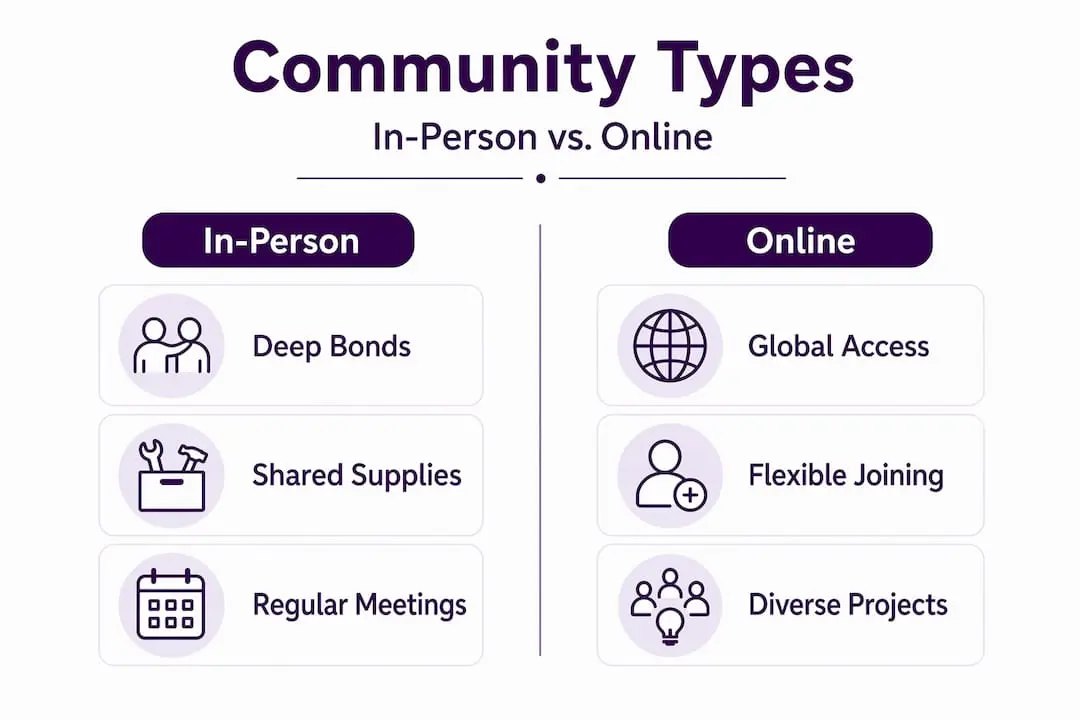
| Format | Best for | Social depth | Accessibility | Challenges |
|---|---|---|---|---|
| In-person local groups | Regular, structured social making | High | Limited to location | Travel, fixed schedules |
| Online communities and platforms | Flexible, global connection | Medium | Very high | Screen fatigue, less tactile |
| Mobile or outdoor groups | Active people combining hobbies | High | Moderate | Weather, physical demands |
| Hybrid groups | People wanting both worlds | Very high | Good | Coordination complexity |
| Craft marketplaces with community features | Crafters who also want to sell or buy | Medium | Very high | Can feel transactional |
What is a craft marketplace in this context? Platforms that blend commerce with community, what some call a craft supply marketplace, offer crafters the ability to buy and sell supplies and digital downloads while also connecting with other makers. The advantages of craft marketplaces go beyond shopping: they often include forums, tutorial libraries, designer profiles, and shared project spaces that function like communities in their own right. Knowing why to join a craft marketplace is partly about resources and partly about the people you find there.
Needlepoint and textile kit communities show how even product-focused formats can build genuine social engagement when the design prioritises sharing and interaction over pure transaction.
How to find and join a crafting community
Finding the right community takes a little exploration, but the process is simpler than most people expect. The key is to start small and observe before committing.
Here are practical steps to get started:
- Search locally first. Community centres, libraries, and independent craft shops often host regular groups. Many of these are free or low-cost, and the in-person format builds relationships quickly.
- Explore online platforms. Forums, social media groups, and dedicated craft platforms host thousands of active communities. Look for groups where members regularly respond to each other’s posts, not just post their own work.
- Look for supportive norms. The best communities have an explicit culture of encouragement. If you notice experienced members welcoming beginners and responding to works-in-progress, that is a strong sign.
- Use digital resources as a bridge. Platforms like Craftsuprint offer card making downloads and tutorials that give you material to bring to a group or discuss in an online community. Having a shared project creates instant common ground.
- Attend once before committing. Whether online or in-person, most communities welcome visitors. Join a session, observe the dynamic, and decide whether it fits.
Sustained engagement is built through gentle norms that make small contributions feel worthwhile. You do not need to be an expert. You do not need a finished portfolio. You just need to show up with genuine interest.
Pro Tip: When you join a new crafting community, your first goal is not to impress anyone. It is to find one person whose work you genuinely admire and tell them so. That single exchange often starts a creative friendship that lasts years.
My honest take on community crafting
I have spent a long time watching crafters talk themselves out of joining communities. They say they are not good enough yet. They want to finish a few more projects first. They will join when they have something worth sharing. I understand that feeling completely, and I also think it is the thing most likely to keep you isolated indefinitely.
What I have learned from years of working around creative communities is that the entry threshold is almost always lower than you fear. The groups that thrive are not collections of experts showing off. They are collections of people at different stages, all of whom benefit from the presence of others.
The social dimension is not a bonus feature of community crafting. It is the point. The making is the vehicle. I have seen people return to hobbies they abandoned decades ago simply because they found a group where the atmosphere was warm and the expectations were gentle.
There is also something worth saying about imperfection. The crafting communities that sustain themselves over years are almost never the ones built around pristine finished products. They are the ones where someone posts a wonky card and thirty people respond with encouragement and tips. That exchange builds something that no solo project ever could.
If you are waiting until you are ready, I would gently suggest that the community is where you become ready.
— Rob
Discover your craft community with Craftsuprint
If this article has sparked curiosity about where to begin, Craftsuprint is worth exploring as a starting point. It is a dedicated digital platform for craft enthusiasts, offering thousands of printable downloads including card making kits, paper patterns, and themed project collections.
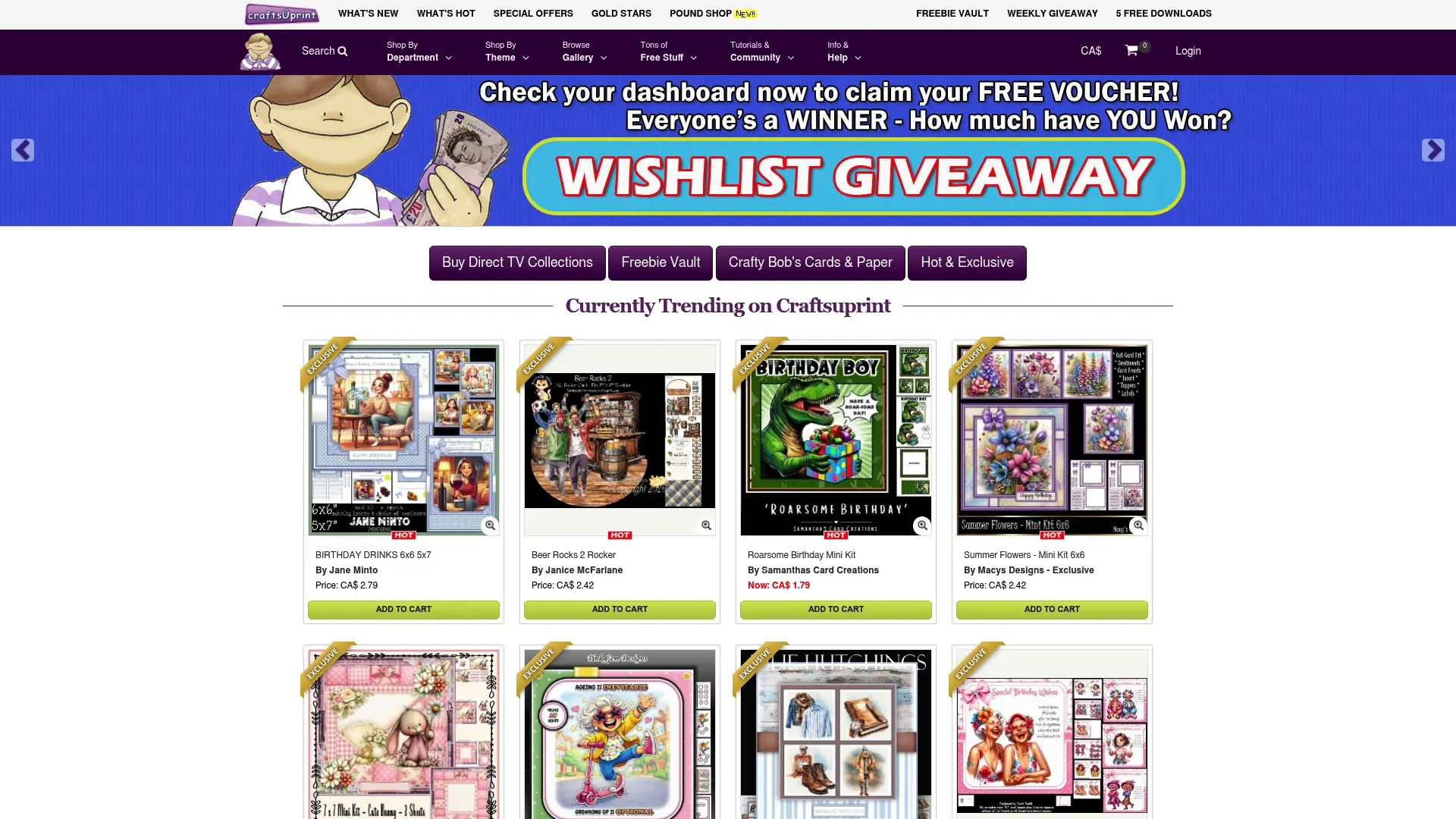
Beyond the downloads, Craftsuprint functions as a craft supply marketplace where independent designers share their work and hobbyists discover new projects every week. The platform includes weekly freebies, community contests, and a Gold Star programme that lets active members earn while they create. Whether you are looking for your next project or hoping to connect with like-minded crafters, Craftsuprint offers a welcoming entry point into the wider world of bespoke craftsmanship and community making. Your next creative chapter is one download away.
FAQ
What is a crafting community?
A crafting community is a social group organised around shared making, repair, or customisation of objects. It functions through ongoing interaction, including discussions, skill-sharing, and peer support, and provides social connection as well as creative development.
Why join a crafting community?
Joining a crafting community offers benefits including belonging, skill development, emotional support, and creative accountability. Research shows that belonging arises from shared making itself, not just conversation, making these communities uniquely rewarding.
What is the difference between a crafting community and a craft marketplace?
A crafting community centres on social interaction and shared making, while a craft marketplace is primarily a platform for buying and selling. Many modern platforms combine both, offering community features alongside commercial functions.
How do online crafting communities compare to in-person ones?
Online communities offer greater accessibility and flexibility, while in-person groups typically build deeper social bonds more quickly. Hybrid formats that blend both approaches can offer the advantages of each.
How do I find a good crafting community to join?
Start by searching local craft shops, libraries, and community centres for in-person groups, or explore dedicated online platforms and social media communities. Look for groups where members actively respond to each other’s work and beginners are welcomed without pressure.