
Step by step craft supply sourcing: your 2026 guide

TL;DR:
- Effective craft supply sourcing involves a systematic process, starting with a detailed brief and ending with a trial order to ensure quality. Suppliers should be thoroughly researched, samples tested, and ethical certifications verified before establishing a relationship. Digital resources like Craftsuprint provide instant access to printable crafts, reducing reliance on physical inventory and shipping.
Effective craft supply sourcing follows a clear sequence: prepare a precise sourcing brief, explore multiple supply options, gather at least three quotes, research shortlisted suppliers, communicate your design requirements, order physical samples, negotiate pricing and minimum order quantities (MOQs), then formalise the relationship with a trial order. That eight-stage process applies whether you are sourcing card stock from a local paper merchant or printable templates from a digital platform like Craftsuprint.
The core stages at a glance:
- Prepare your sourcing brief specifying fibre type, grade, dimensions, sustainability requirements, volumes, and lead times
- Explore supply options locally, at trade fairs, and through online platforms
- Gather at least three quotes to enable genuine cost comparison
- Research shortlisted suppliers for certifications, reviews, and ethical compliance
- Communicate exact design and quality standards before any order is placed
- Order and compare physical samples, noting responsiveness and sample quality
- Negotiate pricing, MOQs, and payment terms once you have evidence from samples
- Formalise with a trial order to validate quality and delivery reliability
- Verify ethical certifications such as FSC, GOTS, and OEKO-TEX
- Check legal compliance for natural or reclaimed materials before use
Table of Contents
- Step by step guide to sourcing craft supplies
- How do you verify ethical sourcing and certifications?
- What are the legal and safety rules for natural and reclaimed materials?
- How do you scale craft supply sourcing beyond local suppliers?
- How Craftsuprint supports UK crafters with digital sourcing
- Logistics and shipping considerations for craft supplies
- Craftsuprint: digital craft resources without the sourcing headaches
- Key takeaways
- FAQ
Step by step guide to sourcing craft supplies
1. Write a precise sourcing brief
A one-page sourcing brief specifying material type, grade, tolerances, volumes, and sustainability requirements prevents mismatched quotes and wasted time. List fibre or substrate type, acceptable colour tolerances, dimensions, annual volume, and any allergen or food-contact limits. Vague requests attract vague offers.
2. Explore your supply options
Start with a Google search for local suppliers, then widen to trade fairs, maker communities, and online wholesale platforms. Referrals from adjacent businesses often surface the most reliable regional partners. Build a shortlist of three to five candidates per material category before making contact.
3. Gather at least three quotes
Get quotes from at least three manufacturers so you can compare on equal terms. Your sourcing brief makes this straightforward: every supplier quotes the same specification, so price differences reflect genuine cost variation rather than scope differences. Always account for shipping, customs, and MOQ costs in the total landed price.
4. Research your shortlist thoroughly
Check customer reviews, trade references, and industry certifications before shortlisting any supplier. Ask about their quality control process, lead times, defect policy, and whether they can handle custom orders. Suppliers who respond quickly and explain trade-offs honestly are worth more than those who simply say yes to everything.
5. Communicate your design and quality requirements
Share written specifications, reference photos, and any compliance notes before production begins. Some suppliers offer prototyping services, though these can add cost. The more explicit you are about tolerances and finishing details, the fewer surprises arrive with the first shipment.
6. Order and assess physical samples
Always test physical samples before committing to bulk orders. Evaluate not just the material itself but how the supplier handles the process: labelling clarity, willingness to discuss changes, and how they respond to feedback. For wood-based materials, tools like moisture meters and digital calipers help verify quality objectively before you sign off.

7. Negotiate terms and MOQs
MOQs are almost always negotiable, particularly once you have sample evidence to reference. Building a supplier relationship before price negotiations produces better long-term outcomes than leading with cost demands. Offer consistent payment timing or a committed monthly spend in exchange for improved pricing tiers. A 50/50 payment split (half upfront, half on delivery) is a reasonable starting position for new accounts.
8. Place a trial order to validate the relationship
A trial order confirms quality, delivery reliability, and process efficiency before you commit to larger volumes. Document everything: defect rates, actual lead times, and communication quality. This evidence becomes your leverage in future negotiations.
9. Track sourcing costs and inventory
Keep detailed records of every material expense. Material costs should ideally sit at 25%–30% of your final retail price; for a product retailing at £40, that means keeping material spend at or below £12. Use a spreadsheet or inventory management software to log quantities, purchase dates, and supplier lot numbers.
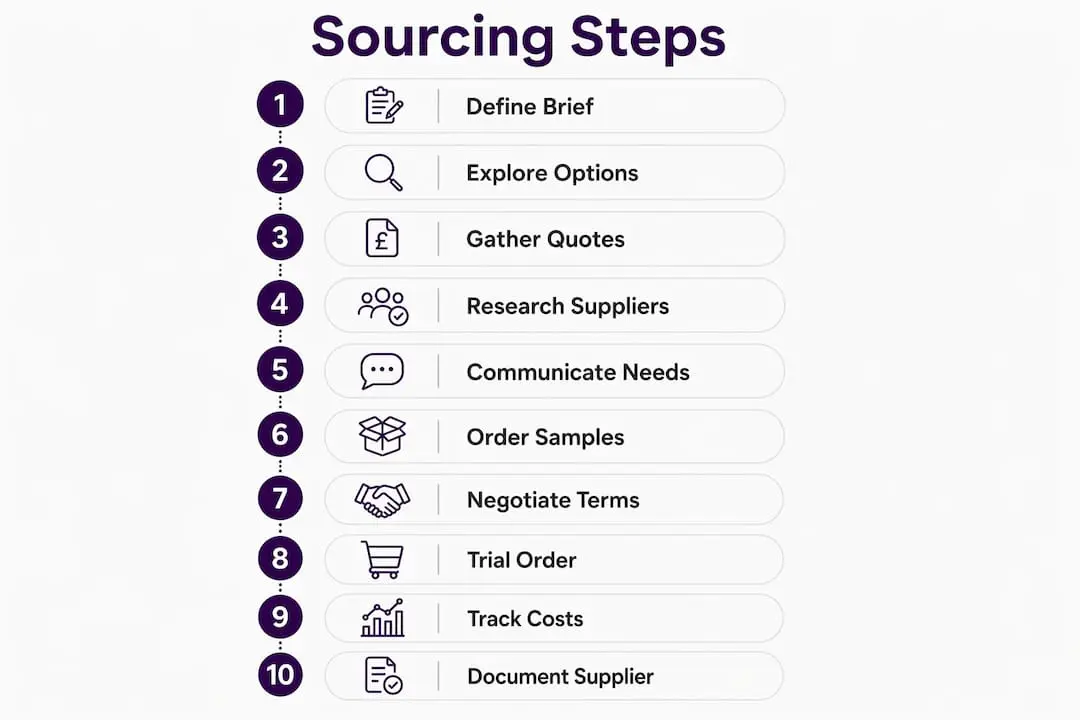
10. Maintain supplier documentation
Create a one-page supplier profile for each approved partner, covering contact details, certifications, lead times, sample history, and approved product descriptions. This keeps procurement consistent and makes it easy to onboard anyone else who handles ordering on your behalf.
How do you verify ethical sourcing and certifications?
Local sourcing does not automatically guarantee ethical compliance. A supplier based in the UK can still use materials processed under poor labour conditions elsewhere in the supply chain. Independent verification is always necessary.
The three certifications that carry the most weight in craft supply sourcing are:
- FSC (Forest Stewardship Council): Verifies responsible forest management for wood and paper products
- GOTS (Global Organic Textile Standard): Covers organic processing for textiles from fibre to finished fabric
- OEKO-TEX Standard 100: Tests textiles for harmful substances, relevant for children’s products and skin-contact items
These certifications are key trust signals when selecting craft supply partners. Ask suppliers for their chain-of-custody documentation, not just a logo on their website. A supplier who can produce current certification numbers and expiry dates is demonstrably more reliable than one who mentions certification in passing.
Assess storytelling value too. Suppliers who can explain where their raw materials originate and how workers are treated give you content that builds customer trust. That provenance story is increasingly a purchasing signal for buyers of handmade goods.
Pro Tip: Build a simple scorecard rating each supplier on price, lead time, quality consistency, ethical standards, and communication speed. Score each on a 1–5 scale after your first sample order. The cheapest supplier is rarely the least expensive once rework, delays, and dissatisfied customers are factored in.
For children’s craft products, FSC, GOTS, and OEKO-TEX certifications are particularly relevant alongside EN71 toy safety standards.
What are the legal and safety rules for natural and reclaimed materials?
Sourcing from nature or using reclaimed materials introduces a specific set of legal and safety obligations that many crafters overlook until something goes wrong.
Key considerations:
- Protected species and public land: Some natural materials, including certain feathers, plants, and stones, are legally protected. Check with your local council or wildlife authority before collecting from beaches, woodlands, or Sites of Special Scientific Interest (SSSIs).
- Children’s product safety: Check for certifications such as EN71 for children’s supplies to confirm they are non-toxic. Paints, adhesives, and resins may contain hazardous substances requiring proper labelling.
- Reclaimed materials: Avoid any reclaimed items showing signs of pests, mould, or chemical exposure. Reclaimed wood in particular can harbour woodworm or residual treatments that are unsafe in a crafting context.
- Imported materials: Verify that any imported supplies meet UK customs regulations and banned-substance lists. Import documentation protects you if a customs or consumer dispute arises.
- Treatment and storage: Dry and treat natural elements properly after collection to prevent mould, insect infestation, or decay during storage.
- Labelling requirements: Secondhand or reclaimed materials sold as part of a finished product may require specific labelling under UK consumer goods regulations.
How do you scale craft supply sourcing beyond local suppliers?
Local sourcing works well for initial inspection and relationship building. International sourcing tends to offer better pricing, wider material variety, and greater consistency once you are producing at volume. The trade-off is higher MOQs, longer lead times, and more complex ethics verification.
Practical approaches for scaling:
- Cooperative buying groups: Pooling orders with other small makers lets you meet bulk thresholds that individual crafters cannot reach alone. This is particularly useful for textiles, where fabric wholesalers may require full rolls of 40–80 metres.
- Inventory management with FIFO: First In, First Out (FIFO) keeps older stock moving before newer deliveries. This matters most for materials with shelf lives, such as essential oils, adhesives, and certain preservatives.
- Budgeting for hidden costs: Shipping fees, customs charges, and MOQ commitments all affect your true landed cost. Track these separately from unit prices.
- Digital resources as a parallel supply stream: Platforms like Craftsuprint provide printable craft resources that complement physical sourcing, particularly for card making, paper crafts, and decorative projects where a digital template replaces a physical material entirely.
How Craftsuprint supports UK crafters with digital sourcing
Craftsuprint operates as a dedicated marketplace for digital craft downloads, printable templates, and craft tutorials. For hobby crafters and small-scale designers, it fills a gap that physical sourcing cannot: instant access to ready-to-print card making kits, paper patterns, and themed design packs without MOQs, lead times, or shipping costs.
The platform’s craft supply classifieds list physical and digital supplies alongside certification details, making it easier to cross-reference sourcing options in one place. Weekly freebies, community contests, and the Gold Star programme give independent designers a route to income while giving crafters access to fresh, curated content. Craftsuprint also publishes practical guides covering everything from craft kit assembly to building a craft brand, which sit alongside the sourcing process described in this article.
Logistics and shipping considerations for craft supplies
Shipping costs can quietly erode the savings you negotiate on unit price. For UK crafters sourcing internationally, customs duties, import VAT, and carrier surcharges all add to the landed cost. Calculate these before comparing international and domestic quotes.
Lead times deserve the same scrutiny as price. A supplier offering 20% lower unit costs but a 12-week lead time may leave you unable to fulfil seasonal orders. Build buffer time into your production calendar, particularly around peak periods like Christmas and Valentine’s Day when carrier capacity tightens. For fragile or moisture-sensitive materials, specify packaging requirements in your sourcing brief and confirm them with the supplier before shipment. Reclaimed or natural materials may also require phytosanitary certificates if crossing borders, so check import documentation requirements early.
Craftsuprint: digital craft resources without the sourcing headaches
Physical sourcing takes time, minimum orders, and storage space. Craftsuprint offers a direct alternative for the printable side of your craft practice.
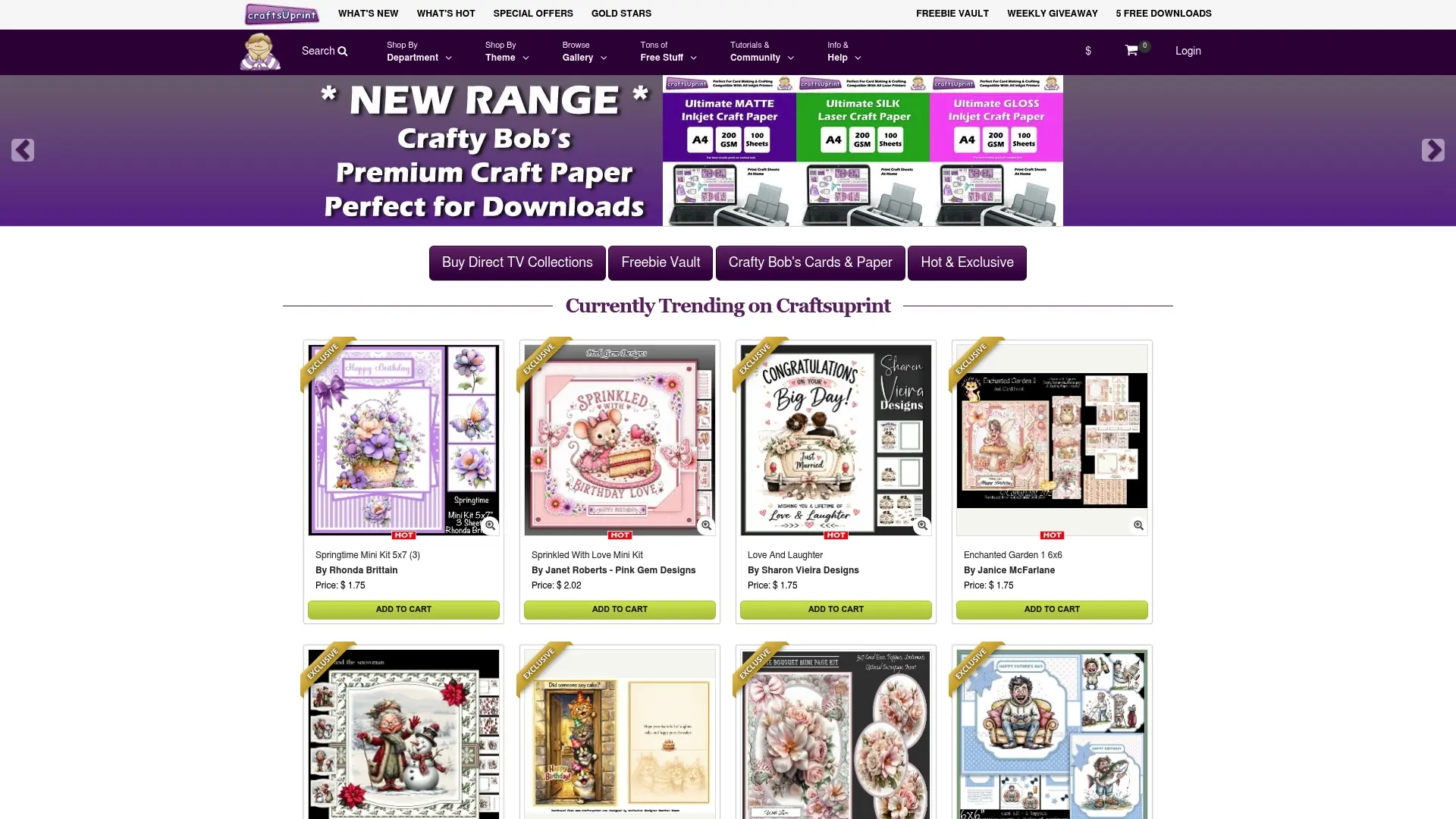
Download card making kits, paper craft templates, and themed design packs instantly, with no MOQ and no waiting for a delivery. The platform suits hobby crafters who want quality-assured digital content and small designers looking to supplement their physical supply chain with ready-to-use printable resources. Craftsuprint’s Create & Craft downloads give you access to a curated library updated regularly with new designs, tutorials, and seasonal content. New members can also claim a free members gift to get started without any upfront commitment. Visit Craftsuprint today and browse the full range of digital craft supplies available for immediate download.
Key takeaways
A structured, step-by-step approach to craft supply sourcing, starting with a precise brief and ending with a documented trial order, consistently produces better quality outcomes and lower total costs than ad hoc purchasing.
| Point | Details |
|---|---|
| Start with a sourcing brief | Specify material type, grade, volumes, and sustainability requirements before contacting any supplier. |
| Verify certifications independently | FSC, GOTS, and OEKO-TEX are the key standards; always request chain-of-custody documentation, not just a logo. |
| Keep material costs in check | Aim for material spend at 25%–30% of your retail price to protect margins across your product range. |
| Use FIFO for inventory | Rotate older stock first, especially for shelf-life-limited materials like adhesives and essential oils. |
| Craftsuprint for digital sourcing | Craftsuprint provides instant-download printable craft resources with no MOQs, ideal alongside physical supply chains. |
FAQ
What is the first step in craft supply sourcing?
Prepare a one-page sourcing brief specifying material type, grade, dimensions, volumes, and any sustainability or compliance requirements. This single document enables accurate, comparable quotes from multiple suppliers.
How many quotes should I get before choosing a supplier?
Get at least three quotes so you can compare total landed cost, not just unit price. Factor in shipping, customs, and MOQ commitments before making a decision.
Which certifications matter most for ethical craft sourcing?
FSC covers wood and paper products, GOTS applies to organic textiles, and OEKO-TEX Standard 100 verifies textile safety. For children’s products, EN71 is the relevant UK safety standard.
How do I manage inventory when buying craft supplies in bulk?
Apply the FIFO (First In, First Out) method: place new deliveries behind existing stock so older batches are used first. This prevents degradation in shelf-life-limited materials such as essential oils and adhesives.
Where can I find digital craft supplies without minimum order requirements?
Craftsuprint offers a marketplace of printable templates, card making kits, and paper craft downloads available for immediate purchase with no MOQs or shipping delays.