The role of sentiments in greeting cards explained

Sentiments in greeting cards serve as intentional vehicles for human emotion, giving people a tangible, considered way to express feelings that words spoken aloud often fail to capture. The role of sentiments in greeting cards goes far beyond a printed verse: they mark milestones, reinforce bonds, and perform a kind of emotional work that a text message simply cannot replicate. Research confirms that greeting card verse functions as ceremonial discourse, sincerely expressing gratitude, love, and recognition at life’s key moments.
What makes this form of communication so durable is its dual nature. Cards deliver broad messages that still feel personal to the individual receiving them, a principle the greeting card industry calls “universal specificity.” The sender chooses the card, the recipient reads it as a direct address. That gap between mass production and personal meaning is where the real emotional power lives.
Key functions sentiments perform in greeting cards:
- Articulate emotions that are difficult to express face to face
- Mark social rituals such as birthdays, bereavements, and celebrations
- Blend a universal message with the sender’s personal intent
- Reinforce cultural norms around emotional expression
- Create a lasting physical record of a relationship at a given moment
Why greeting cards carry such emotional and social weight
Cards create a tangible connection that digital communication consistently struggles to match. Receiving a physical card involves touch, visual design, and the knowledge that someone spent time selecting it, all of which amplify the emotional signal far beyond a typed message. The emotional impact of a card includes the time spent choosing it, the act of physical delivery, and its lasting presence in a home as a quiet record of a relationship.
Sentiments also perform what researchers describe as ritualised emotional labour. The act of walking into a shop, reading dozens of options, and selecting one that fits a specific person and occasion is itself a form of care. That effort communicates something before the recipient even reads a word. Cards also serve a social function by providing a culturally accepted script for moments where people feel uncertain about what to say, whether at a bereavement, a retirement, or a difficult illness.
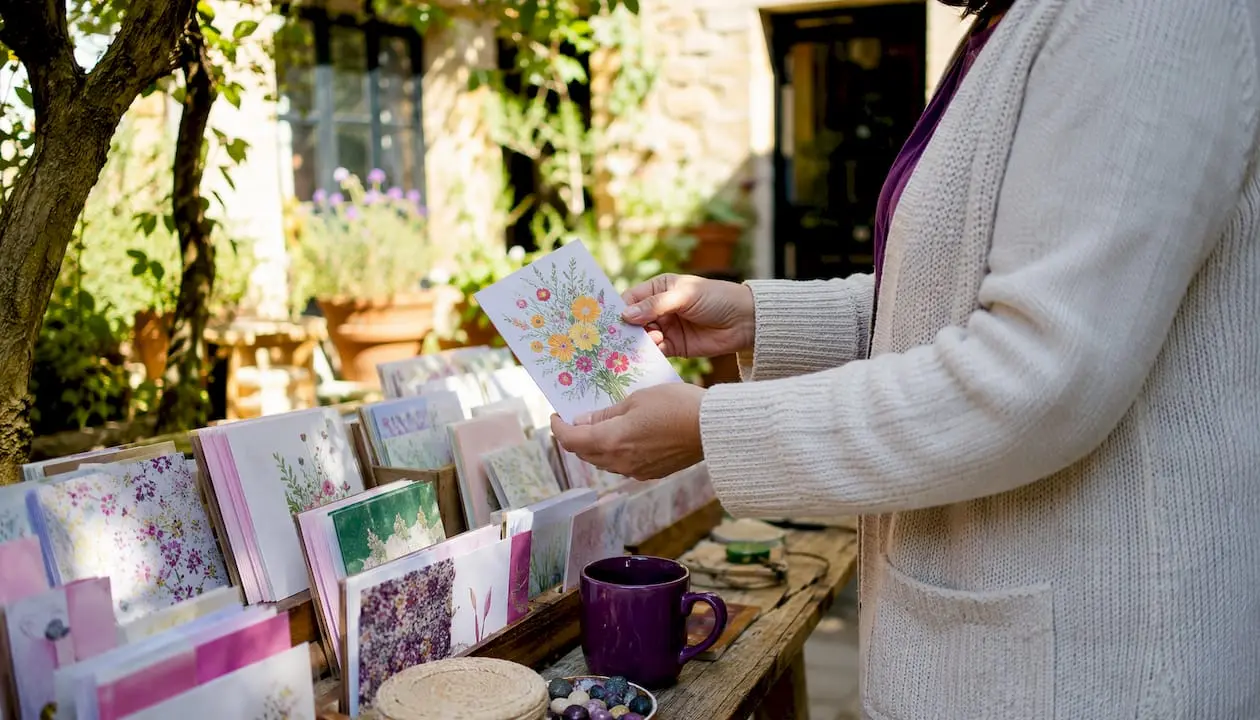
Cards cherished as keepsakes document evolving relationships in a way ephemeral digital messages never do. A birthday card kept in a drawer for twenty years carries weight that a WhatsApp notification cannot.
Pro Tip: When choosing a card, prioritise the sentiment over the design. A verse that genuinely reflects what you feel will resonate far longer than a striking image paired with a generic message.
What psychology tells us about sending and receiving cards
Receiving a card triggers a distinct emotional response: the physical anticipation of opening an envelope, the recognition of a familiar handwriting, and the warmth of knowing someone thought of you deliberately. These are not trivial reactions. Research on consumer emotional labour shows that selecting and sending a card often provides more comfort and sincerity than a digital message, regardless of whether the text inside was mass produced.
| Perspective | Psychological effect |
|---|---|
| Sending a card | Fulfils social obligation, provides emotional relief, expresses care actively |
| Receiving a card | Triggers feelings of recognition, belonging, and being valued |
| Keeping a card | Reinforces relational memory and provides ongoing emotional comfort |
Key psychological motivators behind card exchanges:
- Reassurance that a relationship is valued by both parties
- Mood enhancement through the act of giving and receiving
- Maintenance of social bonds across distance or time
- Relief for those who struggle to articulate complex emotions verbally
- A sense of decorum and ceremony that marks an occasion as significant
The psychological comfort from the ritual of card giving tends to outweigh any scrutiny of whether the printed text is original. People understand the convention and respond to the gesture, not just the words.
How sentiments work differently in personal and business relationships
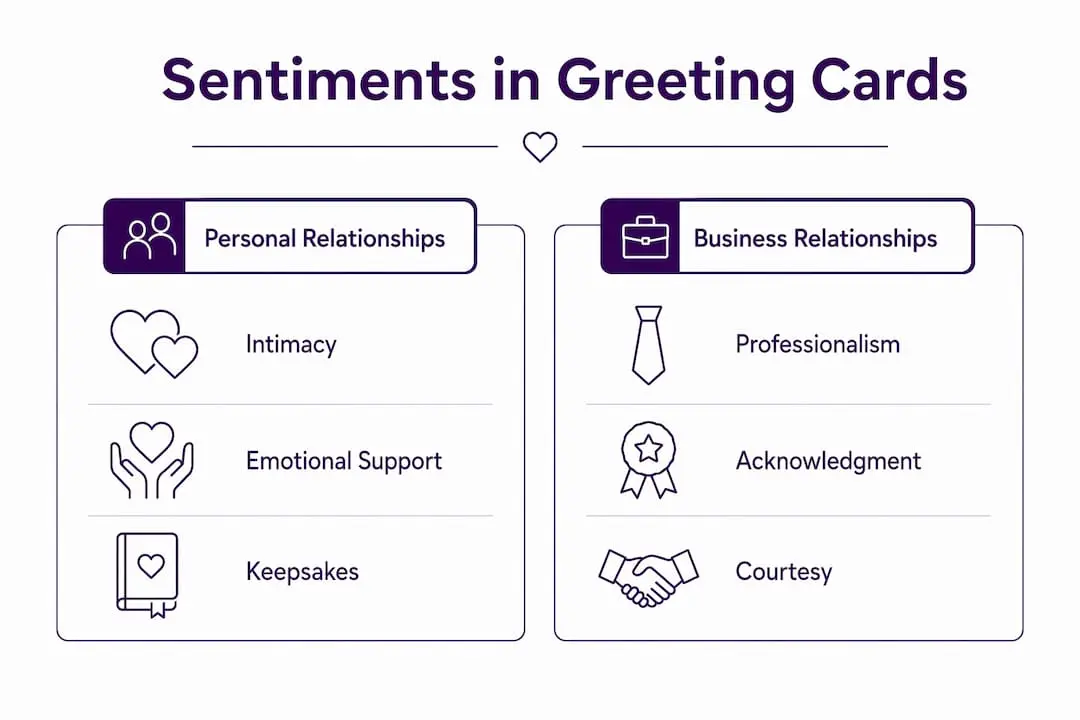
In personal relationships, greeting card sentiments carry the weight of intimacy. A card sent to a grieving friend, a parent on their birthday, or a partner on an anniversary does something a phone call cannot: it exists. It sits on a mantelpiece, gets tucked into a memory box, and resurfaces years later. Sentiments in these contexts express affection, gratitude, and sympathy in a form the recipient can return to.

Business greeting cards operate on different terms but serve an equally clear purpose. Sending a card to a client at the end of the year, or to a colleague on a promotion, communicates goodwill and professional regard without the awkwardness of a face-to-face declaration. The sentiment needs to be warm but measured, personal enough to feel genuine, and appropriate enough not to overstep.
Examples of sentiments suited to each context:
- Personal, celebratory: “Wishing you every happiness on your special day” paired with a handwritten line specific to the recipient
- Personal, sympathetic: “Thinking of you and holding you close in my thoughts”
- Business, appreciative: “Thank you for your trust and partnership this year”
- Business, celebratory: “Congratulations on this well-deserved achievement”
The common thread is that sentiments in both spheres convey messages that feel awkward to deliver directly. Cards give those messages a form.
How to choose the right card for the occasion and sentiment
Matching a card’s sentiment to the occasion and the relationship is the single most important decision in the selection process. A humorous card sent to a close friend on a milestone birthday lands very differently from the same card sent to a distant colleague. Tone, relationship closeness, and the emotional register of the occasion all need to align.
Design elements reinforce the sentiment before the recipient reads a single word. Colour psychology plays a real role: warm golds and reds signal celebration, muted blues and greens suggest calm or sympathy, and pastels tend to read as gentle and affectionate. Imagery works the same way, with florals suggesting tenderness and bold geometric patterns suggesting energy or humour.
Guidance for selecting the right card:
- Consider how well you know the recipient and match formality accordingly
- Read the pre-printed verse aloud to test whether it sounds like something you would genuinely say
- Choose imagery that reflects the recipient’s taste, not just the occasion’s convention
- For card making ideas, look at themed designs that align sentiment with visual language
- Avoid cards where the verse contradicts the image in tone
Pro Tip: A handwritten note inside a mass-produced card is the step that transforms it from a commercial object into a personal communication. Even two sentences in your own words make a lasting impression that no pre-printed verse alone can achieve.
Current trends shaping greeting cards in the UK
The UK greeting card market has shifted noticeably toward authenticity and personalisation. Buyers increasingly seek cards that feel considered rather than generic, which has driven growth in handmade, craft-based, and independently designed cards. Platforms like Craftsuprint reflect this shift directly, offering card making downloads that let crafters produce genuinely personal cards rather than reaching for the nearest shop-bought option.
Sustainability has become a purchasing factor rather than a niche concern. Recycled materials, plastic-free packaging, and cards from independent makers with transparent supply chains now influence buying decisions in a way they did not a decade ago.
UK-specific trends affecting card sentiment choices in 2026:
- Growth in non-occasion cards sent simply to say “I’m thinking of you”
- Rising demand for sentiments that acknowledge grief, mental health, and life complexity
- Preference for cards that look handmade or carry visible craft elements
- Hybrid formats combining a physical card with a digital element such as a QR code linking to a video message
- Increased interest in card design trends that blend contemporary aesthetics with heartfelt language
The appetite for cards that acknowledge modern emotional complexity, rather than defaulting to relentless cheerfulness, reflects a broader cultural shift in how the UK talks about feelings.
What research reveals about how people actually use card sentiments
The struggle many people face in expressing complex emotions is well documented, and greeting cards exist partly to solve that problem. Research by Emily West found that many consumers value pre-printed sentiments precisely because they articulate feelings the sender cannot easily put into words themselves. This is not laziness. For many people, finding language for grief, admiration, or deep affection is genuinely difficult, and a well-chosen verse provides real relief.
There is a cultural divide in how people relate to pre-printed text. Consumers with higher cultural capital tend to distrust mass-produced sentiments, preferring cards that appear handmade or more original. Others, who represent a large portion of card buyers, value the pre-printed verse as the card’s most important feature. Neither response is wrong. Both reflect different but equally valid relationships with emotional expression and authenticity.
Research also shows that greeting card sentiments construct an idealised vision of family centred on love and support, functioning as a cultural defence against distance, stress, and the pressures of modern life. Cards sent between family members do not just communicate; they reinforce a shared story about what the relationship means.
Key findings from academic and industry research:
- Consumers negotiate authenticity differently depending on cultural background and education
- The ritual of selecting and delivering a card carries emotional weight independent of the printed text
- Pre-printed sentiments serve as a resource for people who lack confidence in their own expressive ability
- Cards function as cultural artefacts that reflect and reinforce social norms around emotion
- The text of a card is the primary selection criterion for the majority of buyers, according to the Greeting Card Association
Thoughtful gifts and cards that support emotional expression also play a role in family relationships beyond the card itself. Research on emotional gifts for children shows how tangible, considered gestures contribute to emotional development and relational closeness across generations.
How greeting card sentiments evolved historically
The modern greeting card traces its origins to the early Victorian era in Britain. The first commercially produced Christmas card appeared in 1843, designed by John Calcott Horsley for Henry Cole, and printed in London. Before that, handwritten letters and visiting cards carried the emotional work that printed cards would eventually take over.
The late nineteenth century saw the rise of penny post, which made sending cards affordable for ordinary people rather than just the wealthy. Sentiments in this period tended toward the formal and the ornate, reflecting Victorian values around decorum and emotional restraint. Flowery language, religious references, and elaborate imagery were standard.
The twentieth century brought significant change. Two world wars created demand for cards that expressed longing, solidarity, and comfort across great distances. Sentiments became more direct and emotionally honest as a result. By the mid-twentieth century, the greeting card industry had professionalised sentiment writing, with companies employing dedicated writers to craft verses that felt personal despite being produced for millions.
The late twentieth century introduced humour as a dominant register, particularly in the UK market, where irony and wit became as commercially significant as sincerity. Today’s card market holds all of these registers simultaneously, from the formally sentimental to the deliberately absurd.
How different cultures express sentiments through greeting cards
Cultural context shapes both what sentiments are considered appropriate and how directly they are expressed. In the UK, understatement is a recognised feature of emotional communication: a card that says “thinking of you” carries significant weight precisely because it does not overstate. American card culture tends toward more effusive expression, with longer verses and more explicit declarations of love and pride.
In East Asian cultures, greeting cards often carry sentiments tied to collective values rather than individual feeling. Cards exchanged at Lunar New Year, for instance, focus on prosperity, health, and family harmony rather than personal affection between sender and recipient. The sentiment serves the group as much as the individual.
Religious and seasonal traditions also shape sentiment conventions. Diwali cards in British South Asian communities blend English and South Asian cultural registers, often combining traditional blessings with contemporary design. Eid cards similarly navigate between religious sentiment and personal warmth, reflecting the dual cultural identity of many British Muslim families.
What remains consistent across cultures is the underlying function: cards mark moments, acknowledge relationships, and give people a form for feelings that resist easy spoken expression.
Key takeaways
Sentiments in greeting cards perform emotional and social work that digital communication cannot replicate, combining universal messages with personal meaning to strengthen relationships and mark life’s significant moments.
| Point | Details |
|---|---|
| Sentiments articulate difficult emotions | Cards give people language for feelings that are hard to express verbally or in writing. |
| Ritual matters as much as wording | The act of selecting and delivering a card carries emotional weight beyond the printed text. |
| Cultural capital shapes card preferences | Consumers with higher cultural capital often prefer original or handmade cards; others value pre-printed verses most. |
| Design reinforces sentiment | Colour, imagery, and wording work together to signal the emotional register before a word is read. |
| Handwritten notes transform cards | Adding even two personal sentences converts a mass-produced card into a genuinely intimate communication. |
FAQ
What is a sentiment in card making?
A sentiment in card making is the written message or verse that conveys the emotional purpose of the card, whether that is love, congratulations, sympathy, or gratitude. It is the core communicative element that gives the card its meaning beyond decoration.
What is the message in a greeting card called?
The message inside a greeting card is commonly called the sentiment or verse. In the card making and craft community, “sentiment” refers specifically to the printed or handwritten text that expresses the sender’s emotional intent.
What are the key elements of a greeting card?
A greeting card typically combines a sentiment (the written message), imagery or design, and the physical format of the card itself. The sentiment is the primary selection criterion for most buyers, with design and imagery serving to reinforce the emotional tone of the words.
Why do greetings matter in personal and social contexts?
Greetings, including cards, signal recognition and belonging, two psychological needs that research consistently links to wellbeing. Sending a card tells the recipient that they were thought of deliberately, which carries emotional weight that a casual digital message rarely achieves.
How do you personalise a mass-produced greeting card?
Adding a handwritten note inside the card is the most effective way to personalise it. Even a brief personal line transforms the card from a generic commercial object into a direct communication, as the act of writing in your own words signals genuine effort and care.
Ready to create cards that carry real sentiment? Craftsuprint offers a wide range of card making resources and printable designs to help you craft something genuinely personal. Claim your free members’ gift and start making cards that people actually keep.