
Niche craft categories: your complete 2026 guide

TL;DR:
- Niche craft categories are specialized segments that focus on specific materials, styles, and target audiences. Choosing the right niche helps crafters stand out and build loyalty in a competitive market. Digital niches offer higher profit margins and scalability compared to physical crafts.
Niche craft categories are defined as specialised segments within the broader crafting market, each focused on a distinct combination of material, style, target audience, and purpose. Choosing the right specialty changes everything, whether you are a hobby crafter seeking fresh inspiration or a designer building a profitable digital shop. Platforms like Etsy and Craftsuprint have made it easier than ever to find and serve these focused communities. Understanding what are niche craft categories gives you a real creative and commercial edge in a market that rewards specificity over generality.
What are niche craft categories and how do they differ from broad ones?
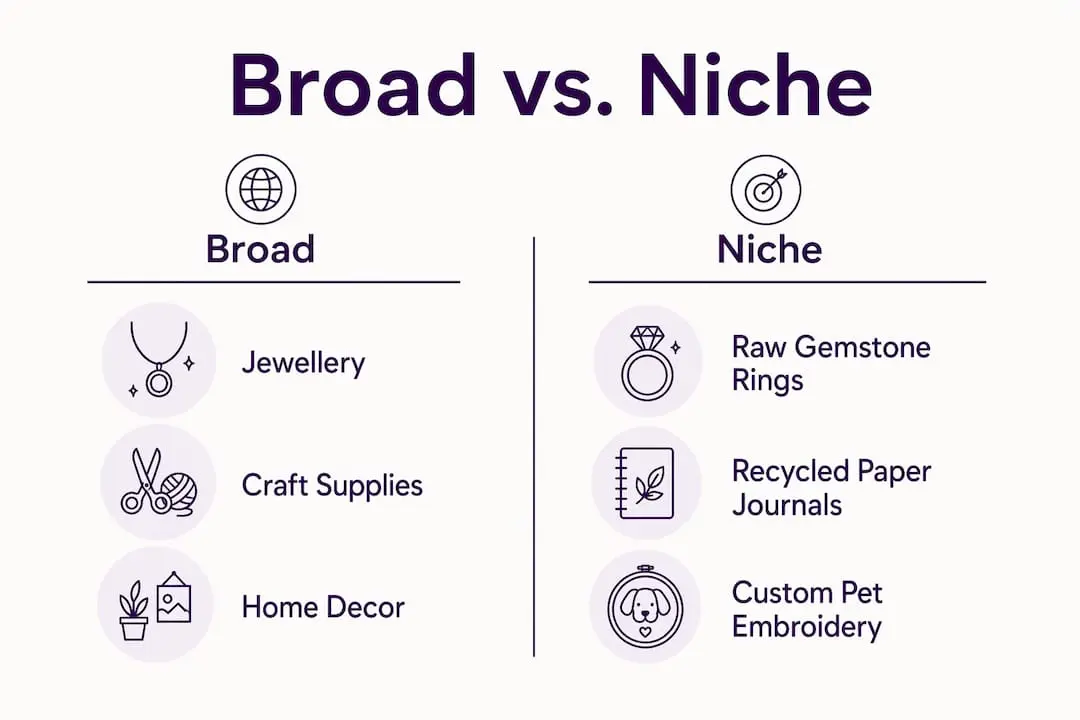
Niche craft categories are not simply smaller versions of broad craft types. They are defined by layering material, aesthetic, and target audience together to create a precise, competition-reducing focus. A broad category like “jewellery” covers millions of products. A niche like “raw gemstone engagement rings for eco-conscious couples” speaks directly to a specific buyer with specific values.
The difference matters commercially. Broad categories like jewellery occupy roughly 15% of Etsy’s market, creating intense saturation. Micro-niches defined by psychographics cut through that noise entirely. Buyers searching for something specific find you faster, trust you more, and convert at higher rates.
Craft industry adviser Erin from Made Urban confirms that choosing more than one product category dilutes clarity for shoppers. Subcategories clarify product purpose and sharpen niche definition. The goal is for a buyer to land on your shop or listing and immediately understand what you make and who it is for.
Here is a direct comparison to show the difference in practice:
| Broad category | Niche category | Why it works |
|---|---|---|
| Jewellery | Raw gemstone rings for eco-conscious brides | Specific material, audience, and occasion |
| Paper crafts | Botanical watercolour birthday card kits | Defined style, format, and use case |
| Needlework | Slogan-based needlepoint PDFs for modern interiors | Phrase-first format, digital delivery, clear aesthetic |
| Home décor | Upcycled vintage tin wall art for cottagecore fans | Material source, style, and audience identity |
| Candle making | Soy wax candles with dried wildflowers for wedding favours | Ingredient, decoration, and occasion |
Pro Tip: When testing a niche, write a one-sentence description of your product that includes the material, the style, and the buyer. If you cannot do it in one sentence, the niche is still too broad.
What are popular niche craft categories and trending micro-niches in 2026?
The most commercially active specialty crafting categories in 2026 share one trait: they solve a specific problem or serve a defined identity. Trend data from early 2026 points to five major groupings that are generating consistent demand.

Sustainable and eco-friendly crafts sit at the top of the list. Buyers are actively seeking products made from recycled, natural, or upcycled materials. This includes beeswax wraps, seed paper greeting cards, and reclaimed wood home accessories. The audience values provenance as much as aesthetics.
Personalised and custom gifts remain a dominant force. Monogrammed leather goods, custom pet portrait embroidery kits, and name-stamped jewellery all perform strongly. Personalisation adds perceived value without proportionally increasing production cost.
Vintage and upcycled crafts attract buyers who want character and sustainability in one product. Repurposed fabric quilts, restored enamelware, and vintage map decoupage are strong examples. The seasonal craft trends in 2026 show this category growing steadily across digital marketplaces.
Digital printables and craft downloads are among the fastest-growing unique craft categories. This includes planner templates, party decoration kits, cross-stitch patterns, and card-making sheets. Digital craft products like planner templates yield approximately 90% net profit margins after platform fees. That figure dwarfs the roughly 75% gross margins typical of physical crafts.
Subscription craft kits are building loyal audiences. Monthly boxes focused on a single niche, such as botanical pressing or lino printing, create recurring revenue and strong community bonds. Buyers commit to a craft journey rather than a single purchase.
Here is a quick-reference list of trending micro-niches worth exploring right now:
- Cottagecore pressed flower art kits
- Slogan-based needlepoint PDF patterns
- Boho macramé wall hanging kits for renters
- Personalised memorial jewellery using resin
- Eco-printed fabric using natural dyes and leaves
- Digital party printables for niche celebrations (e.g., book club birthdays)
- Miniature food sculpting with polymer clay
- Celestial-themed wax seal stamp sets
Each of these niches combines a clear material, a recognisable aesthetic, and a defined buyer. That combination is what separates a profitable niche from a vague product idea.
How to find the right niche craft category for your skills and goals
Craft product niche selection is a process, not a guess. The crafters who build sustainable businesses follow a structured approach that balances personal skill with genuine market demand.
1. Audit your existing skills and materials Start with what you already make well. List your top three craft skills and the materials you use most. This is your starting point, not your final answer. You are looking for the intersection of competence and enthusiasm.
2. Research market demand before committing Search Etsy, Pinterest, and Google Trends for your skill area. Look at what is selling, not just what is popular on social media. Read customer reviews on competitor listings to find recurring complaints or unmet desires. Those gaps are your niche opportunities.
3. Define your buyer using psychographics, not just demographics Age and gender tell you very little. Sellers using psychographic targeting such as values, lifestyle, and interests outperform those relying solely on demographics when defining craft niches. Ask yourself: what does my ideal buyer care about? What does their home look like? What events do they celebrate?
4. Layer your niche definition Combine material, style, audience, and purpose into a single clear statement. “Handmade soy candles” is a category. “Soy candles with pressed wildflowers for cottagecore home décor enthusiasts” is a niche. The categorised craft products guide on Craftsuprint explains how subcategory selection directly affects visibility and buyer clarity.
5. Validate before scaling Create three to five products in your chosen niche and test them at a craft fair, on Etsy, or through a small social media audience. Measure which products generate the most questions, saves, and purchases. Let real buyer behaviour guide your next steps.
6. Avoid the passion trap Craft business experts warn that selecting a niche purely on passion without validating market demand is a leading cause of business failure. Passion sustains you through slow periods, but demand pays the bills. You need both.
Pro Tip: Before investing in materials or equipment, create a single minimum viable product in your target niche and list it online. Real buyer interest is the only reliable validation tool.
What role do digital and hyper-specialised craft niches play in profitability?
Digital craft niches represent the clearest path to high margins and scalable income for crafters who want to grow beyond physical production limits. The model is simple: create once, sell repeatedly, with no inventory and minimal overhead.
The numbers make the case plainly. Digital planner templates yield around 90% net profit after platform fees, compared to roughly 75% gross margins for physical crafts. That gap widens further when you factor in shipping costs, material waste, and production time for physical goods.
Hyper-specialised digital businesses demonstrate what is possible at the extreme end of niche focus. Slogan-based needlepoint pattern businesses, for example, can generate up to £13,000 monthly recurring revenue through niche-specific automation rather than broad marketplace listings. That figure comes from a single, tightly defined product type with a clear audience and a repeatable production process.
The key differentiator in these businesses is the phrase-first workflow. Rather than converting generic images into patterns, successful digital niche creators build tools or processes that convert specific text or phrases into professionally formatted PDFs. This approach avoids marketplace saturation and creates a product that feels bespoke even at scale.
Here is a comparison of digital versus physical craft niches across key business metrics:
| Metric | Digital craft niche | Physical craft niche |
|---|---|---|
| Profit margin | ~90% net after fees | ~75% gross before overheads |
| Scalability | Unlimited (no stock limits) | Limited by production time |
| Startup cost | Low (software, design tools) | Moderate to high (materials, tools) |
| Delivery | Instant download | Postage and packaging required |
| Niche depth | Phrase-first, highly specific | Material and style led |
The role of templates for small craft businesses is particularly relevant here. Digital templates in niche categories, from botanical card-making sheets to themed scrapbooking kits, allow crafters to serve a specific audience repeatedly without starting from scratch each time.
Physical craft niches still hold enormous value, particularly for premium, handmade, or tactile products where the maker story is part of the appeal. The choice between digital and physical is not binary. Many successful crafters run both, using digital products to generate consistent income while physical pieces command higher individual prices.
How to expand and evolve within your chosen niche craft category
Staying in a niche does not mean standing still. The best niche craft businesses grow by expanding horizontally, adding complementary products that serve the same audience rather than chasing entirely new markets.
A leather goods maker who starts with journals can add bookmarks, card holders, and key fobs without leaving their niche. Each new product serves the same buyer and reinforces the brand’s identity. This approach builds customer loyalty because buyers return knowing exactly what to expect. The craft ideas and tutorials section on Craftsuprint is a useful resource for spotting complementary product ideas within your existing niche.
Ongoing trend-spotting is equally important. Niches shift as cultural moments change. Cottagecore drove demand for pressed flower art. The resurgence of slow living has boosted lino printing and hand-lettering kits. Monitoring Pinterest Trends, Etsy’s trend reports, and social media hashtags keeps you ahead of demand rather than chasing it.
The most common mistake at this stage is abandoning niche clarity in pursuit of growth. Adding products that serve a different audience or aesthetic confuses existing buyers and weakens your brand signal. Growth within a niche means going deeper, not wider.
Here are the most effective ways to expand within a niche without losing focus:
- Add complementary products that use the same materials or techniques
- Create seasonal or limited-edition versions of your core products
- Develop a beginner kit version of your most popular item to attract new buyers
- Bundle existing products into gift sets for key occasions
- Introduce a digital version of a physical product (e.g., a printable pattern for a kit you already sell)
Maintaining consistency in your visual identity, language, and product quality is what converts first-time buyers into repeat customers. Niche clarity is not a constraint. It is your competitive advantage.
Key takeaways
Niche craft categories succeed because they combine material, audience, and purpose into a single focused offer that reduces competition and builds lasting buyer loyalty.
| Point | Details |
|---|---|
| Define your niche precisely | Layer material, style, audience, and purpose into one clear product statement. |
| Digital niches offer higher margins | Digital craft products yield around 90% net profit, outperforming physical crafts. |
| Psychographics beat demographics | Target buyers by values and lifestyle, not just age or gender, for stronger results. |
| Validate before investing | Test three to five products before committing to materials, tools, or a full range. |
| Expand horizontally, not broadly | Add complementary products for the same audience rather than chasing new markets. |
Why niche specificity is the most underrated craft strategy
Most crafters I speak to underestimate how much work their niche is doing for them. When your product description, your visual style, and your materials all point to the same specific buyer, you stop competing on price and start competing on fit. That is a much better position to be in.
The mistake I see most often is choosing a niche based purely on what someone loves making, without checking whether anyone is actively searching for it. Boredom is a top cause of craft business failure, so passion absolutely matters. But passion without demand is a hobby, not a business. The crafters who thrive long-term are the ones who find the overlap between what they love creating and what a specific group of people genuinely wants to buy.
I am particularly excited about the digital micro-niche space in 2026. The barrier to entry is low, the margins are exceptional, and the ability to serve a hyper-specific audience at scale is unlike anything available in physical crafting. A well-designed needlepoint slogan PDF or a beautifully formatted botanical card-making kit can reach thousands of buyers without a single trip to the post office.
My honest advice: pick one niche, go deep, and resist the urge to expand until your core offer is genuinely strong. The crafters who try to serve everyone end up serving no one particularly well. Specificity is not limiting. It is the thing that makes people say, “This was made for me.”
— Rob
Explore niche craft categories with Craftsuprint
Craftsuprint is built for crafters who want to go deep into a niche rather than browse endlessly. Whether you are drawn to paper crafts, digital printables, or specialty card-making kits, the platform gives you the tools and inspiration to execute your niche with confidence.
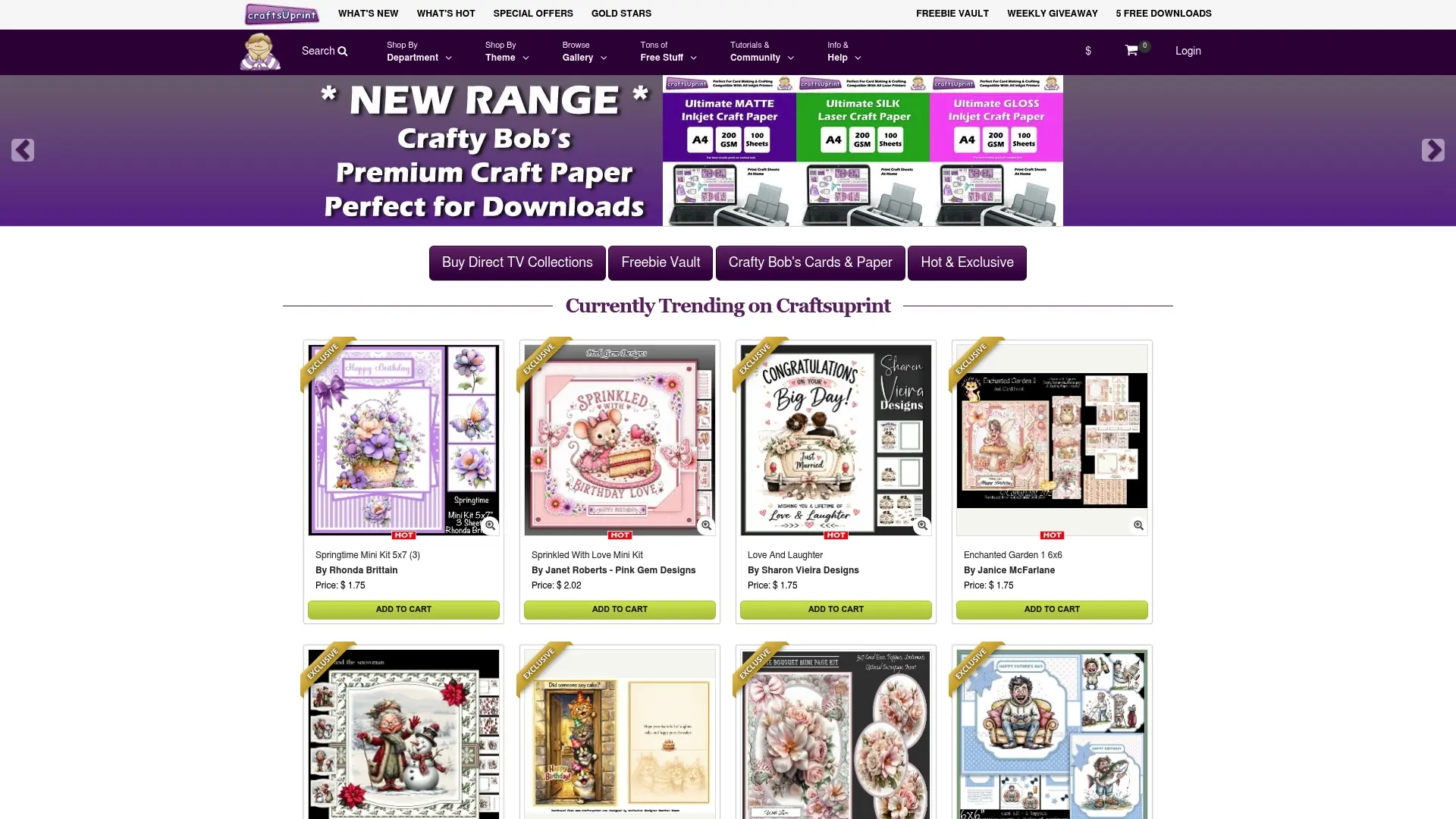
Browse the paper crafts classifieds for ready-to-print kits that fit dozens of micro-niches, from botanical designs to seasonal themed sets. Pick up craft supplies suited to your chosen specialty, or claim your free members gift to start exploring what Craftsuprint has to offer at no cost. If you are serious about finding your niche and making it work, Craftsuprint is the place to start.
FAQ
What are niche craft categories?
Niche craft categories are specialised segments of the crafting market defined by a specific combination of material, style, target audience, and purpose. Examples include slogan-based needlepoint PDFs, eco-printed fabric art, and botanical watercolour card kits.
How do I choose the right craft niche for me?
Start by auditing your existing skills, then research market demand using Etsy search data and customer reviews. Combine your findings with psychographic targeting to define a niche that balances personal passion with genuine buyer interest.
Are digital craft niches more profitable than physical ones?
Digital craft products yield approximately 90% net profit margins after platform fees, compared to roughly 75% gross margins for physical crafts. The scalability advantage of digital niches makes them particularly attractive for crafters seeking recurring income.
What is the difference between a broad craft category and a niche?
A broad category like “jewellery” covers millions of products and creates intense marketplace competition. A niche like “raw gemstone rings for eco-conscious brides” targets a specific buyer with specific values, reducing competition and improving conversion rates.
How do I expand my craft niche without losing focus?
Add complementary products that serve the same audience and use the same materials or techniques. Avoid introducing products aimed at a different buyer type, as this dilutes your brand clarity and confuses existing customers.