
How to plan themed card projects step by step
Turning a creative idea into a polished, themed card can feel genuinely daunting. You might have a clear vision in your head, yet somehow the finished card ends up looking scattered or incomplete. The gap between imagination and execution is where most hobby crafters get stuck, and it happens to everyone at some point. This guide walks you through every stage of the process, from finding your initial inspiration and gathering the right materials, to planning your layout, troubleshooting mistakes, and producing results you will actually be proud of. Whether you are brand new to card making or looking to sharpen your existing skills with printable resources and digital tools, there is something here for you.
Table of Contents
- Gathering inspiration and choosing a theme
- Materials and tools: What you need for themed cards
- Planning your card layout and project steps
- Troubleshooting and refining your themed cards
- Why innovative planning is the secret to standout themed cards
- Enhance your card projects with printable downloads and supplies
- Frequently asked questions
Key Takeaways
| Point | Details |
|---|---|
| Start with clear inspiration | Selecting a meaningful theme sets the foundation for a coherent and creative card project. |
| Use quality materials | The right tools and supplies make the crafting process smoother and enhance final results. |
| Plan steps carefully | Organising your layout and project steps ensures each card has professional finish and impact. |
| Troubleshoot and refine | Reviewing your designs for common errors and making adjustments leads to polished outcomes. |
Gathering inspiration and choosing a theme
Every great themed card project starts with a single spark of inspiration. The challenge is knowing where to look and, just as importantly, how to narrow down your options once ideas start flooding in. Many crafters make the mistake of jumping straight into cutting and sticking without a clear creative direction, which almost always leads to frustration mid-project.
The richest sources of inspiration are often closer than you think. Consider these starting points:
- Nature and seasons: Floral designs, woodland creatures, coastal scenes, and seasonal colour palettes give you an almost endless variety to explore
- Special occasions: Birthdays, anniversaries, weddings, new babies, and holidays such as Christmas or Easter each carry their own visual language and emotional tone
- Hobbies and interests: Gardening, baking, travel, music, and sport can all inspire beautifully personalised themes that feel genuinely thoughtful
- Vintage and retro styles: Art Deco, Victorian botanical prints, and mid-century illustration styles have seen a huge resurgence among crafters
- Colour-led themes: Sometimes choosing a palette first, such as dusty pastels or bold jewel tones, and building a theme around it produces the most cohesive results
Once you have a rough direction, it is worth exploring the card project creation steps used by experienced makers to understand how a theme evolves from concept to finished piece. Seeing how others work through this process can shortcut your own learning significantly.
Digital resources make theme selection far easier than it used to be. Card making downloads provide ready-made templates and digital assets that are available for themed card project planning, which means you can preview a range of styles before committing to one. Browsing through themed kits and printed designs often sparks ideas you would never have thought of on your own.
Pro Tip: Create a dedicated inspiration folder on your phone or computer. Screenshot colour palettes, save images of cards you admire, and pin packaging designs that catch your eye. Revisit this folder at the start of every new project. Within a few weeks, you will start to notice genuine patterns in what appeals to you, and those patterns are the foundation of your personal creative style.
Committing to a single clear theme before you buy a single sheet of paper will save you both time and money. Themed cards work best when every element, from the base card colour to the tiniest embellishment, is chosen to serve the same overall mood.
Materials and tools: What you need for themed cards
With a theme firmly in mind, the next step is getting your materials together. This sounds straightforward, but it is surprisingly easy to either under-prepare or over-invest in supplies you do not actually need. A little forward planning here goes a long way.
The essentials for most themed card projects include:
- Card stock: Choose a weight appropriate to the size and complexity of your design. A 240 gsm (grammes per square metre) card stock is a reliable standard for most projects
- Cutting tools: A craft knife and self-healing cutting mat are non-negotiable for clean edges; a guillotine trimmer is helpful for straight cuts on multiple sheets
- Adhesives: Double-sided tape gives a neater finish than most liquid glues, though foam pads are excellent for adding depth to layered elements
- Embellishments: Ribbons, brads, enamel dots, die-cut shapes, and washi tape all add texture and personality without requiring advanced skills
- Ink and stamps: Rubber or clear stamps combined with dye-based inks are versatile tools for adding custom details to any theme
- Printable downloads: Quality card making supplies and digital downloads assist in executing themed card projects at a consistent standard
Here is a practical comparison of materials suited to different popular themes:
| Theme | Recommended paper weight | Key embellishments | Colour palette suggestion |
|---|---|---|---|
| Floral/botanical | 160 gsm to 240 gsm | Ribbon, leaf die cuts, enamel dots | Soft greens, blush, ivory |
| Christmas/winter | 240 gsm to 300 gsm | Glitter, metallic brads, snowflake stamps | Red, gold, deep green |
| Birthday | 200 gsm to 240 gsm | Balloon die cuts, washi tape, sequins | Bright primaries or pastels |
| Wedding/anniversary | 240 gsm to 300 gsm | Lace trim, pearls, vellum overlays | White, champagne, dusty rose |
| Nature/outdoors | 160 gsm to 200 gsm | Twine, kraft paper layers, leaf stamps | Earthy browns, forest green |
Sustainability is an increasingly important consideration for modern crafters. Choosing recycled card stock, FSA-certified papers, and water-based adhesives reduces the environmental impact of your projects without compromising on quality. The craft supply sustainability checklist is a genuinely useful reference for crafters and parents who want to make more environmentally conscious purchasing decisions.
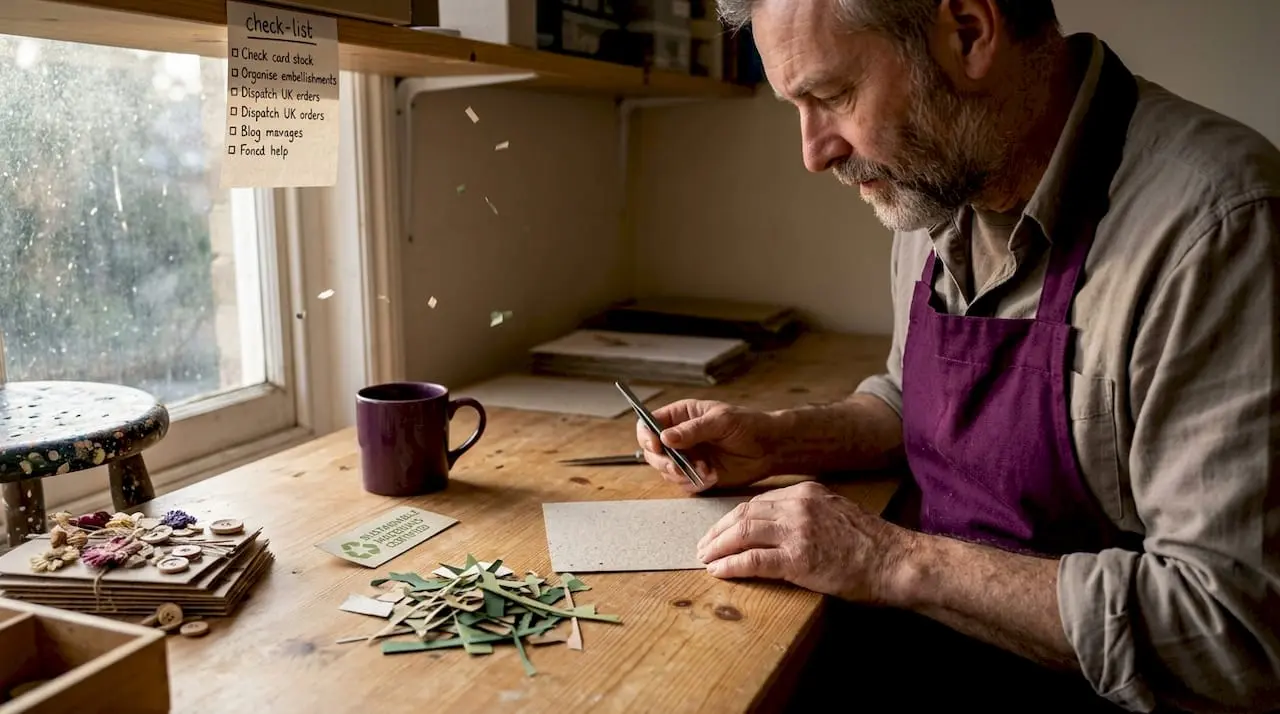
A particularly important insight: over 60% of crafters report that having the right tools laid out before they begin a project significantly reduces errors and rework. Setting up a dedicated workspace with your tools organised by category, cutting, sticking, decorating, means you spend more time making and less time hunting for the scissors you put down somewhere.
Planning your card layout and project steps
This is where many promising projects go wrong. Crafters who skip the planning stage and dive straight into making often end up with unbalanced layouts, mismatched layers, or embellishments that visually compete rather than complement. A simple planning routine, even just ten minutes of sketching before you start, transforms your results.
Follow these steps to plan your card layout effectively:
- Sketch your layout first: A rough pencil sketch on plain paper is enough. Mark where the main focal image will sit, where any sentiment or text will go, and roughly where embellishments will be placed. You do not need artistic talent; simple rectangles and circles work perfectly well
- Decide on your layer structure: Most card layouts use three to five layers. Plan which papers will sit underneath, which will frame your focal point, and which will sit on top as detail
- Choose your sentiment early: The wording and font style of your sentiment should complement the overall theme. Decide whether it will be stamped, printed, or handwritten
- Gather and test your embellishments: Lay everything out on your card base before sticking anything down. Photograph it with your phone. Looking at the photo rather than the physical layout gives you a more objective view of whether it is working
- Set a realistic timeline: If you are making a batch of cards for an event, work backwards from your deadline and block out time for each stage
The instructions and methods for organising themed card craft projects confirm that structured planning consistently produces more refined results than improvised making. Experienced makers universally recommend planning before picking up a single tool.
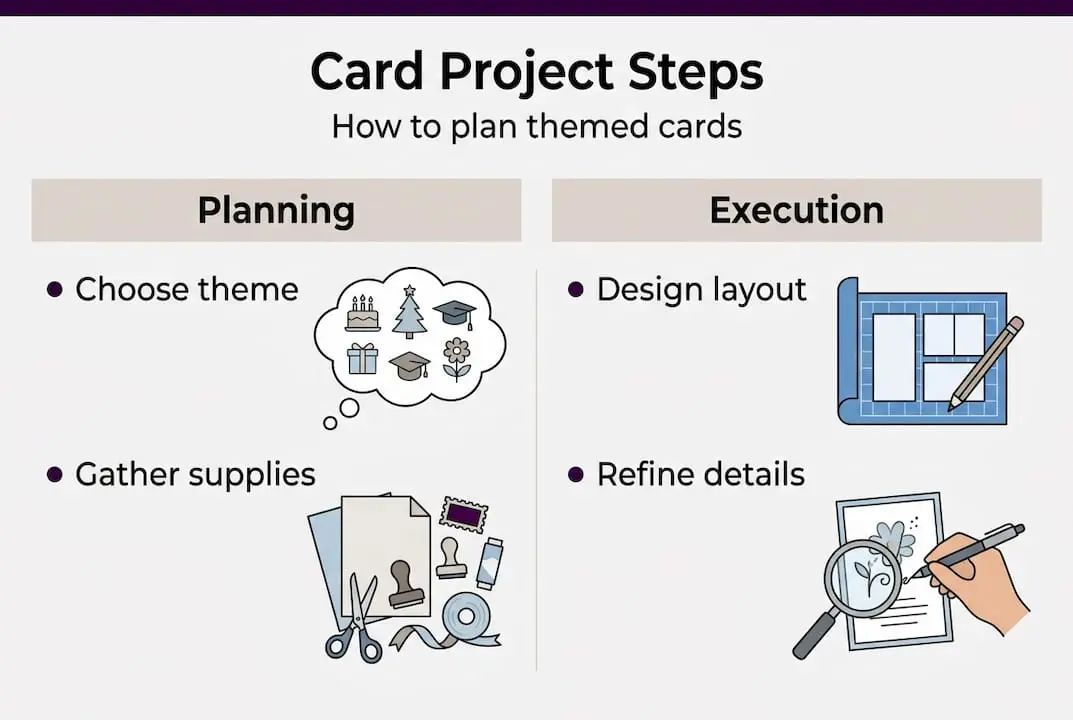
When comparing digital planning to hand-crafted planning, both have real merit:
| Approach | Advantages | Best suited to |
|---|---|---|
| Digital planning | Instant changes, no material waste, easy to share designs | Tech-confident crafters, complex multi-card projects |
| Hand-crafted planning | Tactile, intuitive, no screen required | Traditional crafters, simpler one-off projects |
Pro Tip: Printable planner templates are a brilliant shortcut for themed card projects. Many experienced makers use tutorials for card layouts alongside dedicated planner sheets to keep their projects organised and on track. A single A4 planning sheet per project, noting the theme, colour palette, materials list, and sketched layout, can save hours of backtracking.
You can also find invaluable card project tips from seasoned creators that cover everything from proportion and balance to selecting the right focal images for different card sizes.
Troubleshooting and refining your themed cards
Even the most experienced crafters run into problems. Adhesive bleeding through vellum. Layers that refuse to sit flat. A colour palette that looked perfect in planning but feels muddy in reality. These issues are normal, and knowing how to address them methodically is what separates confident crafters from frustrated ones.
The most common mistakes in themed card projects include:
- Overcrowding the design: Adding too many elements is the single most frequent issue. If your card looks busy, remove one layer or one group of embellishments and reassess
- Ignoring proportion: A focal image that is too small gets lost; one that is too large can make the card feel unbalanced. As a general rule, your focal image should occupy roughly one third to one half of the card’s total surface
- Poor alignment: Slightly crooked layers are more visible than you might expect once the card is finished. Use a bone folder and ruler to score fold lines accurately
- Colour inconsistency: Mixing too many competing tones dilutes the theme. Stick to two or three main colours plus one neutral
- Adhesive mishaps: Visible glue marks or buckled paper usually result from using too much adhesive or the wrong type for the material
When troubleshooting card projects, experienced makers recommend working through your project in reverse. Start by identifying the issue, then trace back through your steps to find the root cause rather than simply trying to patch the surface problem.
Methods for refining card projects are widely available, including troubleshooting steps and guidance specifically tailored to hobby crafters working with digital downloads and printed kits. Having access to a structured method makes it far easier to correct mistakes without scrapping your entire project.
Important note for collectors and themed card enthusiasts: Consistency is the hallmark of a refined project. If you are creating a set of themed cards rather than a single piece, ensure that your colour palette, layering approach, and embellishment choices remain consistent across every card in the set. Small inconsistencies are far more noticeable when cards are displayed together, and a cohesive set always makes a stronger visual impact.
The guidance on organising themed card exchanges is also worth exploring if you are planning to share or swap your creations with other crafters, as it covers presentation and consistency in detail.
Why innovative planning is the secret to standout themed cards
Here is an uncomfortable truth that most card making guides skip over entirely: the cards that genuinely stand out are rarely the result of superior skill. They are the result of better planning. Crafters who spend thirty minutes mapping out their design before they touch a single piece of card stock almost always produce more polished results than those who rely on intuition alone.
The conventional wisdom says that creativity and structure are opposites. In card making, the opposite is true. Structure gives your creativity somewhere to go. When you know your theme, your palette, your layer order, and your focal point before you start, every decision you make at the craft table becomes faster and more confident.
Digital resources have quietly transformed what is possible for hobby crafters. Access to innovative card project resources such as themed kits, printable planners, and step-by-step digital tutorials means that the technical barriers that once blocked creative experimentation have largely disappeared. The crafters who embrace these tools produce work that genuinely surprises people. Do not be afraid to blend a digital template with hand-crafted touches. That combination, planned digital structure with personal handmade warmth, is where the most memorable cards come from.
Enhance your card projects with printable downloads and supplies
Ready to put everything you have learned into practice? Craftsuprint brings together an extensive range of themed card templates, digital downloads, and crafting supplies all in one place, making it genuinely easy to move from inspiration to finished project without the usual treasure hunt across multiple websites.
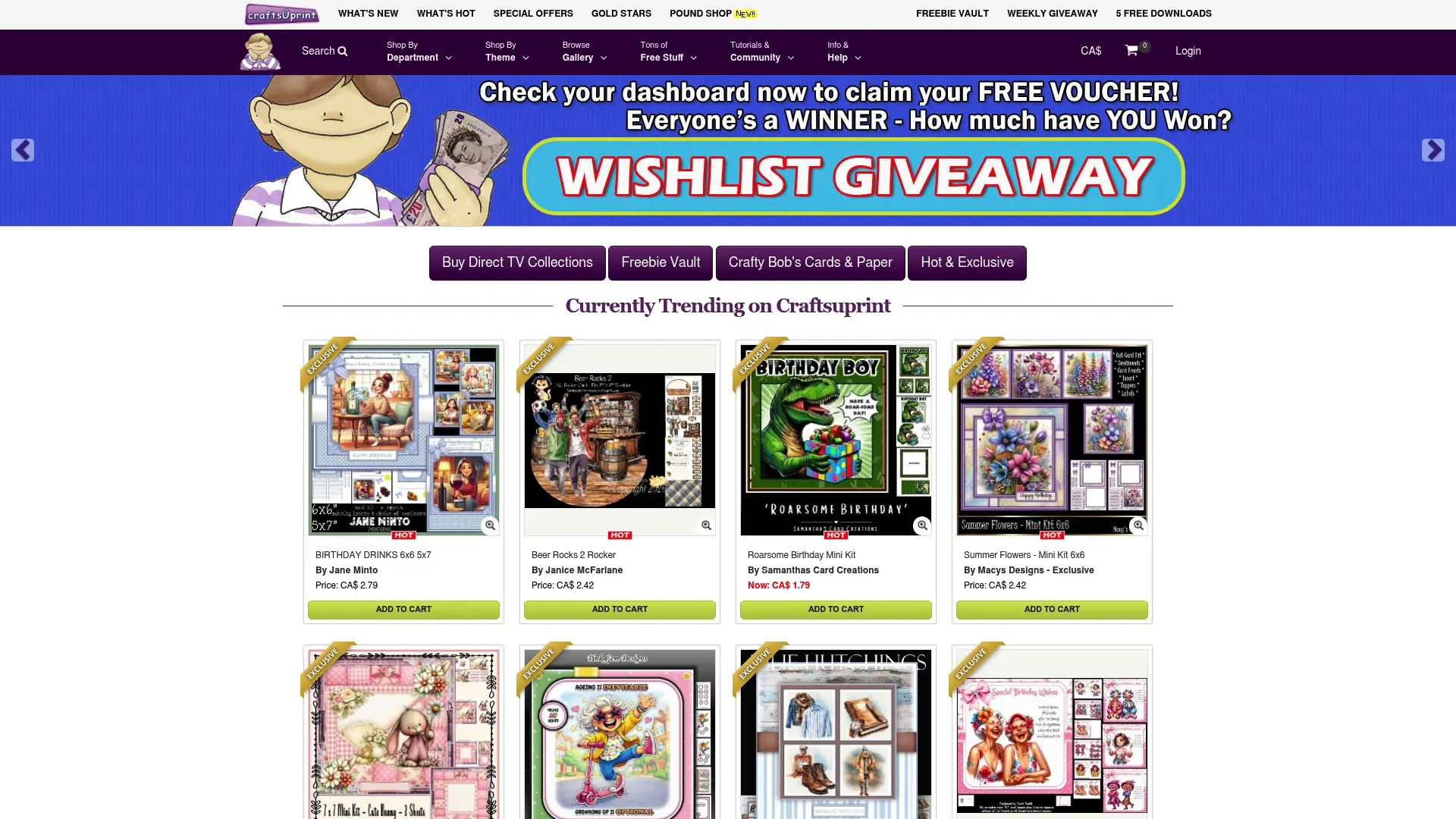
Whether you are looking for seasonal designs, occasion-specific kits, or fresh inspiration for your next themed set, you will find it all ready to download card templates instantly. The platform also supports independent designers, so every purchase directly helps creative makers share their work. Explore the weekly freebies, browse categorised collections, and join a community of hobby crafters who are as passionate about card making as you are. Your next favourite project is already waiting.
Frequently asked questions
What are some popular themes for card projects?
Occasions such as birthdays, holidays, weddings, and nature-inspired themes are the most popular choices for card projects, though hobby-based and vintage-style themes are also widely loved.
Where can I find printable templates for themed cards?
You can access ready-made templates and digital assets for themed card project planning at Craftsuprint, where a wide range of categorised designs is available to download instantly.
How do I troubleshoot mistakes in my card project layout?
Review your project steps from the beginning and use digital templates or printable planners to identify and correct layout errors before adding final embellishments.
What materials are best for sustainable card making?
Choose recyclable papers and eco-friendly embellishments, such as FSA-certified card stock and water-based adhesives, to make your card projects more environmentally responsible.