
How sharing digital crafts grows your community and sales

Most independent designers assume that sharing their digital craft work is something they do for others, a kind gesture with little return. The reality is quite different. Sharing activates a small but extraordinarily powerful segment of your audience, and that group becomes the engine behind your visibility, loyalty, and long-term sales. Understanding how this works, and how to do it safely, is one of the most underutilised advantages available to independent craft designers today.
Table of Contents
- How sharing digital crafts builds community
- Building loyalty and engagement through sharing
- Navigating the risks: value, IP and free sharing
- Practical steps to share and monetise your digital crafts
- What most crafters miss about sharing digital designs
- Start sharing and selling your digital crafts with a supportive community
- Frequently asked questions
Key Takeaways
| Point | Details |
|---|---|
| Community matters most | Sharing digital crafts helps you build a loyal and supportive creative network. |
| Balance sharing and protection | Giving away select freebies can attract followers as long as your main products remain secure. |
| Engagement drives growth | Active, two-way interaction increases your chances of sales and visibility. |
| Strategic sharing works best | Purposeful sharing and clear terms lead to sustained success, not one-size-fits-all approaches. |
How sharing digital crafts builds community
Now that you know why sharing is more powerful than it appears, let’s explore how it forges stronger connections between makers.
A supportive digital crafting community is not simply a group of people who follow you online. It is a network where creators and enthusiasts exchange ideas, offer honest feedback, celebrate each other’s work, and return regularly because they feel genuinely connected. That sense of belonging does not happen by accident. It is built through consistent, intentional sharing over time.

One of the most striking facts about online communities is the 1 to 3 percent activation rule. Out of every hundred people who follow you or download your work, only one to three will actively comment, share, or engage. That sounds discouraging, but this small group carries enormous influence. They are the ones who spread your work to new audiences, leave glowing reviews, and invite their own networks to explore what you create. As research confirms, sharing builds supportive communities fostering collaboration, feedback, and meaningful audience engagement.
Collaborative projects deepen these connections considerably. When you invite your audience to participate in a creative challenge, remix a freebie you have shared, or contribute to a themed collection, the interaction shifts from passive to active. This is similar to how collaborative handmade jewellery communities thrive by inviting makers to contribute their individual skills to a shared creative vision. The result is recurring engagement, not a one-off download.
For many independent designers, isolation is a real challenge. Working alone on digital files day after day can erode motivation. Sharing breaks that cycle by creating touchpoints with real people who genuinely appreciate your work. The mental health benefits for small creators should not be underestimated.
| Community benefit | How sharing creates it |
|---|---|
| Honest feedback | Followers test and review your designs in real projects |
| Fresh ideas | Seeing how others use your work sparks new concepts |
| Motivation | Positive responses fuel creative momentum |
| Word of mouth | Active community members recommend your designs to others |
| Repeat engagement | Regular sharing keeps your audience coming back |
Here is what the core benefits of sharing in a crafting community look like in practice:
- Feedback you cannot buy: Real users show you what works and what needs improving before you release a paid version.
- Creative inspiration: Seeing your designs interpreted by others generates ideas you would never have alone.
- Natural promotion: Engaged followers share your work without being asked, reaching audiences you cannot access directly.
- Motivation and accountability: Regular interaction with a community keeps you consistent, which is far more valuable than occasional bursts of output.
- Trusted reputation: A visible presence in community crafting projects builds credibility that converts browsers into buyers.
“The most engaged members of your community are not passive recipients. They are co-creators who amplify your reach, shape your work, and become your most effective advocates.”
Building loyalty and engagement through sharing
Once a supportive group forms, genuine loyalty and regular interactions become possible.
Loyalty in digital crafting is not about someone downloading your work once. It is about them returning, recommending, and investing in what you create over time. That kind of relationship develops through consistent interaction, not occasional posting.
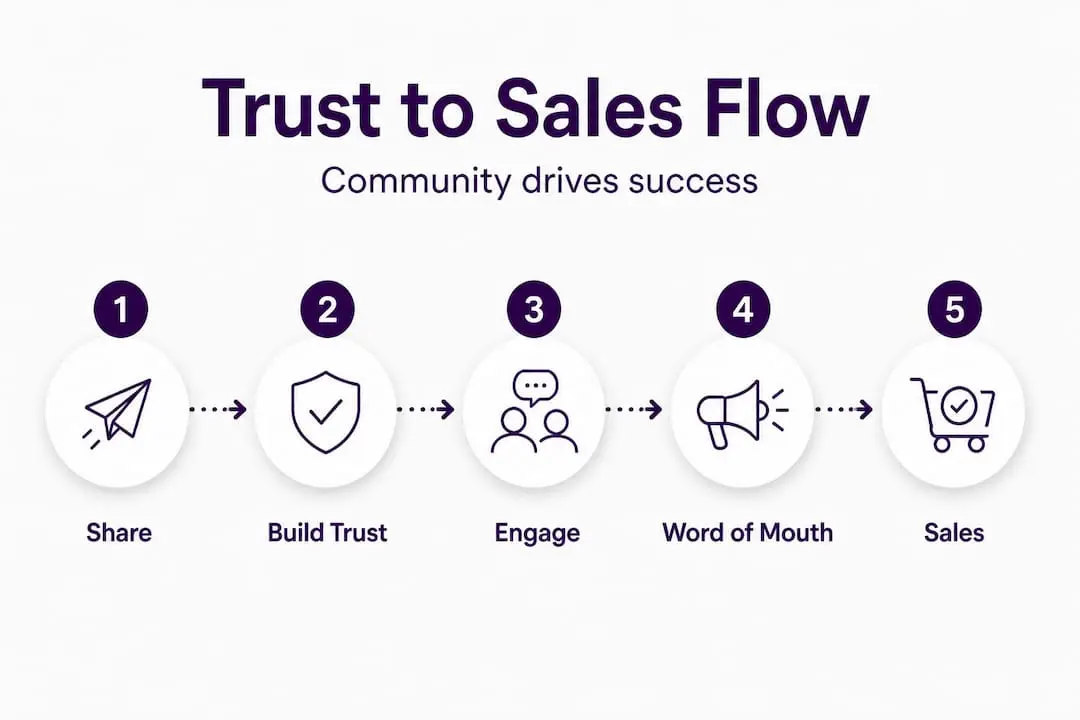
Here is how the journey from first share to repeat engagement typically unfolds:
- First share: You release a free or sample design. A follower downloads it and creates something with it.
- Initial interaction: They post their finished project and tag you, or leave a comment describing their experience.
- Your response: You acknowledge their work publicly, ask what they are making next, and invite them to share again.
- Second touchpoint: They return for another design, this time looking for something specific because they trust your quality.
- Peer recommendation: They mention your work to a friend or post in a crafting group, drawing new followers to your page.
- Repeat purchase consideration: Now familiar with your style and quality, they actively seek out your paid products.
This loop takes time, but it is reliable. Research shows that shared activities lower isolation and activate word-of-mouth loops that translate directly into awareness and, eventually, sales. The designers who build the most loyal audiences are rarely the most technically skilled. They are the ones who show up consistently and respond to engaging with crafters in a meaningful way.
Pro Tip: When someone comments on your design or shares a finished project, respond with a specific observation about their work rather than a generic thank you. Something like “I love how you’ve used that colour combination, did you try it with a contrasting border?” signals genuine interest and dramatically increases the likelihood they will return.
Navigating the risks: value, IP and free sharing
But is all sharing equally helpful? Let’s review what creators must consider to protect their value.
Sharing freely is not always the same as sharing wisely. There is a meaningful difference between building community through selective sharing and accidentally creating a free-for-all that erodes the perceived value of your work. Many new designers fall into this trap by sharing too generously without considering the long-term impact on their brand or income.
The key distinction is intent and structure. Unauthorised free sharing erodes value and intellectual property, whereas thoughtfully balanced freebies for lead generation paired with protected paid products is a sustainable model.
| Approach | Benefits | Risks |
|---|---|---|
| Free sharing without terms | Builds fast exposure and audience growth | Designs can be redistributed, resold, or misused |
| Free sharing with clear terms | Audience building with basic protection | Requires monitoring and enforcement effort |
| Paid products only | Full income protection and clear value signal | Slower audience growth, less community warmth |
| Mix of free samples and paid products | Balanced growth, trust building, and income | Requires strategic planning to avoid devaluation |
Here are the most practical ways to protect your designs while still sharing:
- Add visible watermarks to preview images so they cannot be used without credit.
- Limit download access by using time-limited links or email-gated freebies.
- State terms of use clearly on every product page, specifying whether designs are for personal use only.
- Use low-resolution previews publicly and reserve high-resolution files for verified downloads.
- Register your most commercially valuable designs with relevant intellectual property services in your country.
Pro Tip: Use one or two carefully chosen freebies as email list builders rather than distributing them widely across public platforms. Collect the email address in exchange for the download. You now have a direct line to an interested audience member, a far more valuable outcome than an anonymous download.
Practical steps to share and monetise your digital crafts
Moving from theory to action, here’s how you can share and benefit right now.
Knowing the principles behind sharing is one thing. Putting them into practice in a way that protects your work and grows your income requires a clear, repeatable process. Here is a step-by-step approach for sharing digital designs safely and effectively.
- Choose one design to share as a sample. Pick something that showcases your style without giving away your most commercially significant work.
- Add a terms of use statement to the download file itself, not just the product page. Include whether the design is for personal use, whether it can be shared, and whether commercial use is permitted.
- Set up a capture mechanism. Whether that is an email sign-up form, a community forum registration, or a marketplace account, ensure you have a way to follow up with people who download.
- Share the design across relevant platforms where crafters actively congregate. Visibility matters, but community fit matters more.
- Ask a direct question when you post. “What project are you planning to use this for?” invites interaction and gives you valuable insight into how your designs are used.
- Follow up within 48 hours on any comments or project shares. Early responses signal that you are present and interested, which dramatically increases the chance of repeat visits.
- Upsell naturally. When someone shares their completed project made from your freebie, respond and mention that you have a full kit available that pairs beautifully with what they have made.
Platforms that are worth prioritising for community-focused sharing include:
- Specialist marketplaces with built-in intellectual property protections and a pre-existing audience of crafters.
- Social media groups focused specifically on paper crafts, card making, or printable design, where your niche audience actively gathers.
- Email newsletters sent to subscribers who have already opted in and shown genuine interest in your work.
- Your own blog or website, where you control the terms and can gate access however you choose.
Collaborative projects deserve special mention here. As research confirms, collaborative projects activate a key portion of your audience and drive sustained engagement well beyond a single post. Inviting crafters to contribute to a themed project, for example a seasonal card-making challenge using your designs, creates content you can showcase, builds goodwill, and gives your most engaged followers a reason to keep coming back. Meanwhile, you can use their feedback to refine your next paid product before release. The opportunity to grow through genuine dialogue is one of the most powerful advantages of selling your crafts within an active community rather than as a lone seller.
What most crafters miss about sharing digital designs
Here is an honest truth that most guides on digital craft sharing skip entirely. New creators frequently expect that sharing will produce quick sales. They release a freebie, see a spike in downloads, and wait for the revenue to follow. When it does not arrive in days or even weeks, they conclude that sharing does not work and abandon the strategy.
The real issue is that they are measuring the wrong thing at the wrong time.
Sharing does not produce immediate sales. It produces trust, and trust, over time, produces sales. The designers we see consistently thriving in digital craft marketplaces are almost never the ones who went viral once. They are the ones who showed up every week, responded to their audience, offered the occasional freebie with genuine care, and protected their commercial products without being defensive about it.
Another trap is underestimating the effort required to protect your intellectual property. Many creators share freely and assume goodwill will prevent misuse. It will not, at least not always. A clear terms of use policy and watermarked previews are not signs of distrust directed at your audience. They are professional signals that your work has genuine value.
The community-first model outperforms a purely transactional one in the long run. When your audience senses that you are there to connect, teach, and share rather than purely to sell, they become advocates. They mention you to friends, credit you when they share projects online, and return to your catalogue when they need new designs. The balance between freebies and protected products is not just a commercial strategy. It is how you build a reputation worth having.
Be realistic about the pace of growth. Most successful independent designers build their audience gradually, over months and years, not overnight. Consistent interaction, even with a small group, compounds over time into something far more durable than a single viral moment.
Start sharing and selling your digital crafts with a supportive community
If you’re ready to put these ideas into action, the right platform makes an enormous difference to how quickly and confidently you can grow.
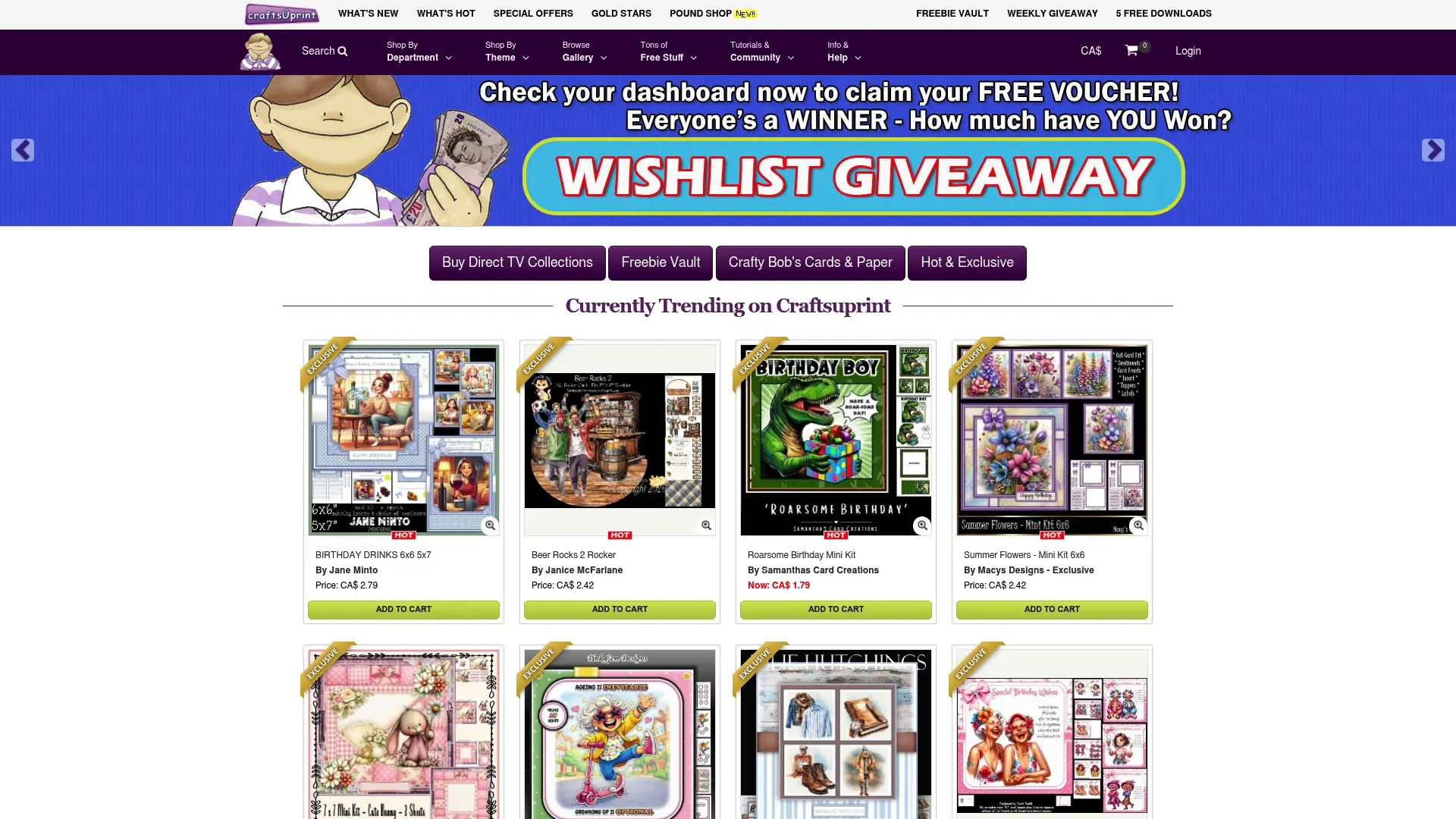
The Craftsuprint digital sharing platform is built specifically for independent designers who want to share their work, build genuine community connections, and earn income from their printable craft projects. You will find a ready-made audience of enthusiastic crafters actively searching for card-making kits, paper patterns, and themed designs. Beyond the marketplace, Craftsuprint offers weekly freebies, contests, tutorials, and a Gold Star programme that rewards designers for consistent, quality contributions. Whether you are just starting out or looking to grow an established catalogue, this is the community where sharing your digital crafts leads somewhere meaningful.
Frequently asked questions
What are the risks of sharing digital crafts for free?
Free sharing can significantly build your audience and trust, but without protective measures in place, unauthorised free sharing can erode the perceived value of your work and allow others to re-use or redistribute your designs without permission.
How can I protect my digital craft designs while sharing?
Watermarks, time-limited download links, and clearly stated terms of use are the most practical starting points to balance freebies with protection for your paid products.
How does sharing digital crafts help with sales?
Sharing activates the most engaged members of your audience, typically one to three percent, whose word-of-mouth recommendations introduce new customers to your work and create natural upselling opportunities.
What’s the best way to start sharing digital crafts as a new creator?
Begin with one or two free designs that carry clear terms of use, and join a trusted platform where a community of like-minded crafters is already active and looking for exactly what you create.