
Discover card making: Creative techniques and DIY tips
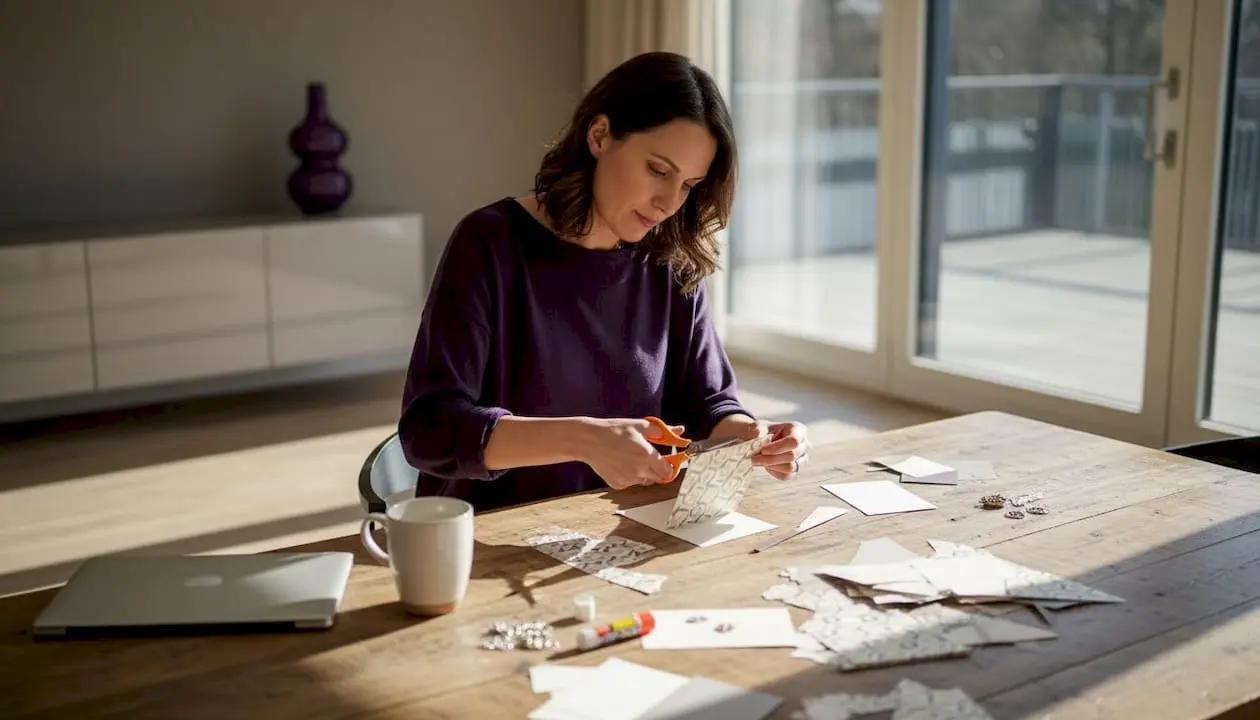
Card making is far more than snipping paper and sticking things down. It is a genuinely dynamic craft that weaves together artistic skill, careful technique, and deeply personal expression, and it has captivated millions of hobby crafters around the world. Whether you are reaching for a bone folder for the first time or experimenting with layered digital designs, card making resources reveal just how broad and rewarding this hobby really is. This article walks you through everything from foundational history to essential tools, hands-on project ideas, and the creative mindset that separates good cards from truly memorable ones.
Table of Contents
- Understanding card making: Definition and origins
- Key techniques and styles in card making
- Essential supplies and tools for card making
- Creative project ideas: Making your first card
- What most guides miss about card making
- Explore supplies, downloads, and tutorials for card making
- Frequently asked questions
Key Takeaways
| Point | Details |
|---|---|
| More than simple craft | Card making combines creative design, technique, and personal touches to produce unique creations. |
| Techniques and styles | You can explore a range of techniques including stamping, die-cutting, and digital designs for flexibility. |
| Essential supplies matter | Quality materials and tools directly impact the look and durability of your DIY cards. |
| Start with easy projects | Begin with step-by-step guides to build confidence and inspire creative ideas for occasion cards. |
| Experiment for progress | Continual experimentation and adaptation lead to mastery and truly personalised card making. |
Understanding card making: Definition and origins
Card making, at its simplest, is the craft of designing and constructing greeting cards by hand, using a combination of paper, embellishments, and various decorative techniques. But calling it simple would be misleading. Card making encompasses various crafting methods and designs, from rustic handmade birthday cards assembled at the kitchen table to highly polished, digitally printed creations that rival anything sold in a high street shop.
The history of card making stretches back further than most people expect. Handmade greeting cards appeared in Europe as early as the 15th century, with German craftspeople producing intricate paper tokens for New Year celebrations. By the Victorian era, the tradition had blossomed into a cultural phenomenon, with elaborate cards featuring pressed flowers, silk ribbons, and lace inserts exchanged for every occasion imaginable. The industrial printing revolution made mass-produced cards the norm, but it also sparked a backlash among crafters who valued the warmth of something made by hand.
Today, card making sits comfortably within a wider craft culture that includes scrapbooking, journalling, paper art, and mixed-media design. It appeals especially to DIY crafters because the barrier to entry is remarkably low. You can start with a handful of supplies and a simple design and produce something beautiful within an hour. Yet the craft scales upward almost indefinitely, offering years of skill development for those who want to go deeper.
“Card making is a craft that welcomes every skill level, from absolute beginners cutting their first piece of card stock to experienced designers layering complex textures and digital elements into one stunning piece.”
Its popularity with hobby crafters is no surprise. It combines the meditative satisfaction of working with your hands, the creative thrill of design, and the emotional reward of giving someone a card you made yourself. There is a reason card making communities online number in the hundreds of thousands.
Key techniques and styles in card making
Having understood the foundation, the next step is exploring the rich variety of techniques available to card makers. The range is genuinely impressive, and knowing your options helps you make creative choices rather than guessing.
A wide range of techniques are used in card making, such as die-cutting, stamping, and digital design. Here is a closer look at the most popular methods:
- Stamping involves pressing an inked rubber or acrylic stamp onto paper to create patterns, motifs, or text. It is one of the oldest and most satisfying techniques because results are immediate and endlessly varied depending on ink colour, pressure, and stamp choice.
- Embossing adds texture and dimension to a card’s surface. Dry embossing uses a stylus and a stencil to press raised designs into card stock. Heat embossing uses embossing powder and a heat gun to create a glossy, raised effect that catches the light beautifully.
- Die-cutting uses metal dies and a manual or electric cutting machine to punch precise shapes from paper or card stock. Hearts, stars, flowers, decorative borders — the possibilities are enormous once you build a die collection.
- Watercolour and ink blending are painting techniques adapted for card making, producing soft backgrounds, floral motifs, and abstract washes that give cards an artistic, painterly quality.
- Printable and digital card making has transformed the hobby in recent years. Crafters download pre-designed templates or digital kits, print them at home, and assemble the components. This technique dramatically widens design options without requiring years of artistic training.
| Method | Skill level needed | Equipment cost | Design flexibility |
|---|---|---|---|
| Stamping | Beginner | Low to medium | High |
| Embossing | Beginner to intermediate | Medium | Medium |
| Die-cutting | Intermediate | Medium to high | Very high |
| Watercolour | Intermediate to advanced | Low to medium | Very high |
| Printable/digital | Beginner | Low (printer needed) | Extremely high |
The real creative magic happens when you combine methods. A stamped floral image paired with heat-embossed details and a die-cut sentiment creates a card with layered depth that no single technique could achieve alone. Explore cards craft tutorials to see exactly how experienced crafters layer these methods together.
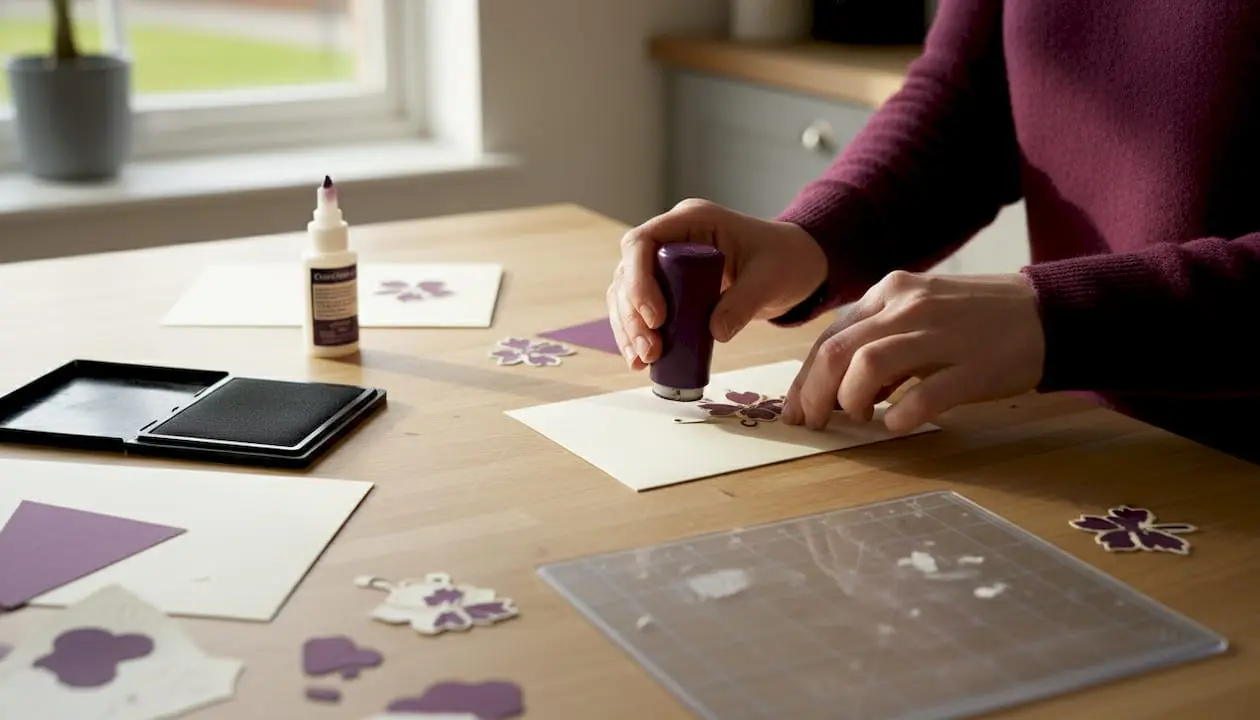
Pro Tip: Do not feel pressured to master every technique before you start. Pick one method that genuinely excites you, work with it until you feel confident, and then introduce a second technique gradually. Combining two methods you understand well produces far better results than juggling five methods you barely know.
Essential supplies and tools for card making
With techniques covered, it is timely to address the tangible materials and tools every card maker needs. Selecting quality supplies is key for successful card making projects, and understanding what each item does helps you spend wisely rather than buying everything at once.
Here is a breakdown of the core supplies:
- Card stock and paper: The backbone of every card. Card stock (a thicker, sturdier paper) is used for the base card, while lighter decorative papers, patterned sheets, and vellum add layers and interest.
- Adhesives: Double-sided tape and foam adhesive pads are workhorses. Foam pads are particularly useful because they lift layers off the surface, creating a three-dimensional effect. Liquid glue works well for smaller embellishments.
- Stamps and ink pads: A starter set of rubber or photopolymer stamps combined with dye-based or pigment ink pads covers most basic projects. Archival ink is worth investing in for projects that need to last.
- Embellishments: Buttons, brads, ribbon, sequins, die-cut shapes, washi tape, stickers, and pearls all fall into this category. Embellishments are where personality enters a card.
- Cutting tools: A craft knife and self-healing cutting mat are essential for precision cuts. Scissors handle general cutting. A paper trimmer makes straight cuts effortlessly and saves enormous time.
- Scoring and folding tools: A bone folder (a smooth, flat tool used to crease paper) creates sharp, clean folds. A scoring board makes this even easier, especially for consistent fold placement.
| Supply | Purpose | Recommended for beginners? |
|---|---|---|
| Card stock (white and coloured) | Base cards and layers | Yes, absolutely |
| Double-sided tape | Clean, flat adhesion | Yes |
| Foam adhesive pads | Dimensional layering | Yes |
| Bone folder | Clean card folds | Yes |
| Rubber stamps and ink | Adding images and text | Yes |
| Heat gun | Heat embossing | Intermediate |
| Die-cutting machine | Precise paper shapes | Intermediate |
Beyond physical supplies, digital resources have become equally important. Downloadable card making kits, printable toppers (pre-designed image panels sized to fit cards), and digital templates give crafters access to professional artwork that can be printed and assembled at home. Explore card making supplies to find curated options across every category, from basic materials to specialist tools.
A word on quality: budget supplies are tempting, but thin card stock buckles when adhesive is applied, cheap ink smears, and low-quality stamps lose detail quickly. Starting with mid-range quality in your core supplies pays dividends in finished results. Save money on embellishments instead, where even budget options look great.
Creative project ideas: Making your first card
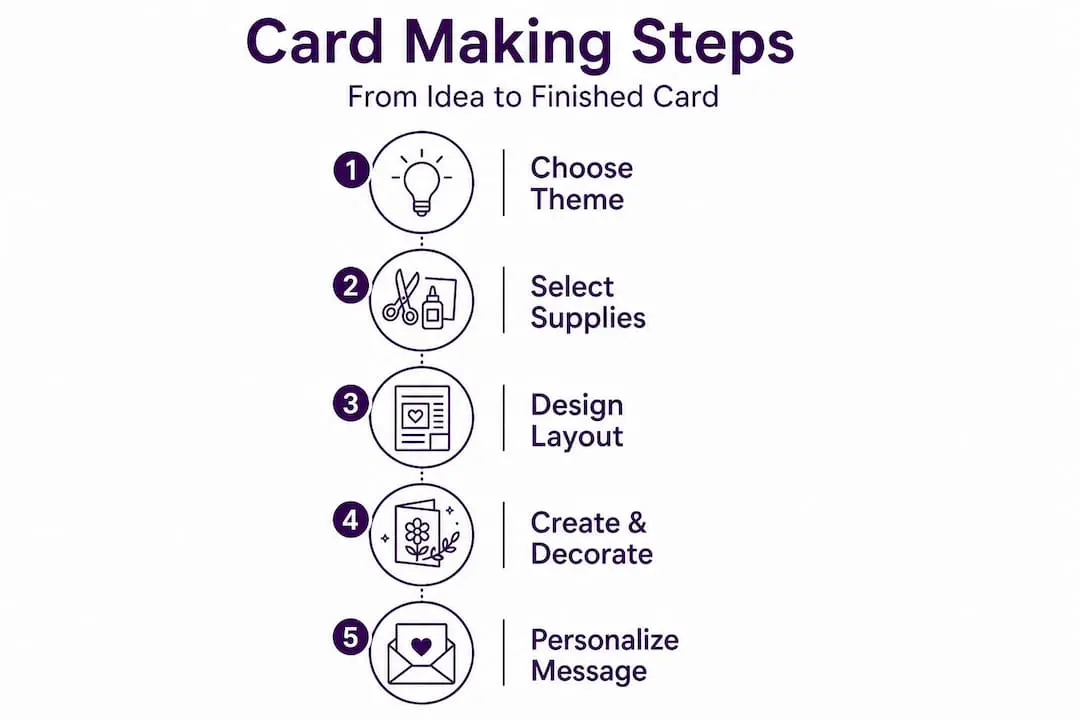
Now you have the context, techniques, and tools sorted, it is time to move into hands-on application. Project tutorials and printable designs are an ideal starting point for beginner DIY card makers, offering guided structure while leaving room for personal touches.
Here is a simple step-by-step project to get you started:
- Choose your occasion: A birthday card is the most versatile starting point because the design brief is broad and familiar.
- Cut your base card: Score and fold an A5 sheet of white card stock to create an A6 base card. Use your bone folder to get a crisp fold.
- Choose a background layer: Cut a piece of patterned paper slightly smaller than the card front and adhere it using double-sided tape.
- Add a focal image: Use a stamp to add a central image, or print and trim a digital topper from a downloadable kit. Mount it onto the card using foam pads for dimension.
- Add a sentiment: Stamp, print, or use letter stickers to add a message inside or on the front of the card.
- Embellish: Add a strip of washi tape, a few sequins, or a tied ribbon bow to finish the design. Less is more — resist the urge to fill every space.
- Final check: Press all layers firmly, ensure nothing is peeling, and add a written personal message inside.
Design ideas for different occasions worth trying include:
- Christmas cards: Layer red and green card stock with die-cut snowflakes and a gold heat-embossed sentiment.
- Wedding and anniversary cards: Use soft florals, cream card stock, and delicate ribbon for an elegant feel.
- Children’s birthday cards: Bold, bright colours, fun stamped animals, and chunky die-cut numbers create instant cheer.
- Thank-you cards: Keep these simple and heartfelt. A single stamped image and a handwritten message often say more than an overworked design.
Common pitfalls to watch for include glue seeping through thin paper (use less adhesive), layers not sitting flat (press firmly and allow drying time), and stamped images smearing (make sure ink is fully dry before layering over it). These are lessons almost every card maker learns through experience, so do not be disheartened when they happen.
Pro Tip: Personalising a card with a small printed photograph transforms it from a lovely gesture into something genuinely irreplaceable. Use a photo as your focal image, or tuck a small print inside the card alongside your message. Pair it with a handwritten note rather than a printed one and the recipient will feel the care that went into every decision.
Dig into printable card making projects for ready-to-use designs across dozens of themes, seasons, and occasions, which makes starting your first project far less daunting.
What most guides miss about card making
Most card making guides follow a familiar script: here are your tools, here are your techniques, now go and make something. What they rarely say is that the crafters who grow fastest are not the ones who follow instructions most carefully. They are the ones who break rules deliberately, make a mess, and pay attention to what went wrong.
Experimenting is not a detour from learning. It is the learning. When you deliberately stamp onto the wrong surface, try a technique with the wrong ink, or build a card that falls apart, you gather information that no tutorial can give you. You understand why the rules exist, and that means you can bend them with intention rather than stumbling into happy accidents.
Most beginner guides also underestimate the value of iteration. Making the same card design three times in a row, changing one element each time, teaches more than making three entirely different cards. Small, controlled experiments reveal how each variable affects the outcome. This is how experienced crafters develop an instinct for what will work before they even pick up a tool.
Embracing experimentation and new techniques is essential for card makers who want to genuinely improve rather than simply repeat familiar patterns. The crafters we admire most did not arrive at their style by following a strict syllabus. They played, they failed, they adapted, and they kept going.
There is also a social side that most guides skip entirely. Sharing your work with a community, even work you consider unfinished or imperfect, invites feedback, encouragement, and ideas you would never generate alone. The card making community is extraordinarily generous with knowledge, and connecting with it accelerates growth in ways that solo practice simply cannot.
So the real advice, beyond all the techniques and supplies, is this: give yourself permission to be a beginner for longer than feels comfortable. The awkward, experimental phase is where the interesting work actually happens.
Explore supplies, downloads, and tutorials for card making
If you are ready to put everything from this article into practice, we have curated exactly what you need to get started without the guesswork.
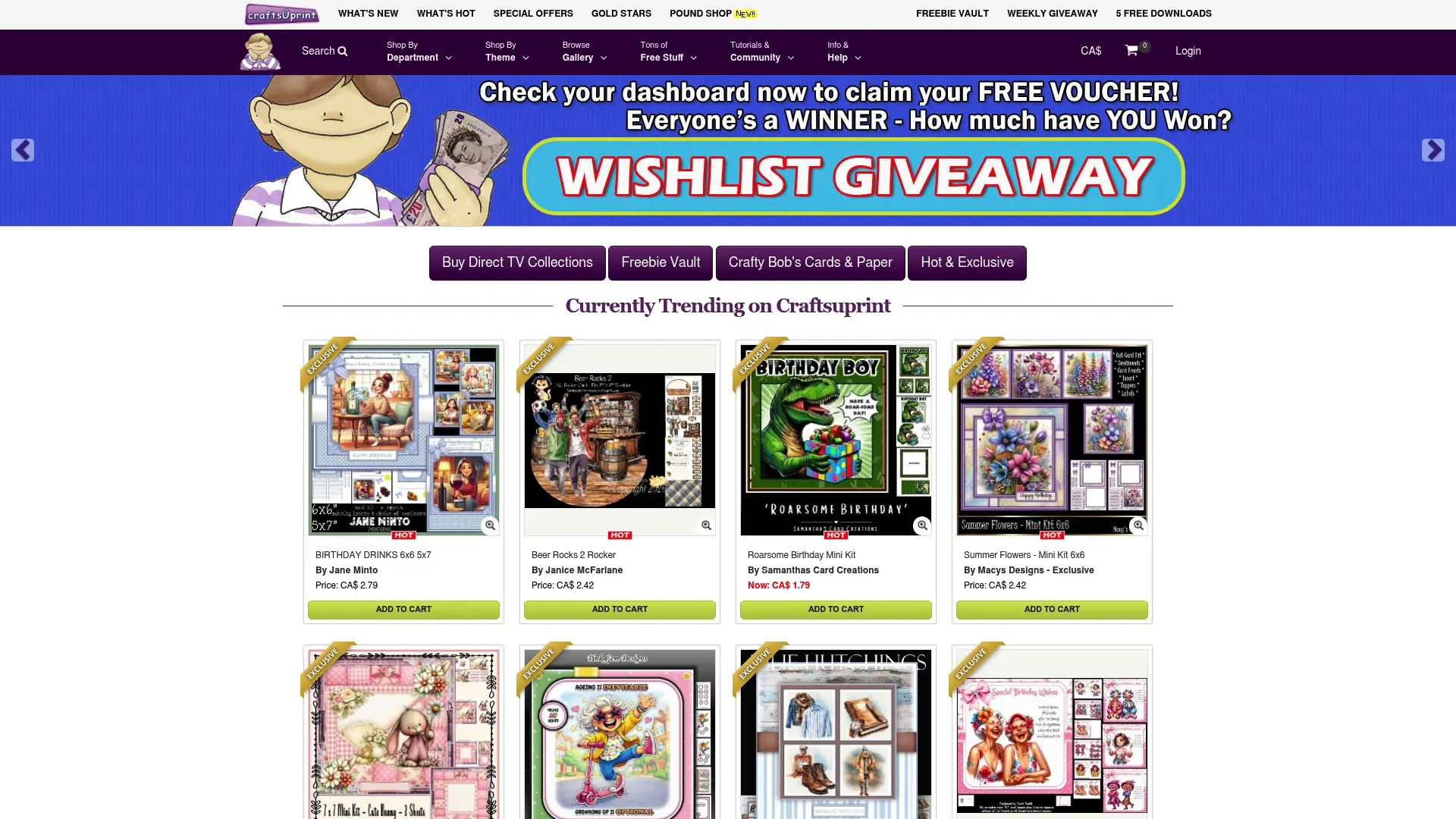
At Craftsuprint, you will find an extensive library of card making downloads, including printable toppers, full card kits, themed mini sets, and step-by-step tutorials created by independent designers who genuinely love this craft. Whether you are looking for a quick birthday card design you can print and assemble tonight, or a seasonal collection to work through across the coming weeks, everything is available for instant download and home printing. Browse by occasion, style, or technique to find designs that match your current skill level and creative mood. New designs and weekly freebies are added regularly, so there is always something fresh to discover.
Frequently asked questions
What materials are needed for basic card making?
You need craft paper, adhesives, stamps, embellishments, and cutting tools for most simple projects, with quality supplies making a noticeable difference to the finished result even at beginner level.
Can card making be done digitally?
Yes, many crafters use printable card making and digital tools to create cards alongside traditional methods, with downloadable kits making digital card making especially accessible for beginners.
How do I personalise my handmade cards?
Add photographs, custom messages, or unique embellishments to create cards tailored for each recipient, using printable designs as a flexible foundation you can adapt for any occasion.
Where can I find card making tutorials and supplies?
Craftsuprint provides a wide range of supplies, downloadable projects, and tutorials for card making, covering beginner through to advanced techniques across every theme and occasion.