
Best craftuk.net alternatives for UK card makers

TL;DR:
- Craftsuprint is the ideal UK-focused marketplace for printable craft downloads, offering community support and a seller-friendly commission structure. Sellers should target buyer intent, evaluate fee models, and consider hybrid strategies combining discovery traffic with personal storefronts. It is especially suitable for UK crafters aiming to reach local buyers with clear licensing and minimal competition.
For UK crafters seeking printable downloads and card kits, Craftsuprint is the recommended UK-first option: it combines a focused digital marketplace with community features, tutorials, and a seller programme built around hobby crafters. Beyond that, large discovery marketplaces suit sellers who want immediate reach, while design-focused and niche craft-asset platforms serve those with premium templates or SVG cut files.
- Large discovery marketplaces (such as Etsy-style platforms): strong buyer traffic and built-in search, but higher competition and fees that can squeeze margins on low-price printables.
- Niche craft-asset marketplaces: attract buyers specifically hunting SVG files, Cricut-ready designs and card kits, with less noise and more targeted audiences.
TL;DR: Start with Craftsuprint for a UK-centred seller experience, test one listing on a discovery marketplace for reach, and keep an eye on HMRC’s VAT threshold if your sales grow.
Table of Contents
- How do these marketplace categories compare at a glance?
- How do you choose the right marketplace for printable craft downloads?
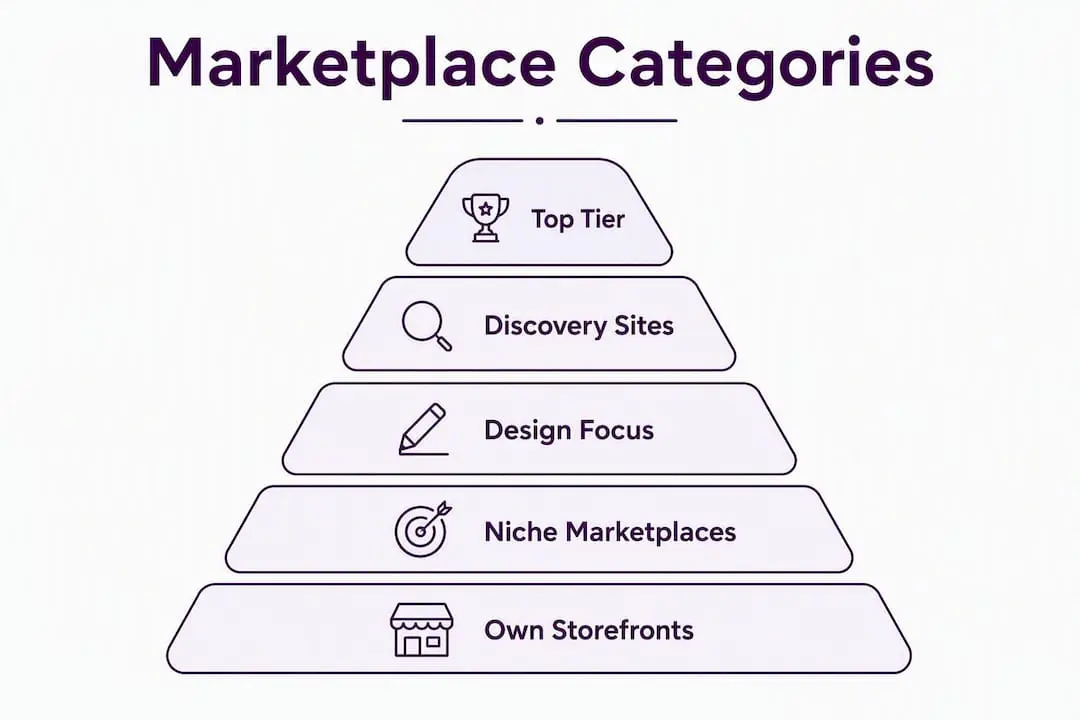
- What does each marketplace category actually offer sellers?
- Practical tips for UK crafters selling printable downloads
- UK tax and legal basics for selling digital downloads
- Which marketplace should you choose?
- Key takeaways
- Why Craftsuprint stands out for UK craft sellers
- Craftsuprint: your UK home for printable craft downloads
- Useful sources
- FAQ
How do these marketplace categories compare at a glance?
| Category | Best for | Typical seller fees | File formats | Licensing clarity | UK-friendliness | Ease of selling |
|---|---|---|---|---|---|---|
| Craftsuprint | Card kits, printables, paper patterns | Commission-based; no large flat fees | PDF, PNG, SVG, Cricut-ready | Clear personal & commercial tiers | UK-centred support, GBP-friendly | Straightforward onboarding, community support |
| Large discovery marketplace | Broad reach, beginners | Percentage + fixed listing fee per item | PDF, PNG, SVG | Varies by seller; buyer confusion common | Global platform; VAT handling variable | Easy setup; high competition |
| Design-focused marketplace | Premium templates, graphics | Percentage commission; curated entry | PDF, PNG, vector | Typically clear; commercial licences available | Global; payouts in USD common | Invite or approval process |
| Niche craft-asset marketplace | SVGs, Cricut files, cut designs | Subscription or percentage model | SVG, DXF, PNG | Usually explicit; cut-file specific terms | Mostly US-centric; GBP payouts rare | Moderate; niche audience |
| Own-checkout storefront | Repeat buyers, high volume | Monthly platform fee + payment processing | Any | Seller sets own terms | Full control; VAT OSS your responsibility | Higher setup effort; no built-in traffic |
Watch for two red flags before you list anywhere. Unclear licensing terms leave buyers unsure what they can print and share, which drives refund requests. Flat per-sale fees on very low-priced items can erase your margin entirely — confirm fee structures before uploading a single file.
How do you choose the right marketplace for printable craft downloads?
Choose by buyer intent first, then pricing model, then how much storefront control you need. A card-kit buyer browsing for “birthday card printable UK” behaves differently from a Cricut enthusiast hunting DXF files, and the right marketplace matches that intent.
Checklist for evaluating any marketplace:
- Product fit: Does the platform actively categorise card kits, paper patterns, or SVG cut files? A general digital-goods store may bury your listing.
- Price point viability: Calculate your net after all fees. Flat transaction fees hurt items priced under £2–£3; percentage-only models scale more fairly.
- Licensing transparency: Can you offer both personal-use and commercial licences clearly? Ambiguous terms generate disputes.
- Buyer origin: Do you want UK buyers specifically, or global reach? UK-specific platforms attract a local audience with a preference for homegrown designs.
- Marketing effort required: Some platforms drive traffic to you; others expect you to bring your own audience.
- Payout currency and schedule: GBP payouts with predictable schedules matter for small-business cash flow.
- Seller support: Forums, help desks, and community resources reduce the learning curve significantly.
Pro Tip: Position around a specific style or occasion niche (“vintage floral birthday cards” rather than “birthday cards”) rather than competing on price. Marketplaces that curate sellers reward brand clarity over volume discounting.
Red flags to avoid:
- Opaque or buried fee schedules
- Licences that don’t distinguish personal from commercial use
- Categories so saturated that new listings disappear within hours
What does each marketplace category actually offer sellers?
Craftsuprint
Craftsuprint is built specifically for digital craft downloads: card making kits, paper patterns, mini kits, themed designs, and tutorials. The commission model avoids punishing flat fees on low-price items, and the platform is UK-centred with GBP-friendly pricing. Community features include weekly freebies, contests, and the Gold Star programme, which gives sellers promotional lift without extra ad spend. Onboarding is straightforward; most sellers can have a listing live within a day.
Best for: UK hobby crafters, card makers, and small designers selling printable downloads.
- Focused buyer audience already looking for craft downloads
- Community features drive repeat visits and seller visibility
- Tutorials and resources support newer sellers
- Smaller global reach than mass-market platforms
Large discovery marketplace category
Platforms in this category carry enormous buyer audiences and strong search visibility. The trade-off is competition: thousands of sellers list similar card kits, and flat listing fees plus percentage commissions can erode margins on lower-priced printables. Best suited to sellers with a distinctive visual style who can invest time in keyword-optimised listings and product photography.
Best for: Sellers prioritising volume and international reach over margin per sale.
- High organic traffic and built-in buyer trust
- Fees stack up quickly on low-ticket items
- Discoverability depends heavily on listing optimisation
- VAT handling varies; UK sellers should verify OSS obligations
Design-focused marketplace category
These platforms attract buyers seeking premium templates and graphics, and most operate a curation or approval process. That keeps quality high and reduces saturation, but entry is not guaranteed. Payouts are typically in USD, which adds a currency conversion step for UK sellers.
Best for: Designers with polished, higher-price templates who can pass a quality review.
- Less price competition due to curation
- Buyers expect professional, print-ready files
- Approval process can delay launch
- USD payouts require currency conversion
Niche craft-asset marketplace category
Focused on SVG files, DXF cut files, and Cricut-ready designs, these platforms attract a subscription-buying audience. Licensing terms are usually explicit about cut-file use, which reduces buyer confusion. Most are US-centric, so GBP payouts and UK-specific support are limited.
Best for: SVG and Cricut file specialists comfortable with a US-leaning audience.
- Highly targeted buyers with clear purchase intent
- Subscription models can mean lower per-item revenue
- Limited UK-specific support or GBP payouts
- Strong for volume if your catalogue is large
Own-checkout storefronts (Shopify/WooCommerce-style)
Running a dedicated storefront retains more margin once you have repeat customers, but you bring all the traffic yourself. Setup takes longer (typically one to two weeks to configure payments, delivery, and VAT settings), and monthly platform fees apply regardless of sales volume.
Best for: Established sellers with an existing audience and email list.
- Maximum margin and full customer data ownership
- No built-in discovery traffic
- VAT OSS registration your responsibility from day one
- Higher technical setup effort
Practical tips for UK crafters selling printable downloads
Preparation before you list saves refund requests later. Package files correctly: a ZIP containing a print-ready PDF, an SVG for cutting machines, and a plain-text licence file covers the majority of buyer needs.
- Prepare your files properly: Include PDF, PNG, and SVG versions where possible. Add a README with print settings and a one-paragraph licence statement.
- Write keyword-rich listing titles: Include the occasion, style, and format (“A5 floral birthday card PDF printable UK”).
- Add a local identifier: Phrases like “UK-based designer” or “designed for A4 paper” reassure British buyers about paper sizes and print compatibility.
- Use tiered pricing: Offer a single card kit at a lower price and a bundle of five at a discount. Bundles lift average order value without discounting individual items.
- Run a freebie strategy: One free download per month builds your follower count and introduces buyers to your style before they commit to a purchase.
- Capture emails early: Even a simple “download your freebie” opt-in gives you a direct line to repeat buyers outside the marketplace algorithm.
Pro Tip: Use marketplace discovery traffic to acquire new buyers, then steer repeat customers to your own storefront or email list. That hybrid approach protects your margin as your catalogue grows.
UK tax and legal basics for selling digital downloads
Most new sellers fall below the VAT registration threshold and simply need to keep clean income records from the start. The current VAT registration threshold for UK businesses is set by HMRC; check HMRC’s VAT guidance directly, as thresholds can change and your specific circumstances affect when you must register.
Documents and settings to prepare when opening a seller account:
- Business bank account details (or personal account if sole trader)
- National Insurance number and UTR if registered as self-employed
- VAT number (only if already VAT-registered)
- A short licence statement to paste into every listing description
- Records of each sale: date, amount, platform, and buyer country
Selling digital downloads to EU buyers triggers EU VAT rules regardless of your UK VAT status. If you sell to EU consumers, review the EU VAT OSS scheme and consider whether your volume warrants registration. Consult a qualified accountant for advice specific to your situation.
This article is general information, not professional tax or legal advice. Confirm your obligations with HMRC or a qualified accountant.
Which marketplace should you choose?
- Beginner hobbyist: Start with Craftsuprint. The focused audience, community support, and straightforward onboarding reduce the learning curve.
- Growing small business: Combine Craftsuprint with a large discovery marketplace for reach, then build an email list to reduce platform dependency.
- Design-led seller: A curated design-focused marketplace suits premium templates, but pass the quality bar first before relying on it as a primary channel.
- High-volume SVG specialist: A niche craft-asset platform alongside Craftsuprint covers both UK card-kit buyers and Cricut enthusiasts.
Keep two criteria visible when deciding: fee structure on your typical price point and whether the buyer audience matches your product type. Everything else is secondary.
Key takeaways
Craftsuprint is the recommended UK-first option for printable craft downloads, card kits, and paper patterns, combining a focused buyer audience with community features and a seller-friendly commission model.
| Point | Details |
|---|---|
| Match marketplace to buyer intent | Design buyers, SVG hunters, and card-kit shoppers use different platforms; choose accordingly. |
| Check fees against your price point | Flat per-sale fees can erase margins on low-priced items; prefer percentage models for low-ticket downloads. |
| Use a hybrid sales approach | Marketplace discovery traffic acquires new buyers; your own storefront or email list retains them at higher margins. |
| Prepare files and licences before listing | Include PDF, PNG, and SVG versions plus a clear licence statement to reduce refund requests. |
| Craftsuprint for UK-first selling | Craftsuprint’s focused craft audience, GBP-friendly model, and community features make it a strong starting point for UK sellers. |
Why Craftsuprint stands out for UK craft sellers
Most marketplace roundups treat all digital-download platforms as interchangeable; however, exploring the top Colouryourstreets.co.uk alternatives can offer additional perspectives and options for sellers. They are not. A platform built around craft downloads attracts buyers who already know what a mini kit is, understand layered PDFs, and return regularly for seasonal designs. That is a meaningfully different buyer from someone browsing a general digital-goods store.

Craftsuprint’s community features, including weekly freebies, contests, and the Gold Star programme, give sellers promotional visibility without paying for ads. Those features exist because the platform was built for this audience, not retrofitted onto a general marketplace. For a UK card maker launching their first paid download, that context matters more than raw traffic numbers.
That said, no single platform suits every seller. If your catalogue skews heavily towards SVG cut files for Cricut users, a niche craft-asset platform alongside Craftsuprint makes sense. If you have an established audience, an own-checkout storefront protects your margin long-term. The platform choice should follow your product and your buyers, not the other way around.
Craftsuprint: your UK home for printable craft downloads
UK crafters looking for a focused, community-backed marketplace for printable downloads will find Craftsuprint built precisely for that purpose. Unlike general digital-goods platforms, every buyer arriving at Craftsuprint is already interested in card kits, paper patterns, and craft downloads, which means your listings reach the right people without competing against unrelated digital products.
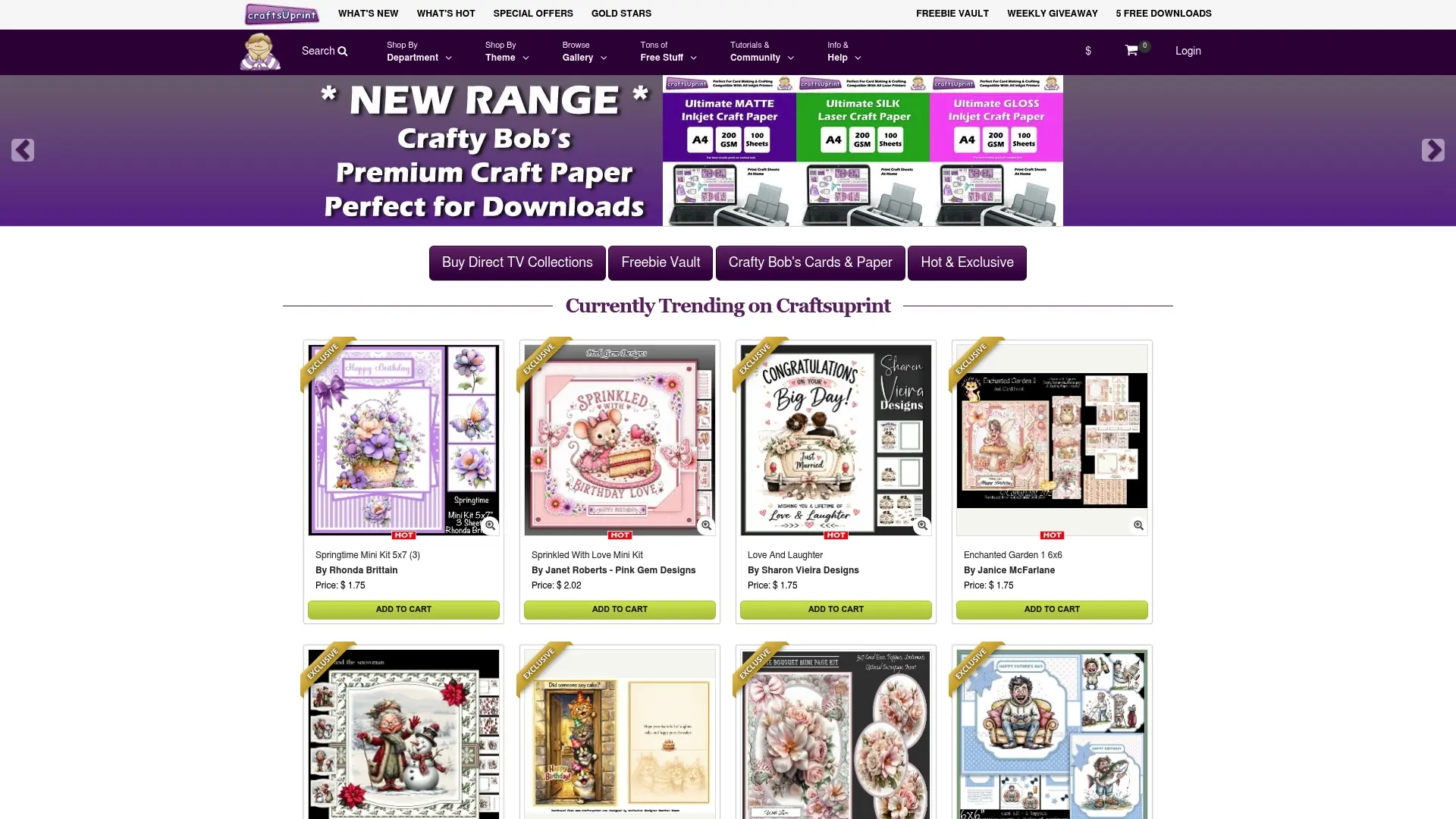
Sellers get instant digital delivery, a commission model that works for lower-price printables, and access to community promotional features including weekly freebies and contests. Create & Craft members can also access exclusive member downloads and themed content. Browse the full range of Create & Craft downloads to see the depth of the catalogue, then set up your seller account and upload your first listing today.
Useful sources
- How to sell printables online (Quickshops Blog): practical breakdown of fee models and file packaging for digital download sellers.
- Best marketplaces for digital products (Pin Design Co): comparison of marketplace categories by buyer intent and product type.
- Selling handmade crafts online in the UK (Anglia Market): covers UK-specific platform considerations including commission bands and product restrictions.
- Cost vs value on handmade marketplaces (The British Craft House): expert perspective on avoiding price wars and choosing curated platforms.
- Selling crafts online (Centre of Excellence): hybrid sales strategy and platform-testing advice for UK makers.
- How to make printables to sell (Cart Mango): beginner-friendly guide to file preparation, licensing, and listing basics.
- HMRC VAT registration guidance: primary source for UK VAT thresholds and registration requirements.
- The best card-making.co.uk alternatives for UK crafters (Craftsuprint Blog): Craftsuprint’s own roundup of marketplace options for card makers.
FAQ
What is the best craftuk.net alternative for UK card makers?
Craftsuprint is the recommended UK-first option for printable card kits and paper patterns, offering a focused craft audience, community features, and a commission model suited to digital downloads.
Do I need to register for VAT when selling printable downloads in the UK?
Most new sellers fall below the UK VAT registration threshold, but you should verify your position with HMRC directly, as thresholds can change and selling to EU buyers triggers separate VAT obligations.
Which file formats should I include in a printable craft listing?
Include a print-ready PDF, a PNG for digital use, and an SVG or DXF for cutting machines where relevant. Adding a plain-text licence file in the same ZIP reduces buyer confusion and refund requests.
Are flat fees or percentage commissions better for low-price printables?
Percentage-based commissions scale more fairly for low-ticket items. Flat per-sale fees can erase margins on downloads priced under £2–£3, so check the full fee structure before listing.
What is the hybrid selling approach for craft downloads?
Use a discovery marketplace such as Craftsuprint to attract new buyers, then steer repeat customers to your own storefront or email list to retain more margin and own the customer relationship directly.