
Card making contests: where to enter and how to win
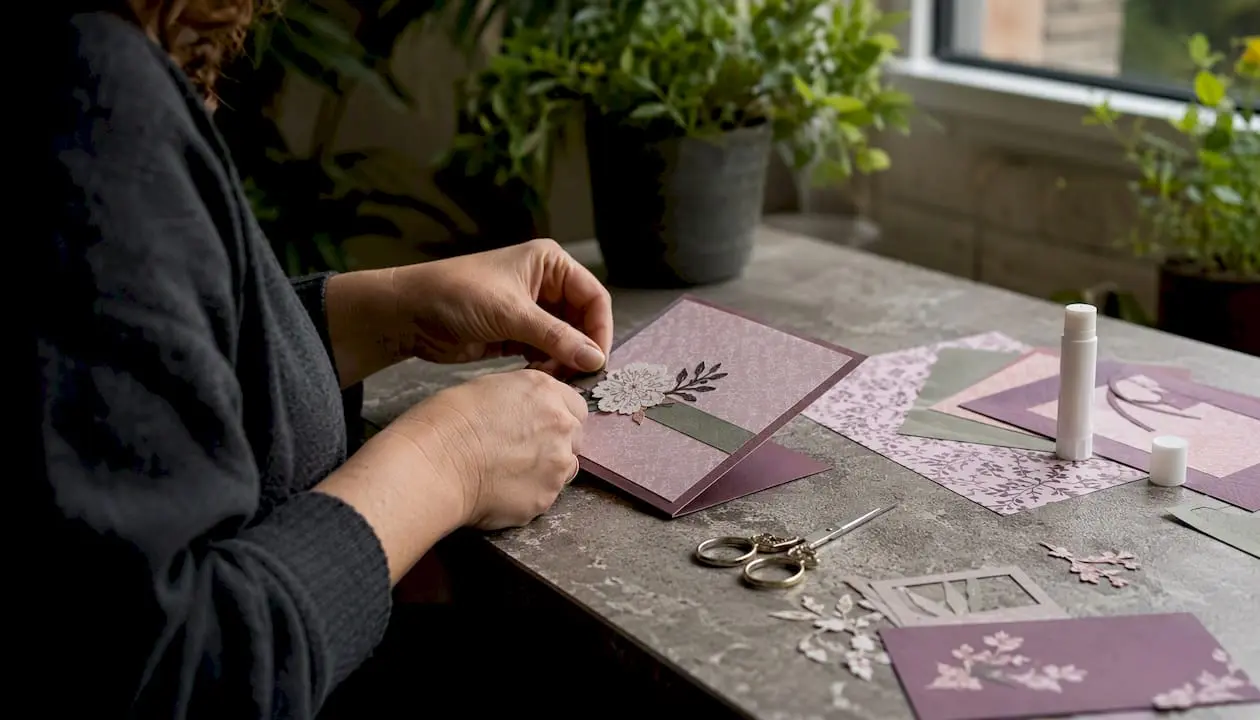
The best places to find active card making contests right now are contest marketplaces like DesignCrowd, brand-run competitions such as the Hallmark Inspired Competition, and community challenges run through craft platforms and clubs. If you’re starting out, enter a monthly community challenge first (low pressure, quick feedback) and pair it with one seasonal brand brief when the theme suits your style.
Most hobbyists waste weeks scrolling for contests that closed months ago. The fix isn’t finding more lists. It’s checking three things before you invest a single hour on a design: whether the contest is still open, what format it wants, and who owns the rights once you hit submit.
Card making competitions reward makers who treat entry requirements as seriously as the design itself. Blind-judged challenges like GCU Community’s monthly stock design contest reject entries that break formatting rules before a judge ever sees the artwork.
Before you sketch anything, run through this:
- Confirm the deadline date and time zone, not just the month
- Check the exact file specification (handmade photo, scan, or digital export)
- Read the rights clause: does the organiser take a licence or full ownership?
- Note any entry fee and what it actually buys you (feedback, exposure, nothing)
Key takeaways
Entering card making contests works best when you verify eligibility and file specs first, choose contests matched to your actual goal, and treat every submission as a reusable template.
| Point | Details |
|---|---|
| Start with community challenges | Free monthly contests like GCU Community’s give quick, blind-judged feedback with minimal risk. |
| Verify before you design | Check the closing date, file specification, and rights clause before starting any entry. |
| Match contest type to goal | Use marketplace contests for cash shots, club contests for portfolio and feedback. |
| Photograph handmade work carefully | Scan at 300 DPI or use raking natural light to capture texture accurately. |
| Sell what you’ve already made | Craftsuprint’s marketplace lets you list contest-ready designs for ongoing sales after judging ends. |
Table of Contents
- Where do you find active card making contests?
- Which card contests run regularly, and how do you confirm they’re open?
- What should you check before preparing an entry?
- How do you pick the right contests for your goals?
- What do experienced card makers do differently?
- Which free tools actually produce contest-ready files?
- What do entry fees, prizes and timelines usually look like?
- How do you actually submit an entry?
- Why entering contests is worth it even when you don’t win
- How Craftsuprint helps you enter contests and sell your designs
- Organiser pages and resources to bookmark
- Sources
- FAQ
Where do you find active card making contests?
Card crafting competitions live in four main places, and each attracts a different kind of maker.
Contest marketplaces run continuous open calls with commercial clients attached. DesignCrowd’s greeting card contests work this way: a client posts a brief, dozens of designers submit, and one gets paid. It’s a crowdsourcing model, so competition is stiff and most entrants walk away with nothing but practice.
Brand-run competitions come from publishers and retailers building their own catalogues. Hallmark’s Inspired Competition is the obvious example, accepting illustration, photography, design, or writing, with cash prizes and a shot at publication. These run less frequently than marketplace contests but carry far more prestige if you place.
Craft clubs and community platforms host the friendliest entry points. Sites like GCU Community and Artist Paper Club run recurring challenges with small prizes, blind judging, and genuinely supportive comment sections. This is where most hobbyists should start.
Specialist blogs and craft schools occasionally run their own scholarship-style contests or feature reader-submitted work. These rarely pay cash but often deliver something better for a beginner: a public gallery credit and constructive critique.
To check whether a listing is actually live rather than an abandoned page from two contests ago:
- Look for a specific closing date, not a vague “ongoing” label
- Check the most recent winners’ announcement date. If it’s over a year old, assume the contest is dormant
- Sign up for email alerts or an RSS feed where the organiser offers one
- Search the contest name plus the current year to catch fresh rules or theme changes
Which card contests run regularly, and how do you confirm they’re open?
Some competitions turn up in searches for years after they’ve quietly folded. Here’s what’s genuinely active, what it wants from you, and the one thing to check before you start designing.
DesignCrowd greeting card contests run on a rolling basis with no fixed calendar. Clients post briefs whenever they need new stock, so the smart move is checking the contests page directly rather than assuming a permanent open call. Entries are digital only, judged by the client who posted the brief, and the winner is typically paid a flat commission rather than a share of future sales.
Hallmark’s Inspired Competition accepts illustration, photography, design, or writing, and unlike most contests on this list, it explicitly welcomes multiple creative formats rather than card designs alone. Prizes include cash and the possibility of publication, which makes verification worth the effort. Check the current rules page each time, since submission windows and formats can shift year to year.
Strawberry Field’s Design a Christmas card competition is a seasonal charity brief run by the Salvation Army’s Strawberry Field project. Winning designs get sold to raise funds for the charity’s work, so this suits makers who want their creativity tied to a cause rather than a straightforward prize. It opens annually ahead of Christmas and closes well before the retail season starts, so watch the dates closely.
GCU Community’s Dash of Inspiration challenge runs monthly with a strict one-card-per-entrant rule and blind judging, meaning judges see the design without knowing who made it. This is a stock design challenge, so entries need to work as a reusable digital template rather than a one-off handmade piece.
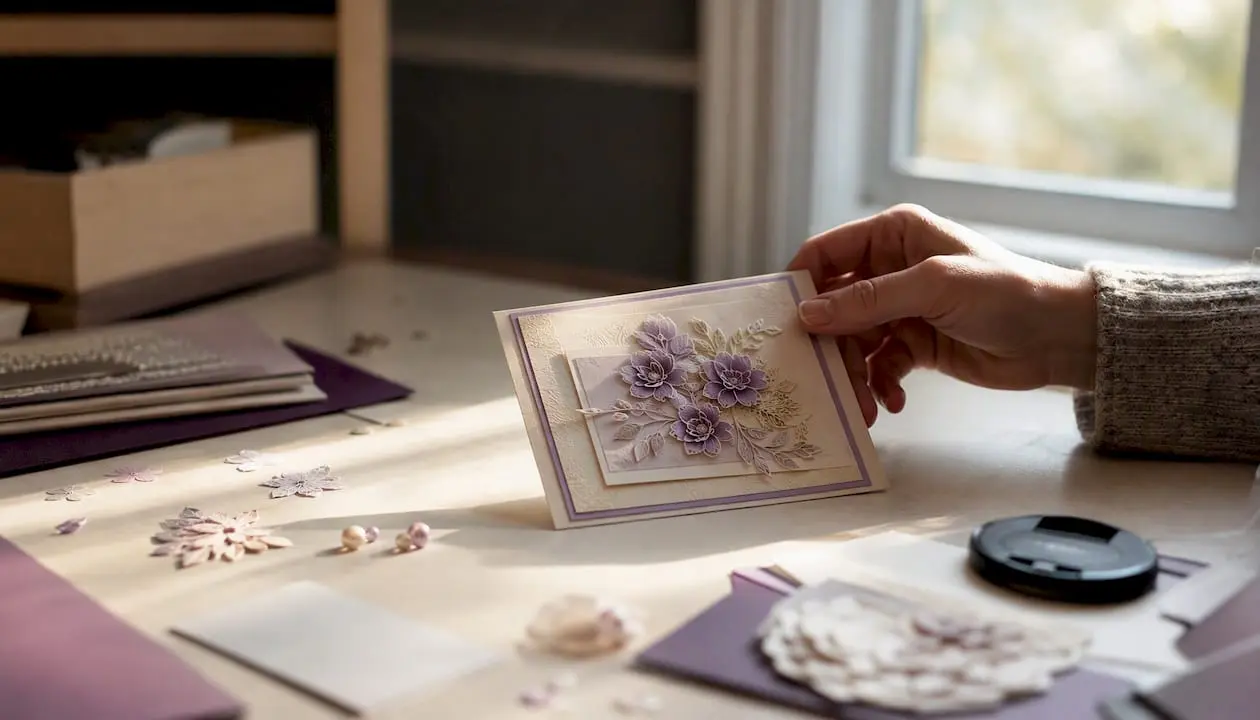
Artist Paper Club’s card competition accepts any medium and asks for nothing more than a photo submitted by email or tagged on Instagram. Winners were announced within days of the closing date in its 2025 run, and every entrant received small rewards or points, not just the winner.
| Contest | Entry type | Frequency | Digital or handmade |
|---|---|---|---|
| DesignCrowd greeting card contests | Digital design | Rolling, brief-driven | Digital only |
| Hallmark Inspired Competition | Illustration, photography, design, writing | Periodic (check current rules) | Both accepted |
| Strawberry Field Christmas card competition | Digital or scanned artwork | Annual, seasonal | Both accepted |
| GCU Community Dash of Inspiration | Stock design template | Monthly | Digital only |
| Artist Paper Club card competition | Any medium, photographed | Periodic community event | Both accepted |
Digital-only contests like DesignCrowd and GCU Community suit makers comfortable in vector or raster software. Charity and club contests tend to welcome handmade work photographed or scanned afterwards, which is friendlier if papercraft, not screen design, is your actual skill.
What should you check before preparing an entry?
Half the disqualifications in card crafting competitions happen before judging even starts, over eligibility or formatting, not design quality.
Run through this before you touch a design file:
- Age and residency limits. Scholarship-style and brand contests often restrict entry to a specific age band or country; club challenges rarely do.
- Commercial catalogue status. Some contests exclude designs you’ve already sold or listed anywhere else, including your own online store.
- Previous publication rules. If a design has appeared publicly before, even on a personal blog, some organisers will disqualify it outright.
- File specification. Digital contests typically want a specific export size and resolution. GCU Community’s stock design challenge, for instance, lays out precise formatting rules alongside its one-card-per-entrant limit.
- Photo versus scan for handmade work. A phone photo in flat daylight rarely does a dimensional card justice; a flatbed scan captures texture and colour far more accurately for anything reasonably flat.
Entry fees vary from nothing at all (most community challenges) to a modest charge for some brand-run competitions covering administration. What matters more than the fee is the rights clause attached to it.
Pro Tip: Read the licensing terms before you submit, not after you win. Some contests take a one-time, non-exclusive licence, letting you keep selling the design elsewhere. Others demand full transfer of copyright, meaning you can never resell or reprint that design again, even in your own shop. If a contest doesn’t specify, email and ask before entering.
How do you pick the right contests for your goals?
Not every contest deserves your time, and the maker who enters everything usually finishes fewer designs than the one who’s selective.
Start by naming your actual goal, because it changes the maths entirely:
- Prize money or paid commission. Marketplace contests like DesignCrowd pay the winner but leave everyone else with nothing, so only enter if you can absorb that risk.
- Portfolio building. Community challenges with public galleries, like Artist Paper Club’s, give you a credited entry regardless of whether you place.
- Feedback and skill growth. Blind-judged contests such as GCU Community’s Dash of Inspiration strip away bias, so the judging comments (where offered) tend to be more useful than a popularity-driven vote.
- Marketplace exposure. Contests tied to a platform where you can also sell your work, like Craftsuprint’s contest and marketplace features, let a single design work two ways: competition entry now, ongoing sales later.
Weigh entry fees against realistic return. A free monthly challenge costs you only design time, so the downside is minimal even if you don’t place. A paid brand competition needs a genuine shot at winning, or exposure valuable enough to justify the cost, before it’s worth the fee.
| Your goal | Best contest type | Verdict |
|---|---|---|
| Quick feedback and practice | Free monthly community challenge | Enter now |
| Cash prize with no exposure guarantee | Marketplace brief-driven contest | Enter selectively, expect competition |
| Untested design idea | Any paid contest | Practise and test the design in a free challenge first |
What do experienced card makers do differently?
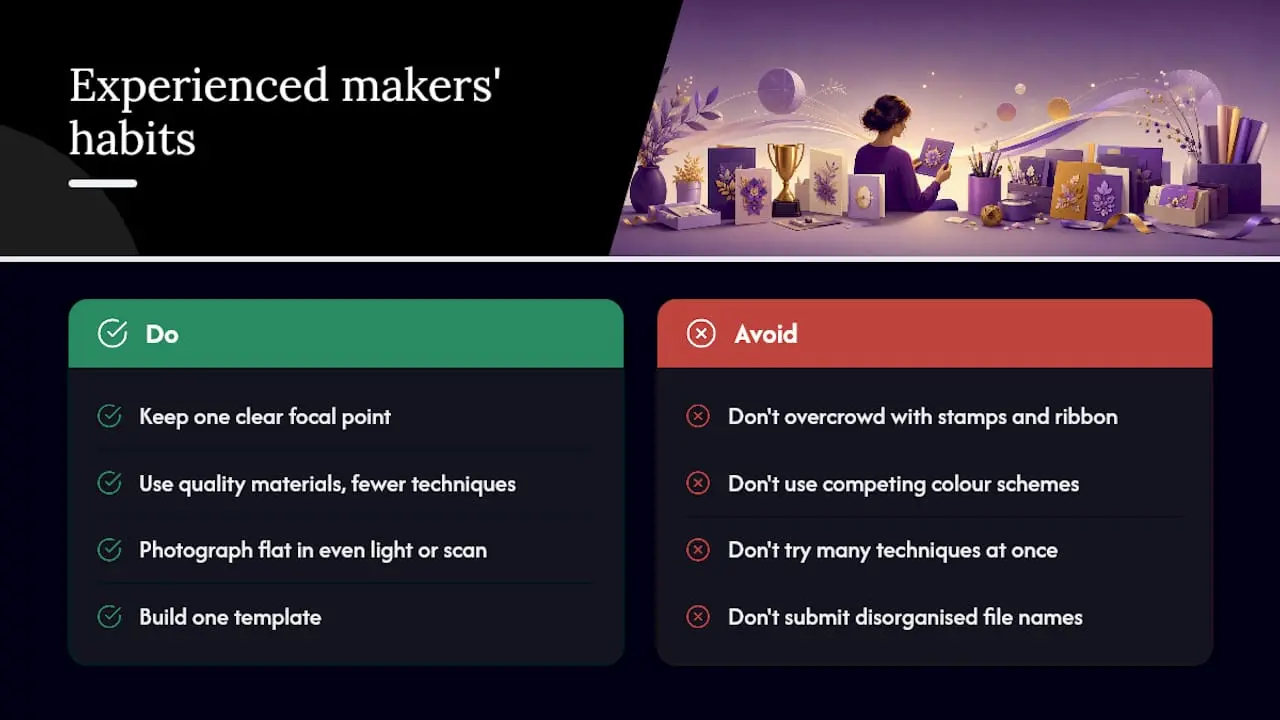
The gap between an amateur-looking card and a striking one usually comes down to restraint, not skill. Crafters who post consistently across community galleries tend to repeat the same handful of design habits.
Keep the layout to one clear focal point. A card crowded with stamps, ribbon, and three competing colour schemes reads as busy rather than rich. The Spruce Crafts’ card-making guide covers this alongside thirteen practical techniques worth working through if your cards feel cluttered without you knowing why.
Quality materials matter more than quantity of technique. Combining a good cardstock with one or two well-executed methods, stamping, die cutting, or layering, consistently beats a card that tries five techniques at once. Handmade doesn’t mean cluttered; the cleanest designs in most galleries tend to be the ones that place, not the busiest.
For submission, photograph handmade cards in even, natural light with the card flat and square to the camera. Scanned images at sufficient resolution generally capture texture and colour truer than a phone photo, particularly for embossing or foiling that catches light unpredictably. Name your files clearly with your name and the contest theme, since disorganised submissions slow down judging and occasionally get lost in a crowded inbox.
Craftsuprint’s step-by-step card making guide and its guide to creating card templates both walk through building a reusable layout, which speeds up entering multiple contests without redesigning from scratch each time.
Pro Tip: Build one strong template and vary the colour palette and embellishments for each theme. It’s how experienced entrants submit to several contests a month without burning out on entirely new designs each time.
Which free tools actually produce contest-ready files?
You don’t need expensive software to meet most contest specs. What you need is the right tool for each stage of the job.
- Layout and design: Canva (free tier) handles most digital card layouts and exports cleanly to PNG or PDF.
- Photo editing: GIMP is a genuinely capable free alternative to Photoshop for colour correction and cropping handmade card photos.
- Scanning: any flatbed scanner set to 300 DPI minimum captures texture and embossing better than a phone camera.
- Vector export: Inkscape handles vector artwork for contests that specifically request scalable files.
| Purpose | Recommended setting | Notes |
|---|---|---|
| Digital submission (print) | 300 DPI, CMYK where accepted | Check the specific contest brief for colour mode |
| Digital submission (web/online gallery) | 300 DPI, RGB | Smaller file size, faster upload |
| Handmade card photo | Natural light, flat angle, 300 DPI scan preferred | Avoid flash, which flattens texture |
| File naming | YourName_ContestTheme_v1 | Prevents mix-ups in shared inboxes |
Textured or dimensional handmade cards are the trickiest to photograph well; if you’re looking for creative inspiration, check these ideas for making leaf art that could also be adapted into unique card fronts. Angle a single light source across the card rather than straight at it. Raking light like this throws shadows that reveal embossing and layering far better than flat, front-facing light does. If a scanner is available, scan first and photograph only elements that don’t sit flat, like 3D embellishments, then composite the two in an editor if the contest allows it.
What do entry fees, prizes and timelines usually look like?
Most card crafting competitions cost nothing to enter. Community and club challenges, including Artist Paper Club’s and GCU Community’s, run free, funded by the platform itself. Brand-run competitions occasionally charge a modest administrative fee, though many, including Hallmark’s Inspired Competition, do not charge entrants at all.
Prizes range from community recognition and small reward points, as Artist Paper Club offers every entrant regardless of placing, up to cash awards and publication for competitions like Hallmark’s. Charity briefs like Strawberry Field’s sit in between: the reward is seeing your design sold for a cause rather than a personal cash payout.
Timelines vary sharply by contest type. Club and community challenges typically announce winners within days of the closing date, as Artist Paper Club’s 2025 competition demonstrated. Brand-run and marketplace contests often take several weeks, since a client or judging panel needs time to review a larger volume of entries.
A realistic planning window looks like this: two weeks to design and refine, one week to finalise files and check specs, then submit with several days of buffer before the deadline in case of technical issues or last-minute rule clarifications.
How do you actually submit an entry?
Follow this sequence the day you decide to enter, and you’ll avoid the last-minute scramble that trips up most first-time entrants.
- Finalise the design using your chosen software or, for handmade work, complete the physical card.
- Re-read the brief one final time against your finished design, checking theme, size, and any excluded elements.
- Photograph or scan handmade work under even lighting, or export digital work at the specified resolution and file type.
- Rename the file clearly with your name and the contest reference.
- Upload or email according to the organiser’s stated channel, never assuming email works if they specify a submission portal.
- Save proof of entry, whether that’s a confirmation email, a screenshot of an upload confirmation, or a timestamped copy of your sent message.
Before you hit submit, run one final check:
- File size within the stated limit
- Cropping matches the required aspect ratio
- Metadata or embedded text doesn’t reveal your identity if the contest specifies anonymous judging
- A backup copy saved somewhere other than the device you’re submitting from
Watch for two common mistakes: submitting after the deadline in a different time zone than the organiser’s, and forgetting that some contests explicitly forbid withdrawal once judging begins. If you haven’t received a confirmation within a day or two of a digital submission, follow up. A missing confirmation usually means the file didn’t upload correctly, not that the organiser is simply slow.
Why entering contests is worth it even when you don’t win
Contest feedback teaches you things practice alone rarely does. Submitting to a blind-judged challenge forces you to look at your own design the way a stranger would, stripped of the story behind why you chose that ribbon or that colour. That’s a different kind of scrutiny than showing a card to a friend who already likes your work.
The time cost is real, and it’s worth being honest about it. A well-made card entry, from concept to final file, usually takes a few hours for an experienced maker and considerably longer for a beginner still learning their software or their scanner’s quirks. Weigh that against what you’re actually getting: a public gallery credit, a scrap of judge feedback, maybe a small prize. For most hobbyists, the creative return, a finished piece, a new technique tried under a deadline, a theme that pushed you somewhere you wouldn’t have gone alone, outweighs the modest odds of winning cash.
How Craftsuprint helps you enter contests and sell your designs
Most contest platforms only do one thing: run the competition, then move on. Craftsuprint gives hobby card makers a second option most contests don’t offer, a place to actually sell the design you made for that brief, long after the judging closes.
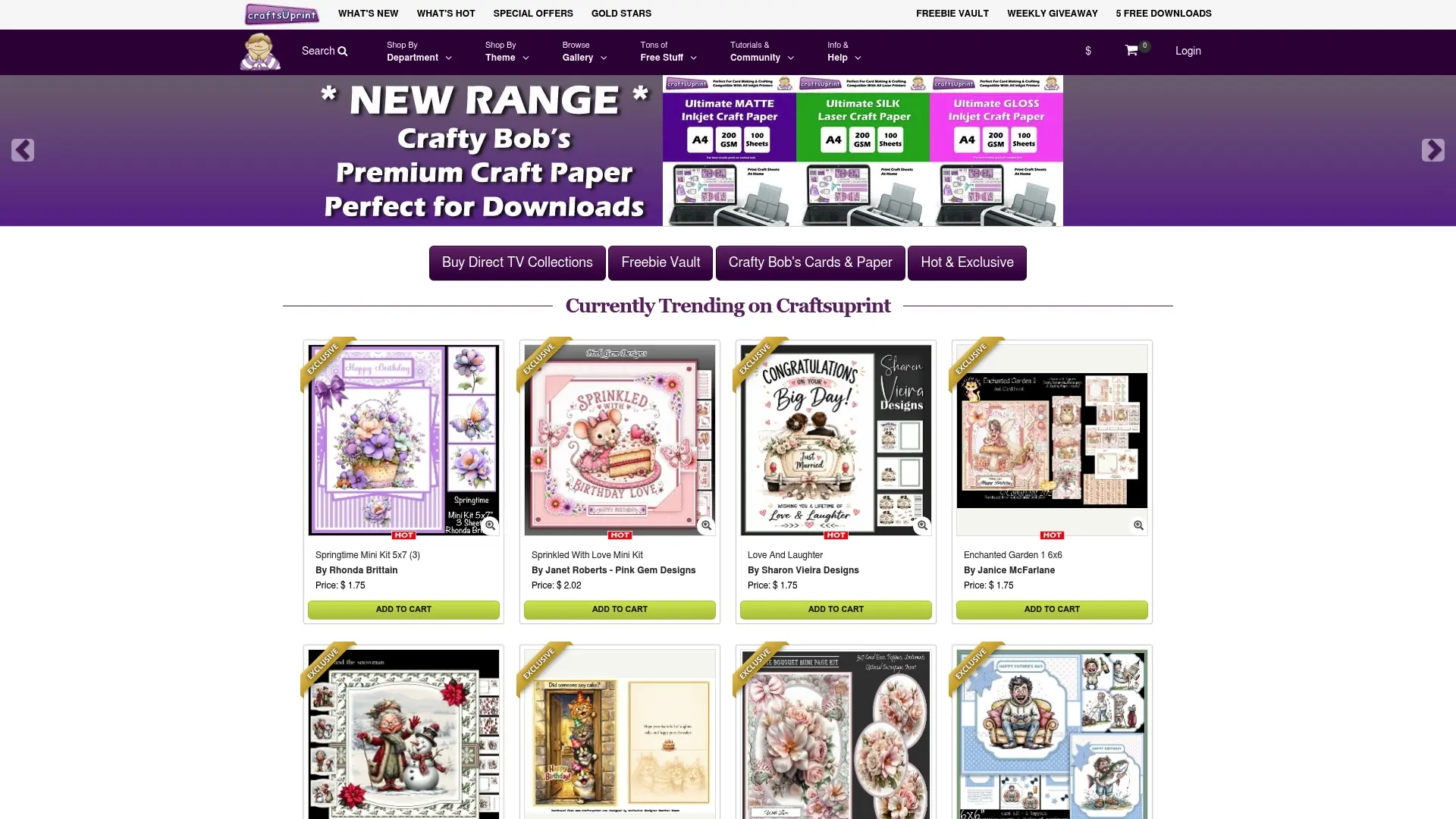
Craftsuprint operates as a marketplace built specifically for printable craft downloads, card-making kits, and paper patterns, alongside tutorials that help you build the exact templates contests ask for. If you’ve just finished a design for a monthly challenge or a brand brief, you don’t have to let that file sit unused afterwards. List it in Craftsuprint’s craft supplies catalogue or explore the classifieds section for paper crafts if you’re sourcing materials for your next entry. New members can also claim a free Create & Craft member gift to get started without any upfront cost. Browse the tutorials and blogs for template guides, then set up your own storefront when you’re ready to turn contest practice into ongoing sales.
Organiser pages and resources to bookmark
Bookmark these pages directly rather than relying on search results, since contest rules and deadlines change without much warning.
- DesignCrowd’s greeting card contests, to catch new client briefs as they post.
- Hallmark’s Inspired Competition page, for current entry formats and prize details.
- Strawberry Field’s Christmas card competition, for seasonal opening dates each year.
- GCU Community’s Dash of Inspiration challenge, for monthly themes and blind-judging rules.
- Artist Paper Club’s competition page, for community-level entry requirements and past winners.
Set up email alerts wherever an organiser offers them, and follow community feeds directly rather than depending on general search. Contest pages get updated quietly, often without a fresh announcement, so a saved bookmark checked monthly beats hoping a new listing surfaces in your feed.
Sources
- Card Making Techniques, Tutorials & Projects — The Spruce Crafts
- Dash of Inspiration: AUGUST 2026 STOCK Design Challenge — GCU Community
- Card Making Competition 2025 — Artist Paper Club
- Design a Christmas card competition | Strawberry Field
FAQ
What are some greeting card competitions worth entering?
DesignCrowd’s greeting card contests, Hallmark’s Inspired Competition, Strawberry Field’s Christmas card competition, and community challenges like GCU Community’s Dash of Inspiration all run regularly and accept hobbyist entries.
What is the best free software for making contest-ready cards?
Canva handles most digital layouts for free, GIMP covers photo editing, and Inkscape manages vector export for contests that request scalable files.
How many people typically enter greeting card scholarship contests?
Entry numbers for scholarship-style greeting card contests aren’t publicly published in detail, so check the specific organiser’s page for the current year’s applicant figures before assuming your odds.
How do you make a homemade card look professional?
Stick to one clear focal point, pair quality cardstock with one or two well-executed techniques rather than several at once, and photograph or scan the finished card under even, natural light.
Can I sell a card design after entering it in a contest?
It depends entirely on the contest’s rights clause. Some competitions take only a one-time licence, leaving you free to sell the design afterwards through a marketplace like Craftsuprint, while others require full copyright transfer.