
Advantages of printable projects for UK crafters
TL;DR:
- Printable projects provide hobby crafters with instant access, low-cost reprints, and customizable options to match their styles. They reduce setup effort and allow experimentation with different materials, sizes, and finishes, fostering creativity and sustainability. Overall, printables make craft projects faster, more flexible, and environmentally friendly while supporting mindful, hands-on making.
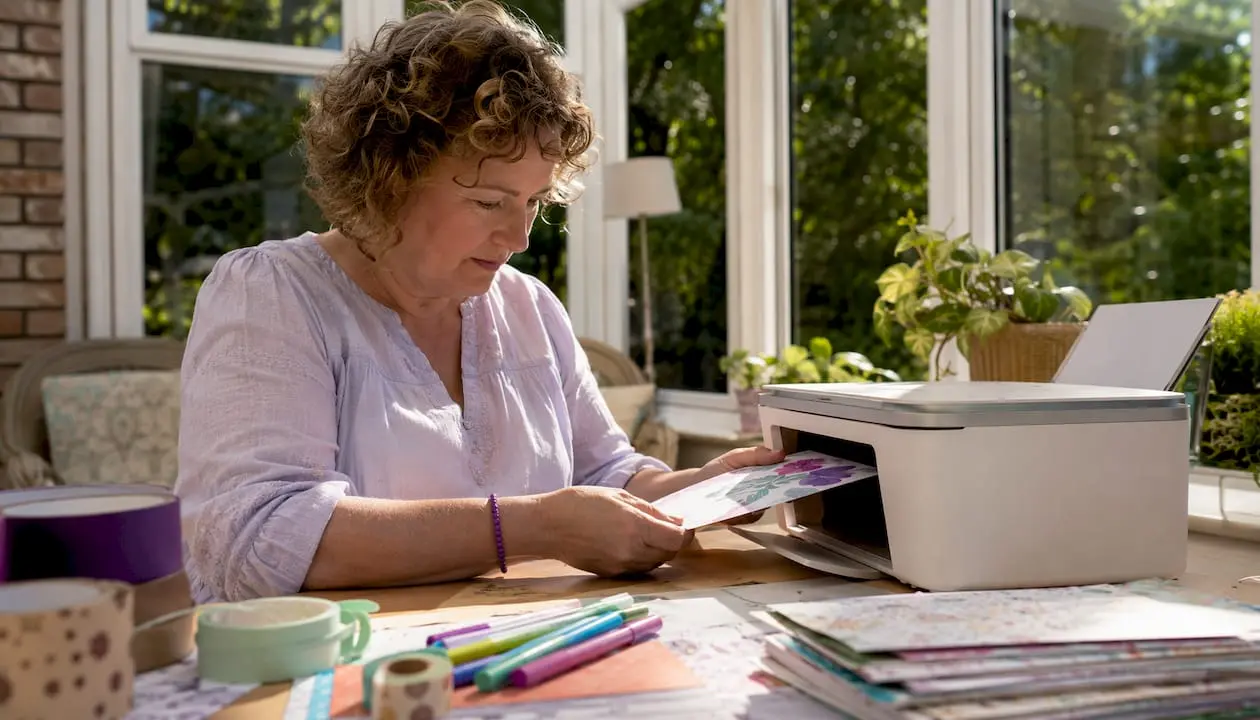
Printable projects give hobby crafters faster, cheaper, and more customisable results than most ready-made alternatives. Download a file, print on your choice of paper, and you are making within minutes. The advantages of printable projects stack up quickly: no shipping wait, no wasted materials, and a design you can tweak to match your exact aesthetic. Craftsuprint hosts hundreds of ready-to-download craft projects, tutorials, and starter kits built around exactly this workflow.
Key benefits at a glance:
- Time-saving: templates remove the setup work so you move straight to making
- Cost-effective: print only what you need, reprint as often as you like
- Customisable: choose your paper, size, and colour palette to suit your style
- Scalable: one file serves a single card or a batch of twenty
- Sustainable: print on demand cuts packaging waste and eliminates shipping miles
- Instant access: your file arrives the moment you pay, no waiting for a parcel
Pro Tip: Before committing to a full print run, always print a single test sheet at draft quality. It costs almost nothing and saves you from wasting a whole sheet of 300gsm cardstock on a colour that prints darker than it looks on screen.
Table of Contents
- What are the real advantages of printable projects for crafters?
- How does the download-to-finished-project workflow actually work?
- What materials and tools do you actually need?
- Do printables actually support creativity and wellbeing?
- How do you choose a printable that will actually work?
- Are printable projects actually sustainable?
- Key takeaways
- What printables have taught me about making things
- Ready-to-print projects are waiting for you on Craftsuprint
- Further reading and useful sources
- FAQ
What are the real advantages of printable projects for crafters?
The headline benefits are real, but understanding why they work makes them more useful in practice.
Time-saving and reduced invisible effort
The biggest drain on any craft session is not the making — it is the setup. Measuring, sketching, ruling margins, choosing a layout. Design experts describe this as invisible effort: the cognitive overhead that sits between wanting to make something and actually starting. A well-designed printable eliminates most of it. The layout is done, the proportions are correct, and the only decision left is which paper to load.
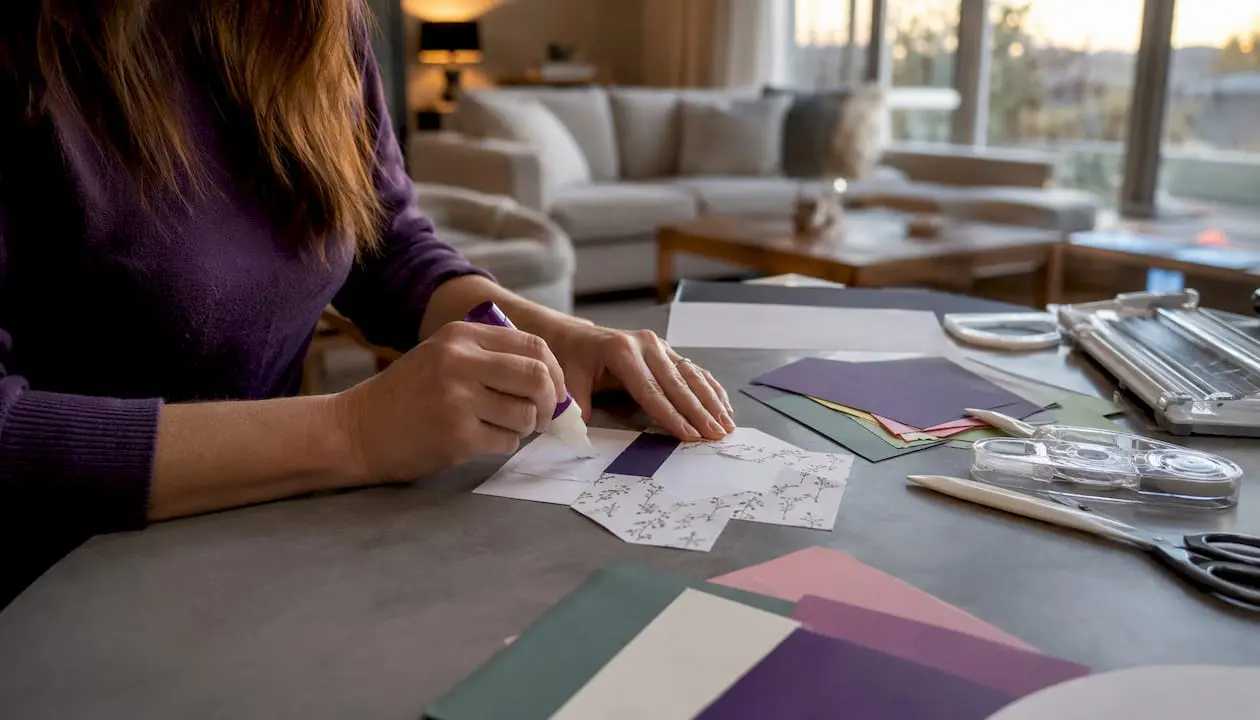
For a greeting card, that means you open the file, check the fold line, and print. For a planner insert, you pick your paper weight and go. Ready-to-print kits reduce this friction further by bundling all the components in one download.
The fit factor: customisation that grows with you
Stationery specialists call this the fit factor: the ability to build a system or aesthetic that changes with your tastes rather than forcing you to adapt to a static product. Buy a pre-printed planner and you are locked into its layout. Download a printable insert and you can swap it next month for something that suits your current style better.
The same logic applies to gift wrap, party decorations, and card making. You control the colour scheme, the paper finish, and the size. Vellum, textured cardstock, kraft paper — the design stays the same while the material changes the entire feel of the finished piece.
Cost, scalability, and the freedom to experiment
Printables can be reprinted indefinitely at essentially no additional product cost beyond paper and ink. That removes the anxiety of ruining an expensive item. Try a fold you have never attempted before on a cheap sheet of 80gsm copy paper, then repeat it on 160gsm cardstock once you are confident. For group projects — a craft afternoon, a school fair, a family card-making session — one file covers every participant without any per-unit digital cost.
How does the download-to-finished-project workflow actually work?
The process is straightforward once you know the steps.
- Download your file (PDF, PNG, or SVG) from the marketplace listing
- Open and inspect it at 100% zoom to check resolution and bleed margins
- Test-print one page at draft quality on plain paper
- Choose your paper — weight, finish, and size (A4 is the UK standard)
- Print the full run with the correct colour profile and page-fit setting
- Trim, score, and assemble using a craft knife, cutting mat, and bone folder
File types explained quickly
- PDF: the most common format; prints at full resolution without any extra software
- PNG: high-resolution image file; useful when you want to drop a design into another programme
- SVG: vector format; scales to any size without losing sharpness, and is editable in free tools such as Inkscape
UK printing tips
Most home inkjet printers handle A4 without issue. Set your print dialogue to Fit to Page rather than Actual Size unless the file is already sized to A4 with bleed. For duplex (double-sided) cards, do a single-sheet test first to confirm your printer’s feed direction. If you want a sharper finish than your home printer delivers, high-street print shops and online services such as Instantprint accept PDF uploads and print on heavier stocks.
Pro Tip: Save a separate “print-ready” copy of every file you use. Rename it with the date and paper weight so you can reprint months later without hunting through your downloads folder.
What materials and tools do you actually need?
The short answer: less than you think.
- Paper and card: 80gsm copy paper for tests; 160–300gsm cardstock for finished pieces
- Cutting tools: a craft knife and self-healing cutting mat, or a guillotine trimmer for straight edges
- Scoring and folding: a bone folder and a metal ruler make clean folds on heavier card
- Adhesives: double-sided tape or a tape runner for clean joins; PVA for layered elements
- Finishing extras: eyelets, brads, ribbon, or washi tape if the project calls for embellishment
Planner printables work across A4, A5, A6, and personal sizes, so the same file can serve different binder formats. For crafters who want to experiment with specialist stocks, eco papers and recycled cardstock are widely available from UK suppliers. The craft supplies section on Craftsuprint lists materials alongside the downloads, which saves a separate sourcing trip.
Home printing is fine for most projects. A local print shop makes sense when you need a large batch, a specific paper weight your printer cannot handle, or a laminated finish.
Do printables actually support creativity and wellbeing?
Physical making offers something screens cannot replicate. The tactile and therapeutic benefits of cutting, folding, and assembling are well-documented among craft practitioners: the repetitive, focused actions quiet mental noise in a way that scrolling does not.
Printables sit neatly in the middle. You get the instant gratification of a digital download and the mindful, hands-on experience of physical craft. A short session — twenty minutes with a card kit after work — is enough to feel the shift. Many hobbyists use printables as a warm-up exercise before tackling a more complex project, because the structure is already there and the decisions are minimal.
Community sharing adds another layer. Posting a finished piece, getting feedback, and seeing what others make from the same template creates a social loop that sustains motivation. Craftsuprint’s marketplace supports this through designer listings, community features, and themed craft kits that give hobbyists a shared starting point.
How do you choose a printable that will actually work?
Not all printables are equal. Before you buy, run through this checklist:
- Is the file resolution at least 300 DPI? (Check the listing description)
- Does it include bleed and trim marks for clean cutting?
- Are assembly instructions included, or is there a tutorial link?
- What paper weight does the designer recommend?
- Is the licence personal use only, or does it allow commercial use?
- Can the file be edited, or is it a flat PDF?
Beyond the checklist, look for listings that include example photos of the finished piece, community reviews, and a clear description of what is in the download. Vague listings with no assembly guidance are a warning sign.
Craftsuprint’s designer listings include downloadable starter kits, step-by-step tutorials, and community ratings, which makes it straightforward to assess quality before purchasing. The DIY card kit examples blog post is a useful starting point for seeing what a well-documented printable project looks like in practice.
Are printable projects actually sustainable?
Printables have a genuine environmental advantage over most physical craft kits, though the picture is nuanced. Because you print only what you need, there is no excess packaging, no unused components, and no shipping miles for a physical parcel. A digital file has no carbon footprint beyond the device used to download it.
The sustainability of the finished piece depends on your material choices. Recycled or FSC-certified cardstock is widely available in the UK and works well with most home printers. Choosing water-based inks, printing double-sided where possible, and using offcuts for smaller projects all reduce waste further. Printable gift wrap is a particularly good swap: you print the exact sheet size you need rather than buying a roll and trimming off the excess. For personalised gifting, a printed design on recycled kraft paper is both lower-waste and more considered than mass-produced wrapping.
The honest caveat: home inkjet printing uses ink cartridges that carry their own environmental cost. Laser printers tend to be more efficient for larger runs. If sustainability is a priority, batch your printing rather than running the printer for a single sheet.
Key takeaways
Printable projects are one of the most practical and flexible tools available to UK hobby crafters, combining instant access, low cost, and genuine creative control.
| Point | Details |
|---|---|
| Instant access, no waiting | Files download immediately after purchase, so you can start a project the same day. |
| Reprint freely | One file covers unlimited copies at only the cost of paper and ink. |
| Customise to your style | Choose paper weight, size, and finish to match your aesthetic rather than a fixed product. |
| Lower environmental impact | Print on demand cuts packaging waste and removes shipping miles entirely. |
| Wellbeing benefit | Short, focused craft sessions with printables offer a tactile, mindful break from screens. |
| Craftsuprint as a starting point | Craftsuprint’s marketplace offers starter kits, tutorials, and designer listings to help you begin with confidence. |
What printables have taught me about making things
The conventional wisdom around printables is that they are a shortcut — a lesser form of making for people who cannot be bothered to design from scratch. That framing misses the point entirely. The value is not in avoiding skill; it is in removing the friction that stops you from practising skill in the first place. A crafter who spends forty minutes ruling margins and measuring fold lines before they even pick up a bone folder is not developing technique — they are burning out before the interesting part begins.
Printables shift the effort to where it belongs: the material choices, the finishing, the assembly decisions that actually develop your eye and your hands. The template is a starting point, not a ceiling. Some of the most inventive work comes from people who take a standard card kit and experiment with unusual stocks, unexpected colour combinations, or layered embellishments the original designer never intended.
The Craftsuprint blog, including Rob’s ongoing craft posts, documents exactly this kind of iterative experimentation — showing how the same download produces entirely different results depending on the maker’s choices.
Ready-to-print projects are waiting for you on Craftsuprint
If you want to try a printable project today without any of the setup, Craftsuprint is the place to start. The marketplace brings together hundreds of downloadable craft projects from independent designers, all with clear instructions and community ratings so you know what you are getting before you print.
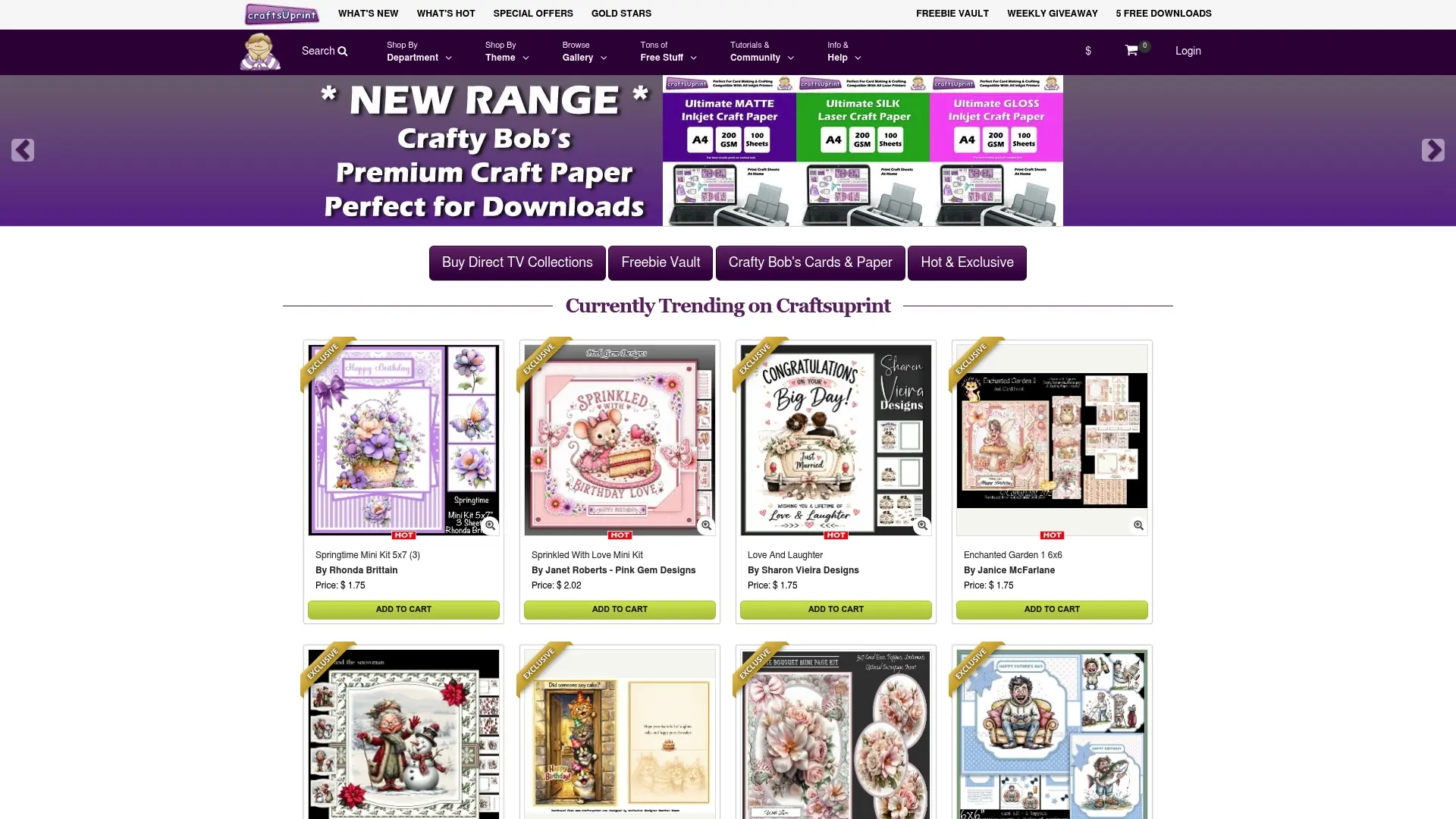
The best low-friction first step is the free male mini kit — a complete starter download that comes with a demo video showing the full workflow from file to finished piece. No commitment, no guesswork, just a real project you can hold in your hands by this evening. Browse the full range of craft supplies on Craftsuprint to pick up any materials you need alongside your download.
Further reading and useful sources
- What makes a printable feel more useful than an app? — SenseCentral
- Are printable planners worth it? — Pretty Easy Planning
- The benefits of using printables in your crafts, planners, and journals — Moonlight Memoirs
- What are printables? The ultimate beginner’s guide — DIY Couple Blog
- Why use planner printables? — Eleve Planning
- 12 creative ways to use printables in 2026 — Craftsuprint Blog
- Why ready-to-print kits make crafting easier — Craftsuprint Blog
- Craftsuprint homepage
FAQ
What are the main advantages of printable projects?
Printable projects offer instant access, unlimited reprints at low cost, and full control over paper and size. They remove the setup overhead that slows down a craft session and let you experiment freely without wasting expensive materials.
Are printable projects suitable for beginners in the UK?
Yes. Most printable files come as PDFs that print directly on standard A4 paper from a home inkjet printer. Starter kits on Craftsuprint include demo videos and step-by-step instructions designed for first-time makers.
How do I know if a printable file is good quality?
Look for a minimum resolution of 300 DPI, included bleed and trim marks, clear assembly instructions, and example photos of the finished piece. Community reviews in the listing are a reliable indicator of real-world print quality.
Can I reuse a printable project file?
Yes. Once purchased, a digital file can be reprinted as many times as you need, subject to the licence terms in the listing. Personal-use licences cover unlimited reprints for your own projects; commercial licences cover selling finished items.
Are printable projects environmentally friendly?
Printables reduce packaging waste and eliminate shipping miles compared with physical kits. Choosing recycled or FSC-certified cardstock and batching your print runs reduces the environmental impact further.