
12 creative ways to use printables in 2026

TL;DR:
- Printables are versatile digital files that can be printed at home for crafts, decoration, organization, and education. They are especially effective for instant wall decor, gift accents, planner systems, and seasonal home updates, offering cost-effective and customizable solutions. Using the right materials and maintaining consistent routines enhances the creative and practical benefits of printables in everyday life.
Printables are downloadable digital files, typically PDF or image formats, designed to be printed at home and used across crafts, organisation, education, and décor. They are one of the most flexible creative tools available to hobby crafters today. Whether you are working with cardstock on a Cricut Joy™ 2 or simply printing a planner page onto regular paper, the range of applications is genuinely surprising. This article covers the most practical and creative ways to use printables right now, with specific techniques, material recommendations, and tips drawn from current craft practice.
1. ways to use printables for instant wall décor
Print and frame is the simplest way to use digital printables for seasonal or everyday décor. You print a design onto cardstock or regular paper, slip it into a frame, and your wall space is transformed in minutes. Kitchen shelves, entry tables, and bathroom nooks all respond well to this treatment. Swap the print with the season and you have a décor system that costs almost nothing to refresh.

Cardstock produces a crisper, more substantial result than standard copy paper. It holds colour better and sits flat inside a frame without curling. For smaller spaces, A5 or 4x6 inch prints in clip frames work particularly well and require no specialist tools.
Pro Tip: Print two or three coordinating designs from the same collection and display them as a trio. The grouped effect reads as intentional and styled rather than accidental.
2. using printables as gift tags and wrapping accents
Gift tags are one of the most underused applications for printables. Print a sheet of tags onto cardstock, cut them out with scissors or a craft knife, punch a hole at the top, and thread through a length of ribbon or twine. The result looks considered and handmade without requiring advanced skills.
The same approach works for bottle labels, envelope liners, and small gift boxes. Many printable designers release coordinating sets that include tags, labels, and wrapping accents together. Using a matched set creates a cohesive gift presentation that stands out against shop-bought alternatives.
Seasonal craft trends in 2026 show strong demand for personalised gifting touches. Printable gift tags sit at the centre of that trend because they are fast to produce and easy to customise with a handwritten message.
3. how to use printables for planner organisation
Printable planner systems are most effective when maintained weekly with a consistent 10–15 minute setup routine. That single habit separates planners that get used from planners that get abandoned. The format you choose matters less than the regularity with which you refresh it.
The three most common printable planner setups are:
- Binder systems with weekly and monthly pages in plastic pockets, swapped out each Sunday evening.
- Clipboard setups with a single weekly page printed fresh each Monday morning.
- Folder systems with monthly batches printed at the start of each month and filed in tabbed sections.
Each system suits a different working style. Clipboard users benefit from weekly page rotation. Folder users do better printing in monthly batches. The key is matching the update cadence to your actual behaviour, not to what looks appealing on Pinterest.
Pro Tip: Add printable tuck-in cards and tags to your planner pages. Small decorative inserts make the system feel personal and encourage you to open it daily.
Printable tags and journal inserts also work inside bullet journals and ring-bound notebooks. They add structure without requiring you to draw grids or headers by hand.
4. crafting with printable patterned paper
Patterned-paper printables serve as backgrounds and layering elements in junk journaling, scrapbooking, and mixed-media projects. Print a sheet of patterned paper, tear or cut it into sections, and layer it beneath photos, journalling blocks, or embellishments. The result has visual depth that plain paper cannot replicate.
Journal cards, pocket templates, envelopes, and tags are all available as printable formats. These elements combine with physical ephemera such as postage stamps, fabric scraps, and pressed flowers to create pages that feel genuinely handmade. The contrast between the printed digital element and the found physical object is what gives junk journalling its distinctive character.
Here is a quick reference for common printable crafting formats and their uses:
| Printable Format | Primary Use | Recommended Material |
|---|---|---|
| Patterned paper | Background layers, page covers | Standard copy paper |
| Journal cards | Pocket inserts, photo mounts | Cardstock |
| Envelope templates | Letter sets, gift enclosures | Cardstock or text-weight paper |
| Sticker sheets | Labels, decorative accents | Printable sticker paper |
| Tag templates | Gift tags, planner tabs | Cardstock |
Combining digital printables with found physical ephemera enriches the layering effect and creates engaging surprises across the page. The mix of textures is what makes the finished piece feel alive rather than flat.
5. print then cut with cricut joy™ 2
The Cricut Joy™ 2 supports Print Then Cut with compatible printable materials and requires full drying before cutting. The workflow runs through Cricut Design Space: you design or select your artwork, send it to your home printer, allow the ink to dry completely, then load the printed sheet into the machine. The Cricut reads registration marks printed around the design and cuts with precision.
Precise registration and full drying are the two non-negotiable steps for reliable Print Then Cut results. Cutting before the ink dries causes smearing and misalignment. Rushing the registration step produces cuts that miss the design edges.
Printable sticker materials and inkjet-compatible cardstock both work well with this method. The technique is particularly effective for producing custom stickers, shaped gift tags, and decorative labels at scale. Once you have the workflow set, you can produce a full sheet of identical cuts in under ten minutes.
Pro Tip: Use the Print Then Cut workflow guide on Craftsuprint to check material compatibility before loading anything into your machine. Incompatible materials cause feed errors and wasted prints.
6. making jewellery and charms with shrink sheets
Printable shrink sheets decrease in size by about 46% after heating and cause colours to darken noticeably. That shrinkage and colour shift must be factored in before you print. Scale your artwork up and lighten the colours in your design software before sending to the printer. Allow the ink to dry fully before cutting out the shapes.
Once heated in an oven or with a heat gun, the sheet contracts and thickens into a rigid, glossy charm. The finished pieces work as earrings, bag charms, keyrings, and decorative pins. Shrink sheet crafting is one of the more surprising ways to use printables because the end result looks nothing like a printed piece of paper.
The technique suits detailed illustrations particularly well. Fine lines and small text become crisp and bold after shrinking. Designs that look delicate at full size gain presence and weight once reduced.
7. assembling printable party decorations
Printing party decorations on cardstock and using simple cutting and assembly tools produces professional results at a fraction of the cost of shop-bought decorations. Circle punches, glue dots, ribbon, and lollipop sticks are the core toolkit. Most party printable sets include cupcake toppers, banners, favour tags, and table cards designed to work together as a cohesive theme.
The assembly process for a standard party set runs as follows:
- Print all sheets onto cardstock at home or via a professional print service.
- Cut out each element using scissors or a craft knife and cutting mat.
- Use a circle punch for topper shapes to achieve clean, consistent edges.
- Attach toppers to lollipop sticks with glue dots, pressing firmly for 30 seconds.
- Thread banner letters onto ribbon or twine in order before tying off the ends.
- Assemble favour tags last, punching holes and adding ribbon loops before filling bags.
Pro Tip: Print one test sheet on regular copy paper before committing your cardstock. Check alignment and colour before printing the full set.
Cardstock is preferred for printables that will be handled repeatedly during events. Standard copy paper suits low-structure elements like banner backing sheets, but anything that will be picked up, passed around, or displayed for hours needs the weight and rigidity of cardstock.
8. creating seasonal home décor on a budget
Seasonal décor is one of the most cost-effective printable activity ideas available. Print a set of autumn leaf designs in october, swap them for snowflake prints in december, and replace those with botanical prints in march. Each swap costs the price of a few sheets of cardstock and a few minutes of your time.
Printable stands and easel-back frames make seasonal swapping even faster. Place a printed design on a small easel on a mantelpiece or shelf, and the whole display changes in seconds. No nails, no adhesive, no commitment.
Decorative printables offer a practical route to a styled home without the cost of buying new décor each season. The key is building a small collection of neutral frames and stands that work with any print size, then rotating designs freely throughout the year.
9. printable activity ideas for children’s education
Printable cutting strips with dashed lines aid young children in developing hand-eye coordination and scissor control. Kindergarten-level resources focus specifically on fine motor skill development through age-appropriate templates. The dashed line gives a child a clear visual guide, and the act of following it builds the muscle memory needed for later writing tasks.
Beyond scissor practice, printable templates support a wide range of classroom and home learning activities:
- Colouring sheets tied to curriculum topics such as animals, seasons, and the alphabet.
- Matching and sorting cards printed and laminated for repeated use.
- Holiday craft templates with pre-drawn shapes for cutting, folding, and assembling.
- Number and letter tracing sheets for early literacy and numeracy practice.
- Story sequencing cards printed as sets and used for reading comprehension activities.
“Printable educational resources give parents and teachers a fast, affordable way to create structured activities that feel like play. The best designs are those that require children to do something physical with the paper, not just look at it.”
Themed craft templates work particularly well for different age groups. Younger children respond to large, simple shapes with bold outlines. Older children engage more with multi-step assembly projects that require reading and following instructions.
10. printable labels and home organisation systems
Printable labels are one of the most practical organising tools in any home. Print a sheet of pantry labels onto sticker paper, cut them out, and apply them to jars, tins, and containers. The result is a consistent, readable system that makes finding things faster and putting things away easier.
The same principle applies to filing systems, toy storage, craft supply drawers, and wardrobe organisation. Printable label sets are available in dozens of styles, from minimal black-and-white to illustrated and colour-coded. Choosing a single style across your home creates visual consistency that makes the space feel calmer.
Printable organising tips consistently point to one rule: print more than you think you need. Running out mid-project and reprinting a partial sheet wastes paper and rarely produces a perfect colour match with the first batch.
11. scrapbooking and memory keeping with printables
Scrapbooking is one of the original creative uses for printables, and it remains one of the most rewarding. Printable page kits include background papers, title strips, photo mats, and embellishment clusters designed to work together on a 12x12 inch layout. You print the elements, cut them out, and arrange them around your photographs.
The benefit of printable scrapbook kits over physical paper packs is storage. A full year of printable kits takes up no physical space until you print them. You can also print multiples of a favourite element without buying a second pack.
Merging digital printables with physical materials such as washi tape, buttons, and ribbon adds dimension to scrapbook pages that purely digital layouts cannot replicate. The combination of printed and physical elements is what gives handmade memory keeping its lasting appeal.
12. printable cards and stationery for every occasion
Printable cards are the most direct application of how to use craft printables for gifting. Download a birthday card design, print it onto A4 cardstock, score and fold it in half, and you have a finished card ready to write in. The quality of a well-designed printable card rivals anything available in a high street shop.
The same logic applies to printable notelets, thank-you cards, and seasonal greetings. Printing a set of ten Christmas cards at home costs a fraction of buying them individually. Craftsuprint’s card themes catalogue covers hundreds of occasions, from birthdays and anniversaries to seasonal holidays and sympathy cards.
Pro Tip: Score the fold line with a bone folder before folding cardstock cards. The crease will be clean and sharp rather than cracked or uneven.
Key takeaways
The most effective ways to use printables combine the right material, a consistent routine, and a clear purpose for each project.
| Point | Details |
|---|---|
| Match material to purpose | Use cardstock for handled items and regular paper for display-only prints. |
| Build a weekly planner habit | A 10–15 minute weekly setup routine keeps printable planners in active use. |
| Dry before cutting | Full ink drying is non-negotiable for Cricut Print Then Cut and shrink sheet projects. |
| Layer digital and physical | Combining printables with physical ephemera adds depth to journals and scrapbooks. |
| Start with print and frame | New crafters get the fastest, most satisfying result from printing and framing a design. |
Why i think most people underestimate printables
I have watched crafters spend hours hunting for the perfect physical paper pack when a printable version of exactly what they needed was available for download in minutes. The assumption that printed-at-home means lower quality is one of the most persistent myths in the craft world. A well-designed printable on good cardstock, printed on a decent inkjet, is indistinguishable from a commercial product to most eyes.
The area where I see the biggest missed opportunity is organisation. People use printables for crafts readily enough, but they rarely apply the same thinking to their homes. A set of printable pantry labels or a printed weekly planner transforms daily life in a way that a decorative card simply does not. The practical applications are, if anything, more valuable than the creative ones.
My honest advice for anyone starting out is to resist the urge to buy every tool at once. A pair of scissors, a bone folder, a pack of cardstock, and a reliable printer will take you through the first dozen projects without difficulty. The Cricut Joy™ 2 and shrink sheets are genuinely exciting, but they reward crafters who already understand the basics. Start with print and frame. Get comfortable with cardstock. Then layer in complexity as your confidence grows.
The crafters I have seen get the most from printables are not the ones with the most equipment. They are the ones with a consistent routine and a clear idea of what they want to make.
— Rob
Discover thousands of printables on Craftsuprint
Craftsuprint is the UK’s leading digital craft marketplace, with thousands of ready-to-print designs across every category from party decorations and seasonal cards to planner inserts and scrapbook kits.
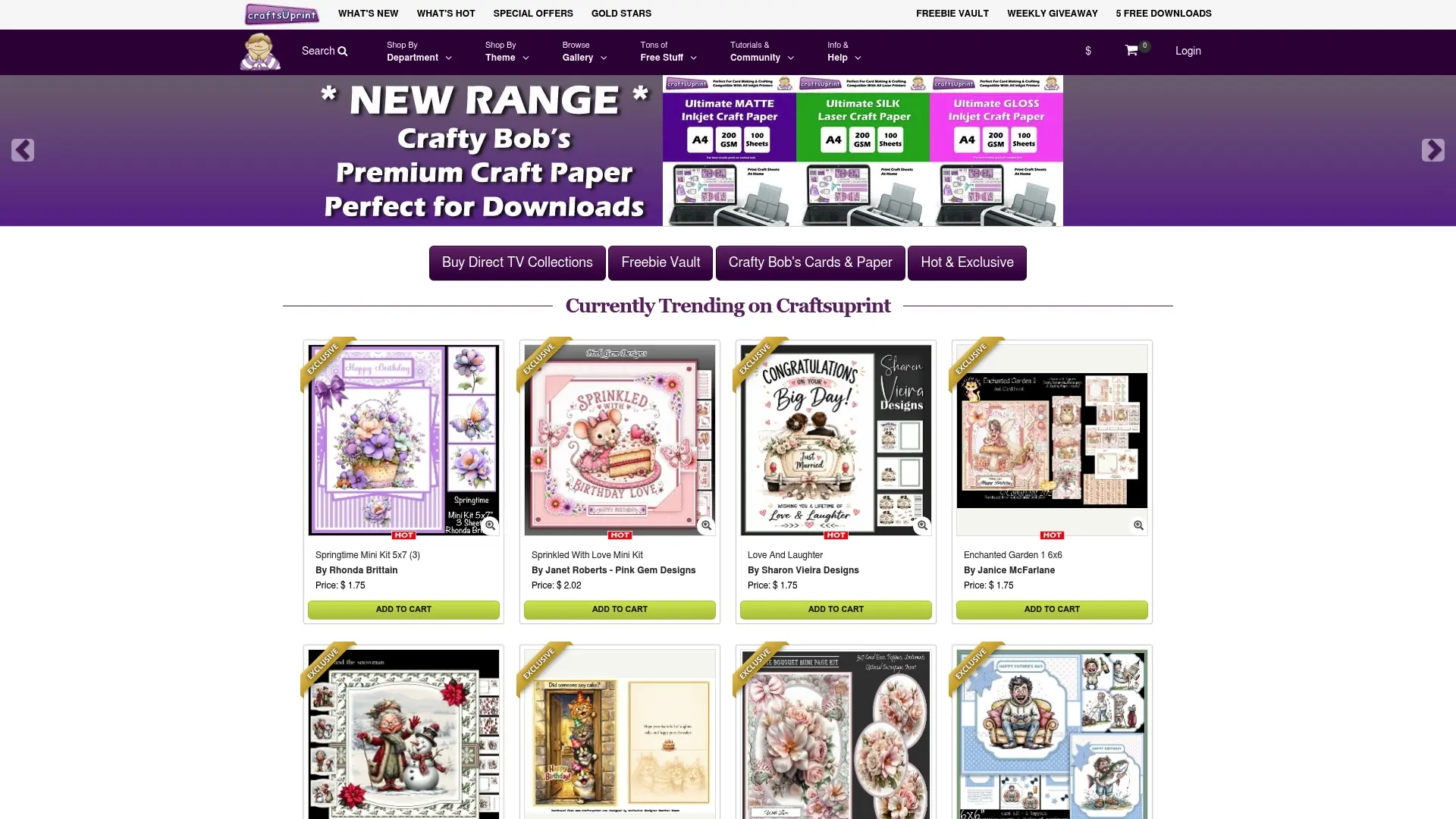
Whether you are assembling your first printable party set or building a full planner system, Craftsuprint has the designs and craft supplies to support every stage of your project. Browse the Create & Craft downloads library for themed printable sets, weekly freebies, and exclusive member offers. New designs are added regularly, so there is always something fresh to print and make.
FAQ
What are printables in crafting?
Printables in crafting are downloadable digital files, usually PDFs or image files, designed to be printed at home and used in projects such as cards, decorations, planners, and scrapbook layouts.
What paper should i use for printable crafts?
Cardstock is the recommended choice for printables that will be handled, assembled, or displayed for extended periods. Standard copy paper suits low-structure elements such as banner backings or display-only prints.
Can i use printables with a cricut machine?
Yes. The Cricut Joy™ 2 supports Print Then Cut with compatible inkjet printable materials. Print your design first, allow the ink to dry fully, then load the sheet into the machine for precise cutting.
How do i keep a printable planner system going?
A consistent 10–15 minute weekly setup routine is the most reliable way to maintain a printable planner. Match your update cadence to your format: weekly rotation for clipboard users, monthly batches for folder systems.
Are printables good for children’s activities?
Printable cutting strips and craft templates are well-suited to children’s activities. They support fine motor skill development, hand-eye coordination, and creative engagement through age-appropriate, structured tasks.